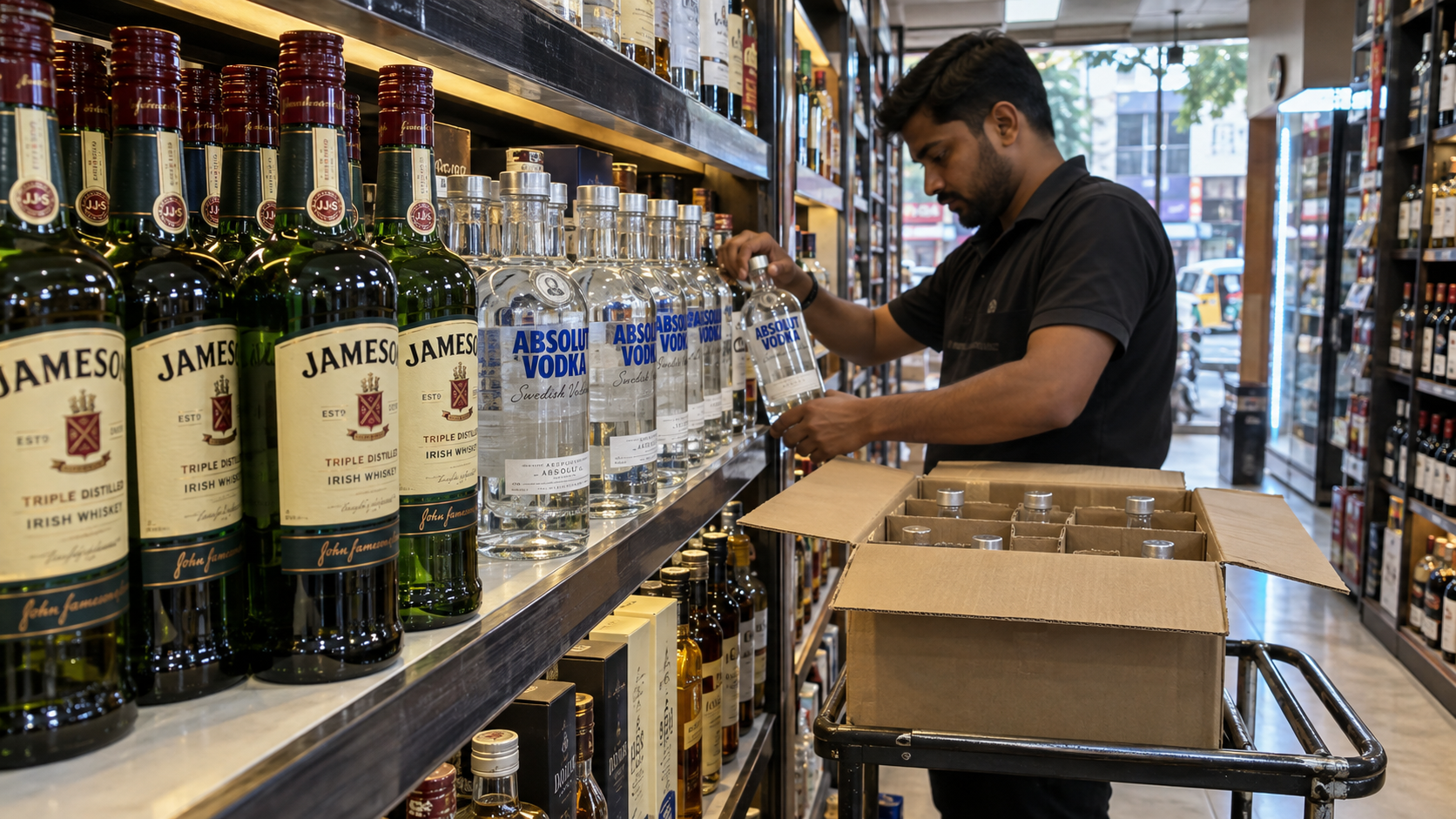
The Absolut and Jameson maker's 0.9% organic decline was better than the 1.7% drop in the company-compiled consensus, as inventory cuts hit its two largest problem markets while India surged 19%.
Pernod Ricard's first quarter showed a company with two markets in retreat and most of the rest of the world growing.
The French spirits group said Thursday that organic net sales for its fiscal first quarter, ended September, fell 0.9%. Reported sales fell 6.3% to €2.234 billion, mainly because of the sale of its Imperial Blue whisky and wine businesses. Analysts had expected a 1.7% decline, according to a consensus compiled by the company, with estimates ranging from a 3.8% drop to a 0.2% drop. The shares rose as much as about 4% in Paris before paring gains.
The split
The two weak spots were the U.S., down 10%, and China, down 25%. In both, wholesalers and retailers were working down stock they already held, a drag the company said it had expected. Excluding those two markets, sales grew 4%.
India led the gains, up 19% on strong demand, continued premiumization and the lapping of last year's excise changes in Maharashtra. The company said it is taking preparatory steps toward a potential initial public offering of its Indian business, which is producing a favorable pipe-fill effect in sales, though any listing still requires board approval. The broader Asia and rest-of-world region rose 9%, with growth in Japan, South Korea, Taiwan and Türkiye.
Europe was weaker, down 6%, with pressure in bars and restaurants and a sharper decline in Germany. Mexico declined sharply on weak consumer demand.
Beneath the Chinese shipment figure, the flow of product from distributors on to retailers and bars, which the industry calls depletions, grew again in the run-up to the Mid-Autumn Festival, the company said. That distinction is important: shipments fell because the trade was destocking, while sell-through from distributors returned to growth.
The outlook
Pernod kept a cautious tone for the full year. It expects organic net sales to be broadly stable in fiscal 2027, with declines in the U.S. and China and continued growth elsewhere. It plans to keep advertising and promotion spending at about 16% of sales and to defend its organic operating margin through cost control and efficiency savings.
Over fiscal 2027 to 2029 it reiterated that it aims for average organic sales growth close to the lower end of its 3% to 6% range, a target it set in August, citing softness in the U.S. market.
Two readings
The constructive reading is that this is the bottom of a destocking cycle. The first-quarter decline is far smaller than last year's 3.9% full-year drop, underlying depletions in China have returned to growth, and the rest of the world is growing.
The cautious reading is that the U.S., one of its largest markets, is still shrinking, and that the company has already guided to the low end of its medium-term range for the first year of the period, leaving little room for further disappointment.
What to watch
U.S. depletion trends through the holiday season, whether Chinese shipments recover once distributor inventories normalize, any board decision on the India IPO and first-half results on Feb. 18.