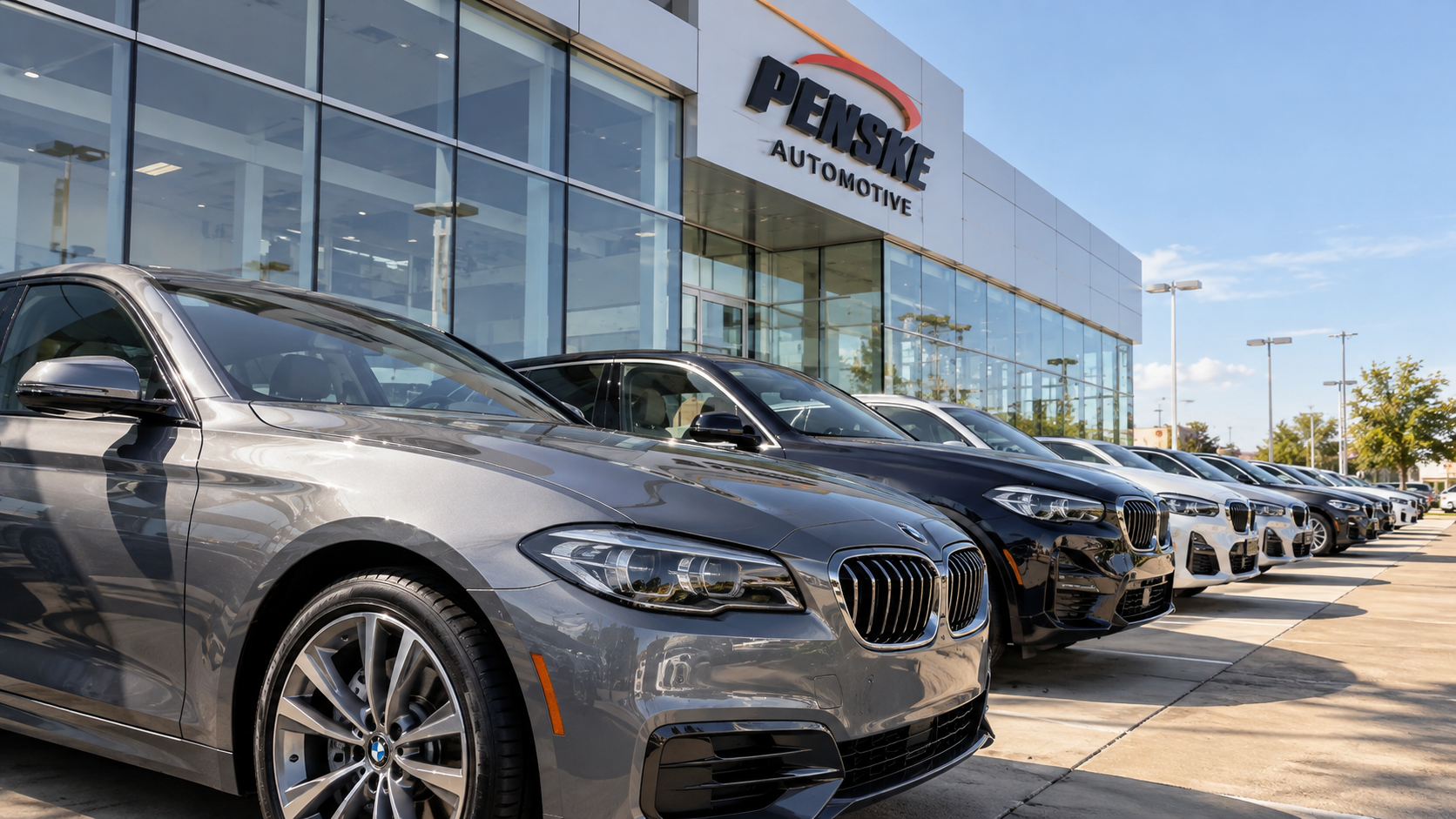
Penske Corp. and Mitsui, which already own about 72.6% of Penske Automotive Group, agreed to pay $212 a share in cash, $2 more than their July proposal. The deal needs the support of a majority of the votes cast by disinterested holders, and that vote is now the only real gate.
For two months this summer, Penske Automotive Group's minority shareholders could have sold in the market for more than they will now receive. On Thursday the company's two largest owners, Penske Corp. and Japan's Mitsui & Co., agreed to buy them out at $212 a share, a $2 improvement on the price they floated in July.
Penske Automotive, one of the largest U.S. car-dealership groups, said Thursday it signed a merger agreement with an entity owned by Penske Corp. and Mitsui. Every share outside the buyer group converts into $212.00 in cash, which the company said puts its enterprise value at about $16.3 billion. Ownership after the deal splits roughly 64% to Penske Corp. and 36% to Mitsui. The companies expect to close in the first quarter of 2027.
The shares jumped to just under the cash price after the announcement and were near $211.66 at about 1:40 p.m., up about 8.7% from Wednesday's close of $194.79.
The premium depends on the starting point
The company put the premium at 8.84% to Wednesday's close and about 8.6% to July 21, the last trading day before the buyers made their first, non-binding proposal at $210. Against the 60- and 90-day volume-weighted average prices before that proposal, the premium is 20.09% and 26.17%.
Measured against the opening bid, the gain is 0.95%.
The trading history adds a third benchmark. After the $210 proposal became public on July 22, Penske Automotive closed at $214.57, and it stayed at or above $212 every session through Sept. 21, peaking at $223.44 on July 29. For two months, the market priced in a higher final number than the one agreed. The stock then slid to $194.79 by Wednesday, a 12.8% fall from that peak, which lowered the base from which Thursday's premium is measured.
The protection is a vote
The buyers and their affiliates own about 72.6% of the shares and have signed agreements to vote in favor. That makes the ordinary majority a formality. The deal also requires approval by a majority of the votes cast by "disinterested stockholders," as defined in Section 144 of Delaware's corporate law, which excludes the buyers, their directors and officers, company officers and directors who were not on the special committee.
That minority vote is the real test. A committee of independent and disinterested directors negotiated the terms and received a fairness opinion from Moelis; directors tied to the buyers recused themselves. The committee's chair said the panel "determined that this transaction provided the greatest value for the Company's minority shareholders."
The money
The buyers will fund the deal with up to $2.2 billion of equity from Penske Corp. and Mitsui and up to $1.8 billion of debt committed by JPMorgan, Bank of America and Wells Fargo, with no financing condition. The minority stake, about 27.4% of the shares, is worth roughly $3.8 billion at $212, by this publication's calculation. If the buyers walk away in certain circumstances, they owe a $488 million termination fee, equal to about 13% of that minority stake. The company's fee is $383 million. Holders keep collecting quarterly dividends until closing, and any increase is limited to 2 cents.
At early afternoon prices, the stock traded about 0.16% below the cash price.
Market implications
One reading is that the committee secured a fair exit. Holders get a premium to every pre-proposal benchmark, an independent committee negotiated with a fairness opinion, the disinterested holders hold a veto, financing is committed and the buyers face a fee of nearly half a billion dollars if they fail to close. Dealer stocks had weakened into the announcement.
A second reading is that the controllers paid little to move from a proposal to a deal. The final price is under 1% above the opening bid, the market traded above it for two months, and with 72.6% already in hand, no rival bidder can prevail without the buyers' agreement.
What to watch
Two filings matter most. The preliminary proxy and the Schedule 13E-3 should lay out the path from the $210 opening bid to $212, any alternatives the committee weighed and the valuation ranges behind Moelis's opinion. The date of the special meeting, any public opposition from large holders and appraisal demands come next. Penske Automotive reports third-quarter results Oct. 28 without a conference call.