
PCE, Nvidia, and Jackson Hole Arrive in the Same 72 Hours
Last week tested every layer of the capital stack. This week delivers the data that prices whether any of them broke.
Treasury doubled long-bond buybacks and got one session of lower yields. Anthropic sized the largest IPO since SpaceX. QTS data center bonds priced at junk yields. Walmart posted its weakest growth since 2020.
Five trading sessions carry core PCE and GDP Wednesday. Six AI and software earnings land across three days. Jackson Hole starts Thursday. Warsh speaks Friday.
Here are the five questions that drive the week.
Wall Street Owns 88% — Yet Most Investors Don’t Know the Name

Institutions already control 88% of this little-known company.
BlackRock owns roughly 32 million shares. Vanguard owns about 48 million.
And management authorized a 40-million-share buyback.
One man believes Wall Street may see something Main Street has missed.
Does PCE Confirm the Inflation Split the Fed Cannot Ignore?
Wednesday delivers the week's most important data point.
Core PCE lands alongside GDP, personal income and spending, durable goods orders, and corporate profits. The data arrives hours before Nvidia reports.
Core PCE ran at 3.7% in June. The gap between PCE and CPI flipped from negative to positive 60 basis points. That is one of the largest reversals since 1985. Pimco traced it to AI buildout costs.
CPI and PPI both cooled in July. Retail sales fell 0.6%. Consumer sentiment dropped to 51. Those prints cut September hike odds from two-thirds to roughly one-third.
But oil has moved. Brent sits above $90. Diesel margins hit $100 a barrel. The question is whether the soft CPI path holds in the Fed's preferred measure. Or whether PCE catches the input costs CPI missed.
What to Watch
Core PCE above 0.3% month over month keeps the hawkish camp alive going into Jackson Hole. Below 0.2% gives Warsh room to hold without naming a direction.
Does Nvidia Prove the AI Buildout Earns Its Cost?
Nvidia (NVDA) reports Wednesday after the close.
Analysts expect revenue near $93 billion to $95 billion. That would mark roughly 67% growth. The number matters less than the margin commentary.
Last week's QTS bond at 7.63% showed the cost of funding AI infrastructure is rising. Nvidia's own Ohio campus guarantee was cut from $250 billion to under $120 billion. Investors pushed back. Nine tech companies carry $3 trillion in off-balance-sheet commitments tied to AI. Google just gave Marvell (MRVL) a $12 billion warrant as a second chip supplier.
Nvidia has to show the spending cycle still earns its cost of capital. Revenue growth alone is not enough against a 30-year at 5.25%. The bond market now charges more for the same buildout. Nvidia is the first name that has to show the return still works.
What to Watch
Data center revenue and gross margins are the key numbers. Guidance that holds or rises confirms the cycle. A margin warning names the cost pressure that is working through the whole chain.
Buffett, Gates and Bezos Quietly Dumping Stocks—Here's Why

The world's wealthiest individuals are making huge moves with their money.
Warren Buffett just liquidated billions of shares. Bill Gates sold 500,000 shares of Microsoft. Jeff Bezos filed to sell Amazon shares worth $4.8 billion.
What is going on? One multi-millionaire believes they are preparing for a catastrophic event. But not a crash, bank run, or recession. It’s something we haven’t seen in America for more than a century.
Does Warsh Use Jackson Hole to Address the Bond Market?
Jackson Hole runs Thursday through Saturday. Warsh speaks Friday.
He has argued for a Treasury-Fed accord. Both sides would name their goals together. Bessent said last week the two would work jointly on the Fed's holdings. The July FOMC minutes parked the question with a task force.
Warsh now has to explain why the committee sounds hawkish while Treasury defends the long end. Three officials wanted a hike in July. Recent data has softened. Long yields refused to follow either signal.
The bond market is asking a basic question. Does the Fed control long money or only the short end? Jackson Hole is the first chance to answer.
What to Watch
Any reference to the "regular and predictable" framework signals whether the Fed-Treasury relationship is being managed. Any number on the balance-sheet runway turns the deferral into a policy signal.
Does Software Extend the AI Rotation Beyond Chips?
Wednesday and Thursday deliver the heaviest software earnings cluster of the quarter.
Salesforce (CRM) and CrowdStrike (CRWD) report Wednesday after the close alongside Nvidia. Synopsys (SNPS) joins them. Autodesk (ADSK) reports Thursday. Intuit (INTU) opens the sequence Tuesday.
The trade has been rotating from chips toward software, cloud, and deployment. Guggenheim upgraded Salesforce and ServiceNow (NOW) during the chip selloff. CrowdStrike has rallied more than 60% this year on AI cybersecurity demand.
The question is whether revenue growth holds against higher discount rates. The 30-year at 5.25% is the price every long-lived asset discounts against. Software names need to prove the AI spending cycle reaches their top lines. And that it does not break margins. A strong cluster would confirm the rotation is broadening. A weak one leaves chips as the only proven AI trade.
What to Watch
Salesforce and CrowdStrike guidance tests whether AI spending drives demand or adds cost. Synopsys and Autodesk test whether chip design and infrastructure tools benefit from the same cycle.
Landmark Executive Order 14241 Unleashes
TRUMP’S NEW DOLLAR
Republican or Democrat – whether you support or oppose Trump’s New Dollar – every American could soon be forced to use it

Discover three critical moves to help you prepare, before it’s too late
Does Consumer Confidence Confirm the Retail Slowdown?
Tuesday brings consumer confidence alongside Case-Shiller home prices and new home sales. Thursday brings jobless claims and the goods trade balance. Friday closes with final Michigan consumer sentiment.
Four retailers reported last week. All four described a cautious consumer. Walmart (WMT) posted its weakest growth since 2020. Home Depot (HD) kept guidance unchanged. Target (TGT) needed a tariff refund to raise its numbers.
Confidence measures now test whether the consumer feels what the retailers showed. Michigan sentiment dropped to 51 last month. One-year inflation expectations climbed above 4%. Oil above $90 and diesel near $7 in California add pressure that was not in the July data.
What to Watch
Conference Board confidence below 95 confirms the retailers. Michigan sentiment below 50 names household expectations as deteriorating faster than the income data suggests.
Monday brings the Chicago Fed National Activity Index.
ADP weekly employment arrives Tuesday alongside new home sales and API oil data. Richmond Fed President Barkin speaks Tuesday and Wednesday. Wednesday also carries MBA mortgage rates, GDP, durable goods, and EIA crude and gasoline stocks. Thursday adds the goods trade balance, retail and wholesale inventories, and Jackson Hole's opening session. Friday closes with Chicago PMI, the NFP annual revision, and final Michigan sentiment. Palo Alto Networks (PANW) reports the following Monday, September 1.
Hidden in Tesla's Filing: A $12 Billion "Super Startup"
Pull up Tesla's most recent SEC filing. Page 5.
And you'll see a single line showing $12 billion in revenue from a brand-new "super startup" Elon Musk has been quietly incubating inside Tesla.
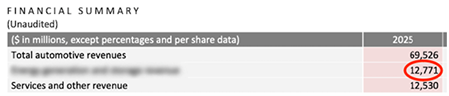
This new "super startup" has nothing to do with cars or robots or space or AI…
But it sits at the center of what Blackstone calls "a $23 trillion investment opportunity."
And on Oct 21st, Elon is expected to pull back the curtain and reveal exactly what he's building.
But Adam O'Dell already knows… and he reveals it all in this urgent video.
Five questions. Three days that carry most of the weight.
Wednesday is the pivot. Core PCE lands in the morning. GDP, personal income, and durable goods land alongside it. Then Nvidia, Salesforce, CrowdStrike, and Synopsys report after the close.
Thursday opens Jackson Hole. Autodesk reports. Jobless claims arrive.
Friday, Warsh speaks. Michigan sentiment and the NFP annual revision close the week.
The bond market spent last week asking whether Treasury can defend the long end. This week it asks whether the Fed, the consumer, and the AI spending cycle can justify the cost of long-term capital.
Anthropic may file publicly before Jackson Hole ends. That would give the AI category its first public mark. It would land the same week Nvidia reports. The gap between private marks and public pricing narrows on one filing.
By Friday afternoon, the market will know whether the long-bond selloff was a squeeze. Or the new cost of everything built on top of it.