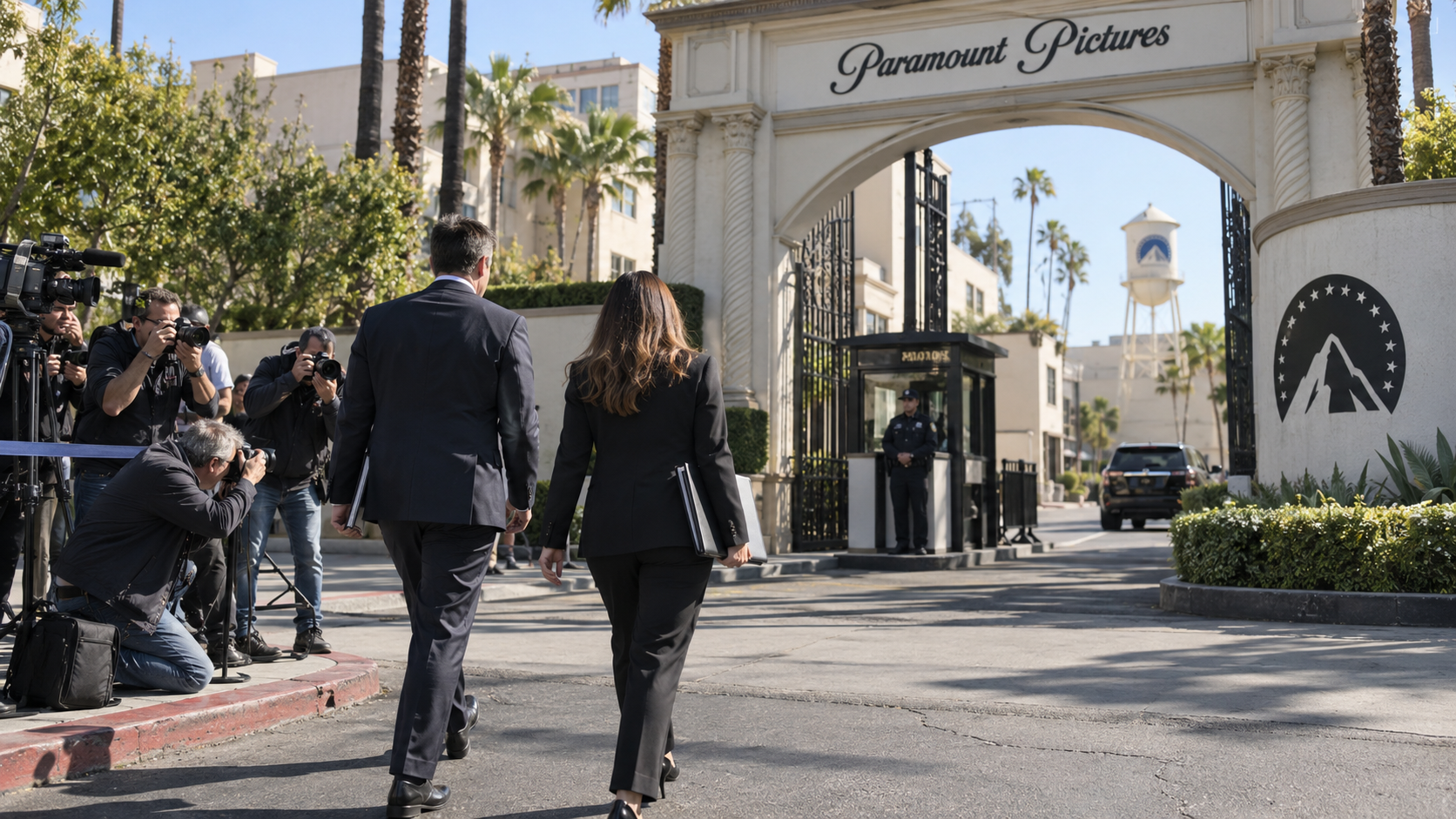
Advanced talks over independent monitoring of CNN and a theatrical-release commitment could resolve the antitrust suit standing between Paramount and its $110 billion acquisition of Warner Bros. Discovery.
Paramount and the coalition of roughly a dozen state attorneys general suing to block its $110 billion acquisition of Warner Bros. Discovery are in advanced settlement talks that could produce an agreement within days. Terms under discussion include independent content monitoring of CNN and a commitment on the number of theatrical film releases Paramount would maintain annually, according to people familiar with the negotiations.
The states, led by California Attorney General Rob Bonta, sued in July to block the combination, arguing it would concentrate too much market power over theatrical films and cable television in a single company. The Writers Guild of America separately sued to stop the deal, arguing it would reduce pay and worsen working conditions for film and television writers. Paramount Chief Executive David Ellison has staked the company's strategy on the acquisition, previously pledging that the combined studios would release 30 movies a year, a commitment that could become one of the settlement's binding terms.
The financial pressure to reach an agreement is building on a clock. Paramount owes Warner Bros. Discovery shareholders a $7 million per day "ticking fee" beginning after September 30 and continuing until the deal closes, a penalty structured to signal confidence to Warner investors when the acquisition was first announced. A hearing over the size of a related bond, with Paramount reportedly seeking a $1.88 billion bond against the plaintiffs' proposed $10,000, is expected September 24. The underlying trial in the antitrust case had been scheduled for March 2027 before Judge Araceli Martinez-Olguin in the Northern District of California, a date that a settlement would render unnecessary.
The market's reaction to the reported progress was immediate. Paramount shares rose nearly 7% after markets closed on the news, while Warner Bros. Discovery shares climbed 8.4% in after-hours trading, a spread that reflects how much value both sides have riding on a resolution before the daily fee begins accumulating in earnest.
The deal has drawn scrutiny beyond antitrust law. Lawmakers have criticized Ellison for what they describe as tailoring news coverage at Paramount-owned CBS News to favor President Trump, and critics have raised concerns about how Ellison would manage CNN's editorial independence once it comes under his ownership, a concern the reported monitoring provision appears designed to address directly. Trump administration regulators had already cleared the deal on a federal level before the state coalition sued in July, leaving the state-level antitrust case as the primary remaining obstacle to closing.
Nothing has been finalized. The talks remain confidential, and a settlement, if reached, would still need to translate specific commitments, on CNN's editorial structure and on Paramount's theatrical output, into enforceable terms. But with a daily financial penalty now bearing down on Paramount and a bond hearing days away, both sides have concrete reasons to reach an agreement before the calendar forces the issue.