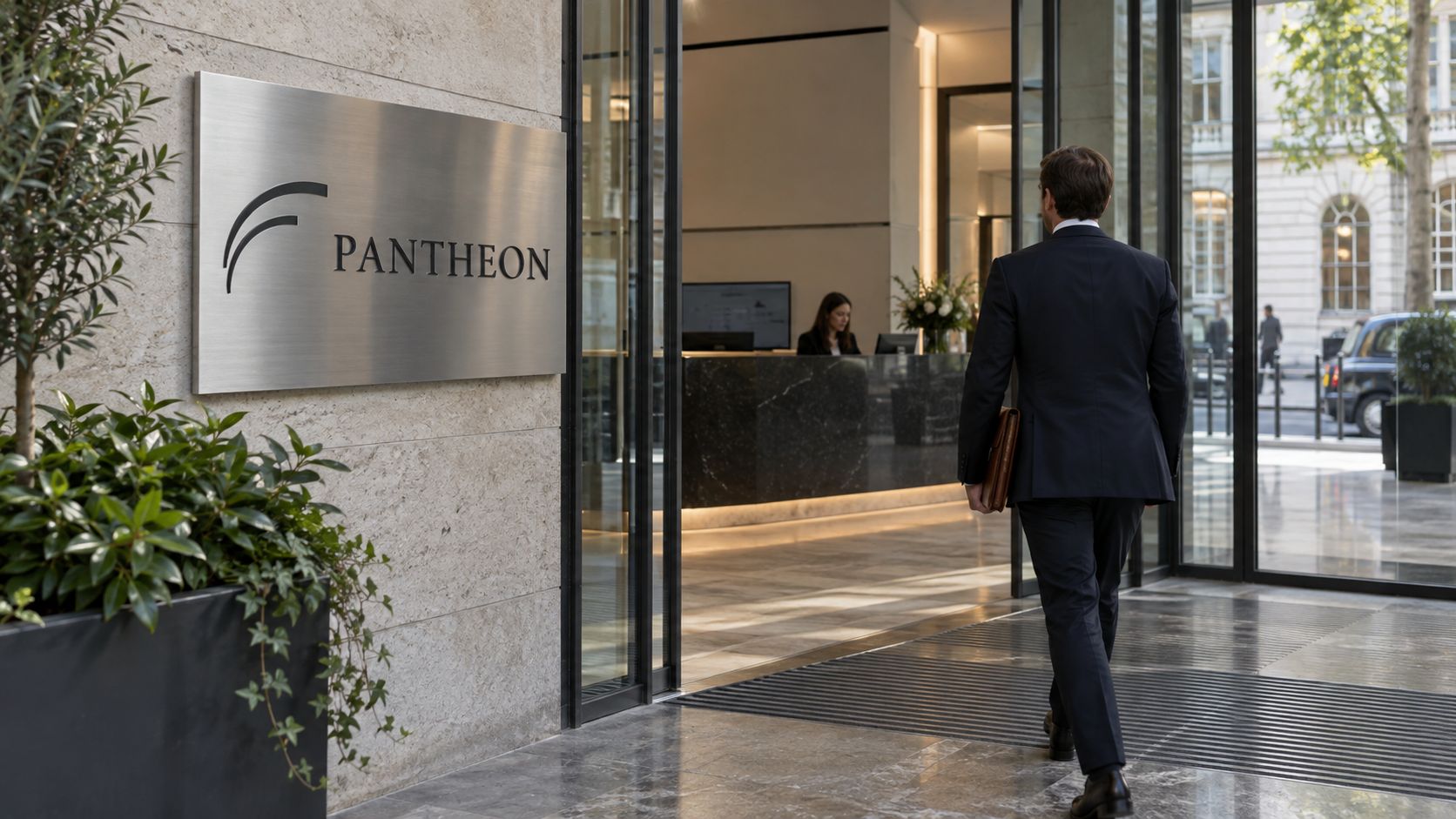
The $6 billion final close of Pantheon Global Secondaries Fund VIII and related vehicles compares with a $3.5 billion target. New investors from Asia and the Middle East were a driver, and the firm deployed about $3.35 billion across 17 transactions in 2025.
Primary buyout fundraising has been slow. Pantheon's secondaries raise was not.
The firm said on Wednesday it held the final close of Pantheon Global Secondaries Fund VIII and associated vehicles with commitments totaling $6 billion, against a target of $3.5 billion. That is 71% above the target. The figure includes related vehicles and is not the size of a single blind pool. Pantheon said it is the largest private equity secondaries fundraise in its history.
What the fund does
Secondaries funds buy existing stakes in private equity funds or portfolios, often from investors who want cash now, instead of waiting for a manager to sell its holdings. The fund focuses on buyout strategies and is diversified by vintage, manager and geography. Pantheon said it deployed about $3.35 billion in 2025 across 17 secondary transactions, which it described as a record. The firm manages about $84 billion.
Pantheon said significant commitments came from new investors in Asia and the Middle East. It did not name them.
The contrast
Industry tallies show 1,785 private equity funds reached a final close in the first three quarters of 2026, against 1,974 in the same period last year. Capital raised was up 17% to $702 billion, so the slowdown is in the count of funds closing, not in dollars. Even so, raising 71% above a target stands out.
The pairing suggests where limited partners' money is going. Investors who are waiting on distributions from older funds can raise cash by selling positions, and investors with capital to put to work can buy those positions. A secondaries fund sits between the two.
What the release left out
Pantheon did not say how the $6 billion is divided between the main fund and associated vehicles such as separate accounts and feeder structures. It did not disclose how much of its deployment is investor-led versus manager-led deals, what prices it paid relative to net asset value, or how the new fund compares in size with its predecessor.
Two readings
One reading is that capital is flowing toward liquidity strategies. A close well above target, with new Asian and Middle Eastern investors, points to demand for a way to get cash out of private equity and for a way in at a price reflecting existing portfolios.
The other reading is that the headline mixes structures. Because the total includes associated vehicles, it overstates the size of the pooled fund, and it says little about whether pricing remains attractive for buyers.
What to watch
The split of commitments; the pricing of secondary deals relative to net asset value; other secondaries managers' fundraising; and whether distribution levels from older funds recover. A narrowing of discounts would signal that demand for liquidity has eased.