OSI Systems closed out fiscal 2026 with records across the board: revenue, earnings, backlog and operating cash flow all set highs for the year ended June 30. The stock still fell roughly a tenth of its value in the session after the report. The gap between those two facts is the story.
The quarter itself looked like a miss on the number that gets quoted first. Fourth-quarter revenue came in at $484.058 million against consensus of about $529.7 million, a shortfall of roughly 8.6%. GAAP diluted earnings per share came in at $3.22, with basic EPS at $3.27 — two standard calculations from the same result, not a discrepancy. On an adjusted basis, the figure Wall Street models against, EPS came in at $3.78 versus consensus of $3.77, a penny ahead and essentially in line. The revenue shortfall is real. The profitability picture, measured the way the Street measures it, was not the problem.
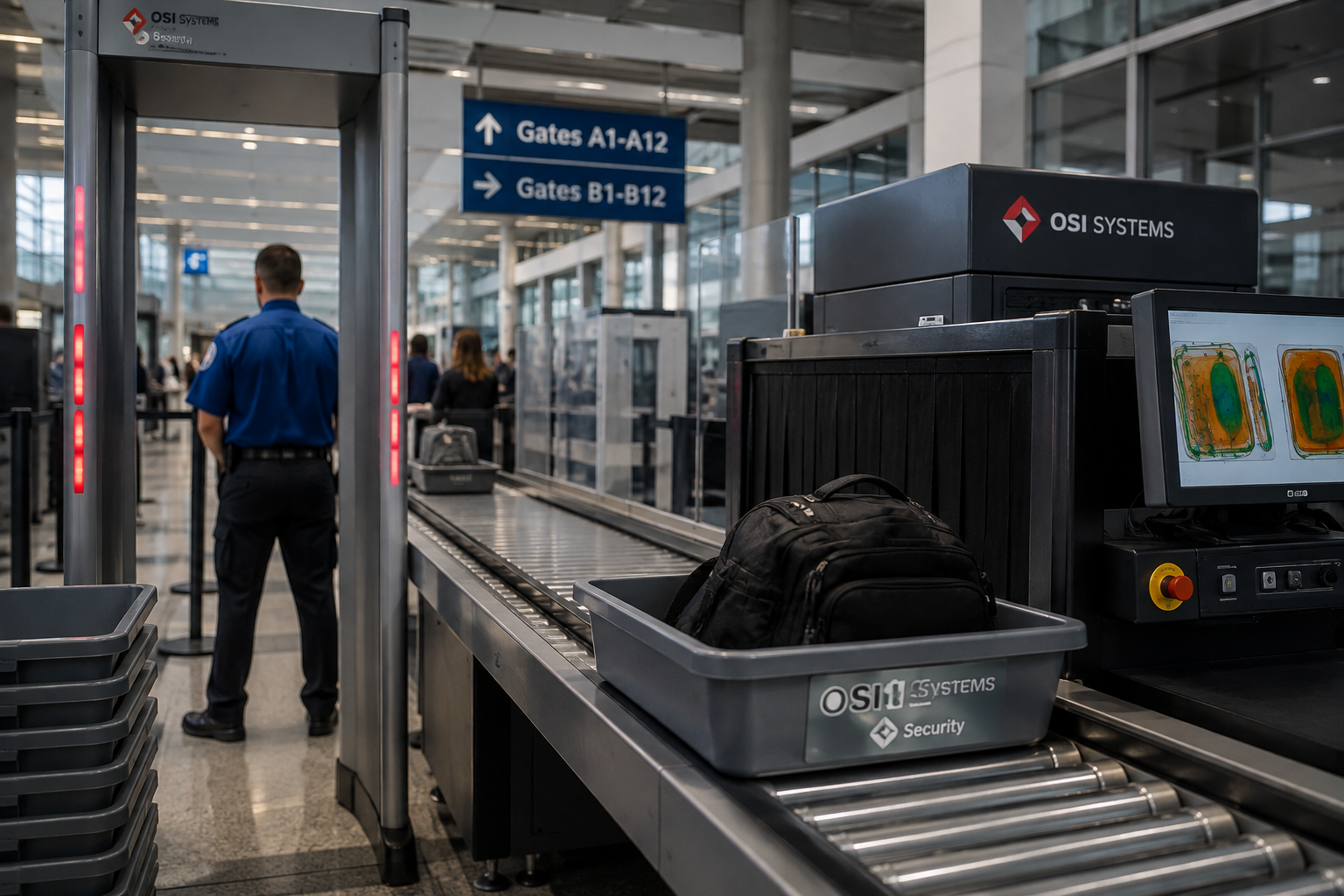
CFO Alan Edrick offered a specific explanation for the revenue shortfall: about $50 million of Security-division deliveries were pushed out, not canceled, because of delays tied to the conflict in the Middle East. Edrick characterized the revenue as deferred rather than lost. That is management's framing of what happened, not an independently verified outcome, and it matters because the case for the stock's next year rests substantially on whether that characterization holds.
A Demand Problem Would Look Different
If <a href="https://www.financialmarkets.com/ticker/OSIS">OSI Systems (OSIS)</a> had a demand problem, the metrics that reveal demand should have deteriorated. They didn't. Gross margin improved about 138 basis points year over year. Operating margin expanded roughly 200 basis points. Backlog hit a record $1.9 billion. None of those figures are consistent with softening orders or pricing pressure in the underlying business. What they are consistent with is a supply and logistics disruption in one division, tied to a specific and identifiable geopolitical cause, hitting one quarter's shipment timing.
A company whose order book and margins improved in the same quarter its headline revenue missed by 8.6% is not showing the fingerprint of weakening demand. The market's initial reaction treated the miss as the signal and the backlog as noise.
The Market's Reaction Overshot the Explanation
Shares closed at $218.09 on Wednesday, August 20, the day of the report, and $206.73 the next session, a close-to-close decline of about 5.2%. Intraday, shares touched a low of $197.29, roughly 9.5% below the prior close, before recovering part of that loss into the close. Both figures are real: the close-to-close move measures where the stock settled, the intraday low measures how far the selloff ran before buyers stepped back in. Neither is trivial for a company whose miss was attributed to timing rather than demand.
Sell-side analysts cut price targets after the print, which matters because it shows the Street isn't simply dismissing the selloff as an overreaction to a one-quarter delivery hiccup. Some of that caution is aimed at the fiscal 2027 guidance itself: revenue of $1.875 billion to $1.93 billion, which implies roughly 5% to 8.1% year-over-year growth. A range with that much spread, layered on top of a $50 million question mark already baked into the base, is not guidance analysts can treat as fully de-risked.
What the Backlog Buys, and What It Doesn't Guarantee
A record $1.9 billion backlog is real evidence of demand. It is not, by itself, proof that the $50 million in deferred Security-division revenue converts on management's timeline. Backlog measures orders in hand; it says nothing about how quickly geopolitical disruption in delivery corridors resolves. Edrick's deferred-not-lost framing is a reasonable read of a single quarter's data, but it is an assertion investors have to test against actual results, not accept as settled.
Fiscal 2027 will supply the test directly. If the deferred $50 million shows up in reported Security-division revenue over the next two to three quarters, the fiscal 2026 miss reads in hindsight as a timing issue overwhelmed by shipment noise. If continued Middle East disruption pushes it out again, the market's harsher read — that guidance itself carries more risk than the backlog implies — holds up.