The stock closed Tuesday at $140.37, well below where it traded before a quarter in which revenue grew 30% and exceeded consensus.
Oracle closed Tuesday at $140.37, down $4.42 or 3.05% from Monday's close of $144.79. The decline extends a multi-session move that began after the company reported first-quarter fiscal 2027 results.
That quarter was, on its face, strong. Revenue rose 30% year over year to $19.3 billion, ahead of a consensus figure near $19.14 billion. The stock traded above $152 before the report and has not been near that level since.
The gap between the beat and the reaction
A stock falling on a 30% revenue beat is a recognisable pattern in the current AI infrastructure cycle, and the explanation offered by market commentary has centred on margin and capital expenditure rather than on demand.
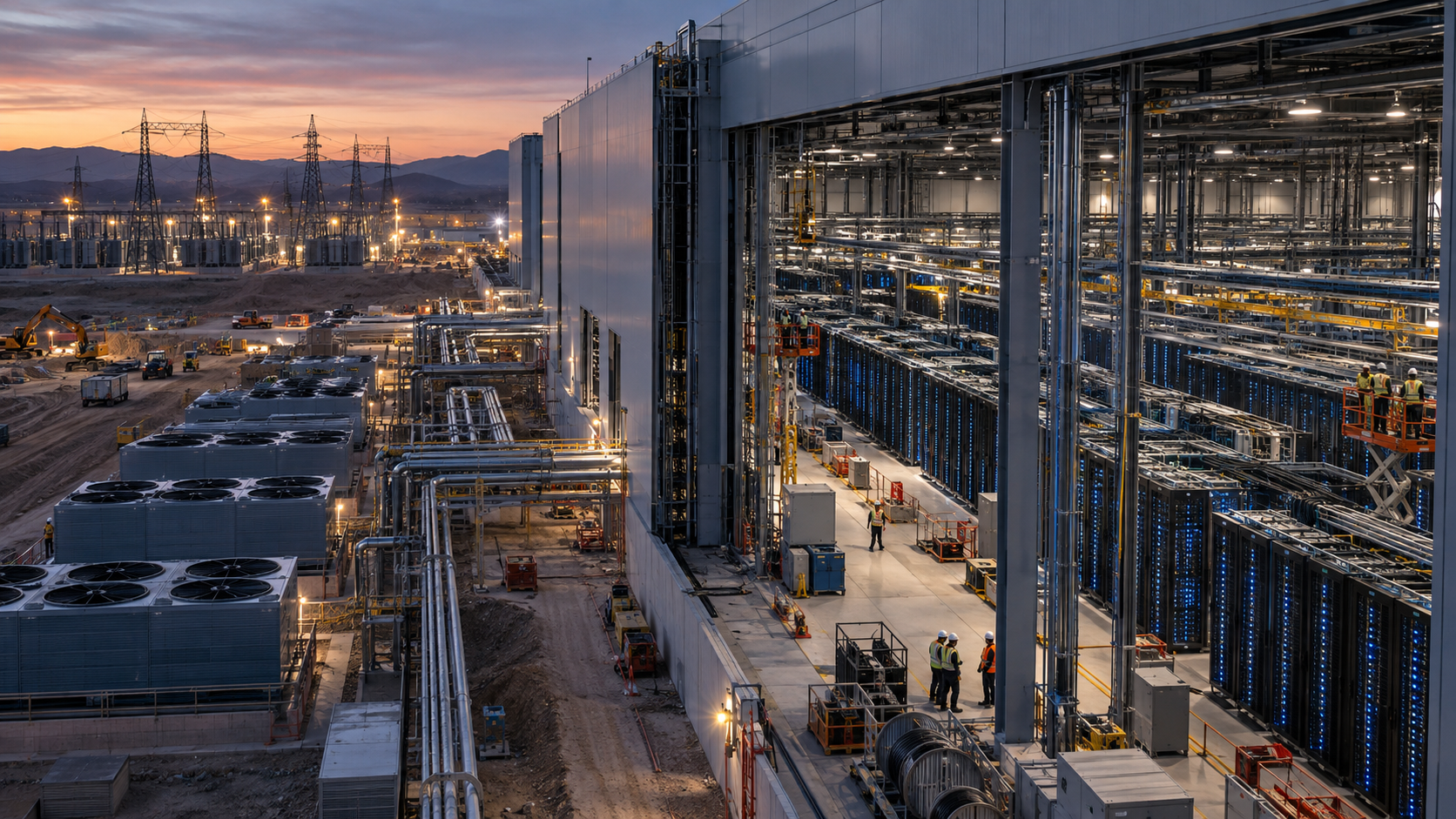
The logic runs as follows. Oracle's cloud revenue growth is real and is being won partly through large AI infrastructure commitments. Those commitments require enormous upfront spending on data centres, power contracts and accelerators, booked as capital expenditure well ahead of the revenue they support. Investors who are comfortable with the revenue trajectory can simultaneously be uncomfortable with the capital intensity required to sustain it, and with what it does to free cash flow and returns on invested capital over the intervening years.
That reading is an interpretation offered by market observers rather than a position management has articulated, and it should be treated as such. No company statement or analyst note specific to Tuesday's session has been identified.
The sector context makes it harder to isolate
Tuesday was a broad risk-off session. The S&P 500 fell 0.45% and the Nasdaq Composite fell 0.78%, with a 10-year Treasury yield near 5% pressuring long-duration equity valuations generally. Oracle's 3.05% decline is a multiple of the index move, but part of it is beta rather than signal.
Notably, the semiconductor complex diverged: the Philadelphia Semiconductor Index rose 0.40% on the same session. Whatever was pressuring Oracle was not pressuring the companies selling the hardware it buys.
What settles the question
The capex argument is testable. Oracle's remaining performance obligations, its cloud gross margin trajectory and its free cash flow conversion over the next two quarters will either show that the AI infrastructure build is earning an adequate return or that the market's scepticism was warranted.
Until then, the price action is telling a story the income statement is not.