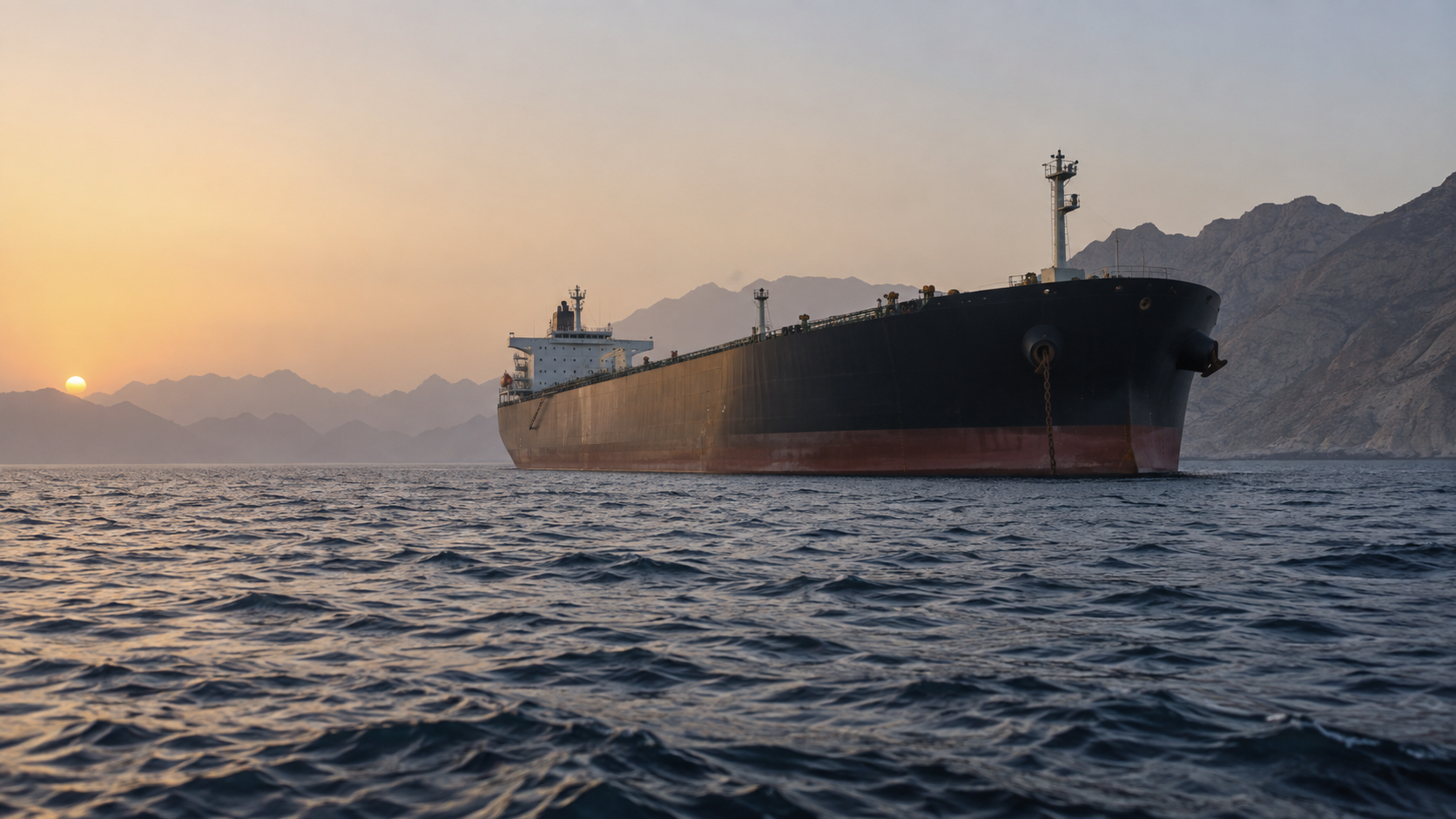
The only scheduled diplomatic channel for easing transit risk through the Strait of Hormuz failed to convene on its first date, leaving the war premium in crude with nothing near term to argue against it.
The foreign-minister-level meeting between Iran and Gulf Arab states that was to be held in Salalah, Oman, on Monday was postponed before it opened, and no new date has been announced.
Oman's foreign minister, Badr Albusaidi, said the delay was made in the interests of consensus and in order to reach an agreement. Iranian state media described it as a joint decision by Tehran and Muscat, taken at the request of several countries in the region. Neither framing names a specific obstacle, and neither side has described the talks as broken off.
What is known about the obstacles comes from the positions the participants had already staked out. Bahrain had said it would not sit down with Iran without restored diplomatic relations. Saudi Arabia's attendance was in question because Houthi forces have continued to strike Saudi territory. And the underlying dispute the meeting was meant to address is not a narrow technical one: the parties do not agree on whether the Strait of Hormuz is an international waterway or a corridor in which Iran can impose a transit fee regime.
The agenda was narrow even at its most ambitious. The meeting was scoped to shipping and traffic management through the strait, not to the wider conflict. There are no ceasefire talks underway.
The price reaction
Crude was higher through the Monday premarket session. Brent traded at $107.37 a barrel, up 2.40% on the day, with an intraday high of $107.41; a separate reading later in the morning put Brent near $108. West Texas Intermediate traded at $102.34, up 2.54%.
Those levels sit on top of an already large weekly move. Brent settled Friday at $104.61, down 2.81% on the session but up 8.7% on the week, and WTI settled at $100.05, down 2.37% on the day and up 9.4% on the week. Friday was the first time Brent had closed above $100 since mid-May.
Friday's decline had raised a reasonable question about whether the market had finished pricing the supply risk. Monday's move, so far, argues the other way.
What the postponement actually removes
The talks were the single scheduled event on the calendar capable of lowering perceived transit risk in the near term. Their failure to convene does not add new physical supply risk. It removes the one dated catalyst that could have subtracted some.
That distinction matters for how the move should be read. Traders are not repricing a new disruption this morning. They are repricing the probability that the existing disruption gets resolved soon, and market commentary tied the Monday gain to the postponement alongside the continued outage of Saudi Arabia's East-West pipeline.
What would settle it
Two things would resolve the question quickly. A newly announced meeting date would support the reading that this was a procedural delay between parties still negotiating. Continued silence, or an explicit statement that the postponement is indefinite, would support the reading that the Gulf states cannot presently coordinate a position on Iran at all, which is the more durable problem for anyone pricing transit risk through the strait.