WTI and Brent have fallen roughly 7% to 9% over five sessions as Iran and Oman discuss a temporary shipping corridor through the Strait of Hormuz. Thursday's flat trading, alongside a fresh maritime advisory and a reported strike near Oman, suggests the decline may be losing momentum.
Crude oil fell for five straight sessions through Wednesday as Iran and Oman discussed a temporary shipping route intended to partially reopen the Strait of Hormuz, with Brent and WTI each down roughly 7% to 9% over that stretch. Gulf shipping traffic through the strait remained roughly two-thirds below its 10-day average even as the talks progressed. On Thursday, that decline stalled: WTI traded at $82.31, essentially flat on the day.
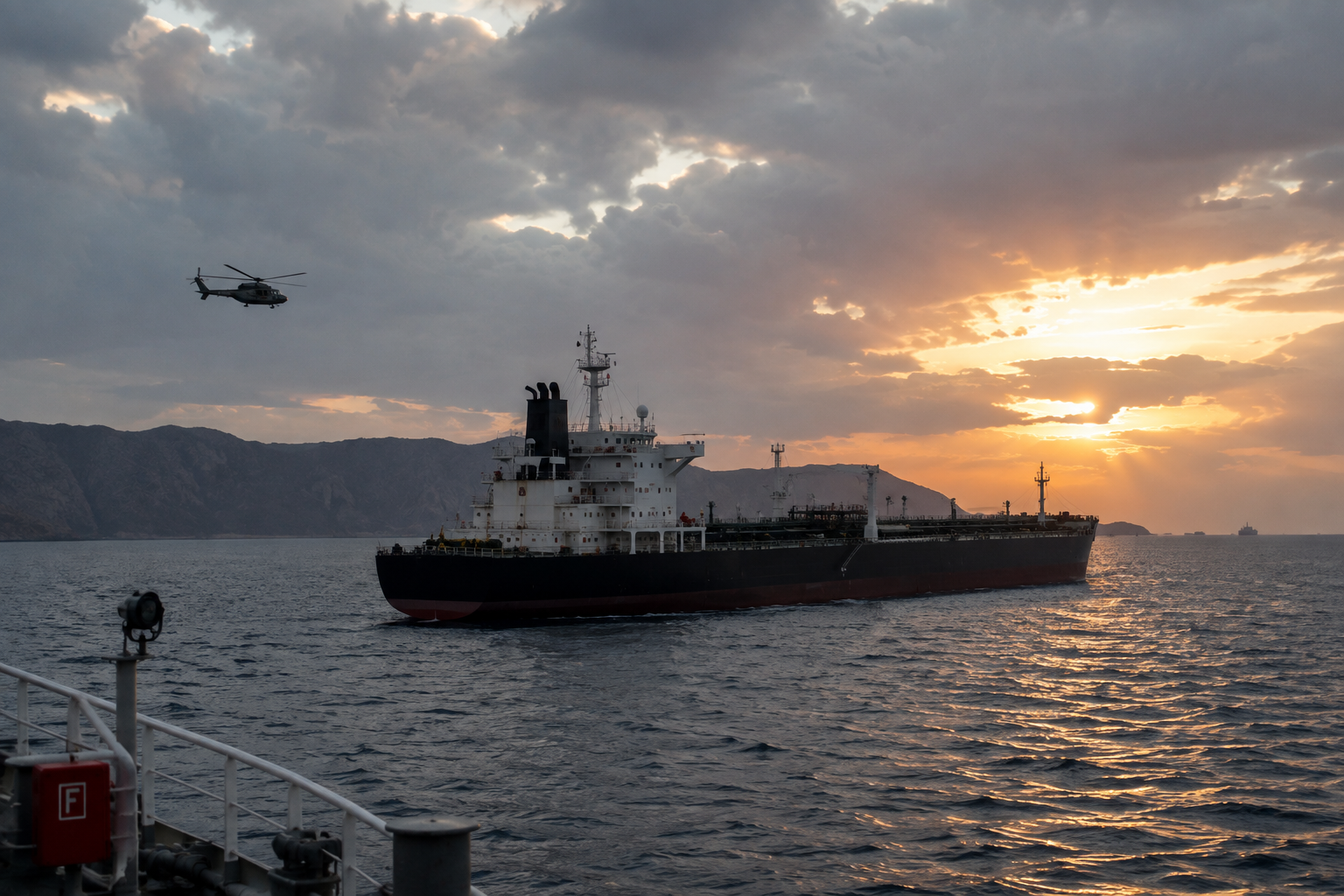
The pause coincides with developments that cut against the reopening narrative behind the price decline. A tanker was struck by an unidentified projectile near Oman around Tuesday, according to the UK Maritime Trade Operations body, which also issued a fresh advisory this week. President Trump had separately claimed the strait was fully "demined" and warned of "zero tolerance" for new mines, a claim that predates both the tanker strike and UKMTO's continued advisory activity. Responsibility for the strike has not been established.
A structurally different explanation for the broader price trend has also emerged this week. Six months into the conflict, OPEC+ appears to be losing much of its traditional influence over the price of oil moving through the region, as China absorbs a growing share of sanctioned barrels and increasingly sets the market on its own terms. That shifts the relevant question from whether Hormuz reopens to who actually sets the marginal price of oil moving around the disruption, a distinct dynamic from the day-to-day talks-versus-attacks pattern driving this week's price action.
Two readings of the past five sessions are both consistent with the evidence so far. One holds that Iran and Oman are making real progress toward a workable transit corridor, that shipping disruption is easing from its highs, and markets are correctly discounting a lower geopolitical risk premium. The other holds that the decline has run ahead of the facts: a tanker strike, a fresh formal advisory, and shipping traffic still running well below normal all argue the risk premium may be underpriced, with Thursday's stall an early signal the market agrees.
Thursday's flat session doesn't resolve that question on its own. It shows that a decline built on optimism about a specific negotiation is no longer accelerating in the face of evidence that the negotiation hasn't yet translated into a safer strait. The next test is whether Iran and Oman announce a formal transit agreement, which would support the de-escalation reading, or whether further incident reports continue, which would support the other one.