Stocks and gold decline as investors weigh supply risks against the prospect of tighter monetary policy.
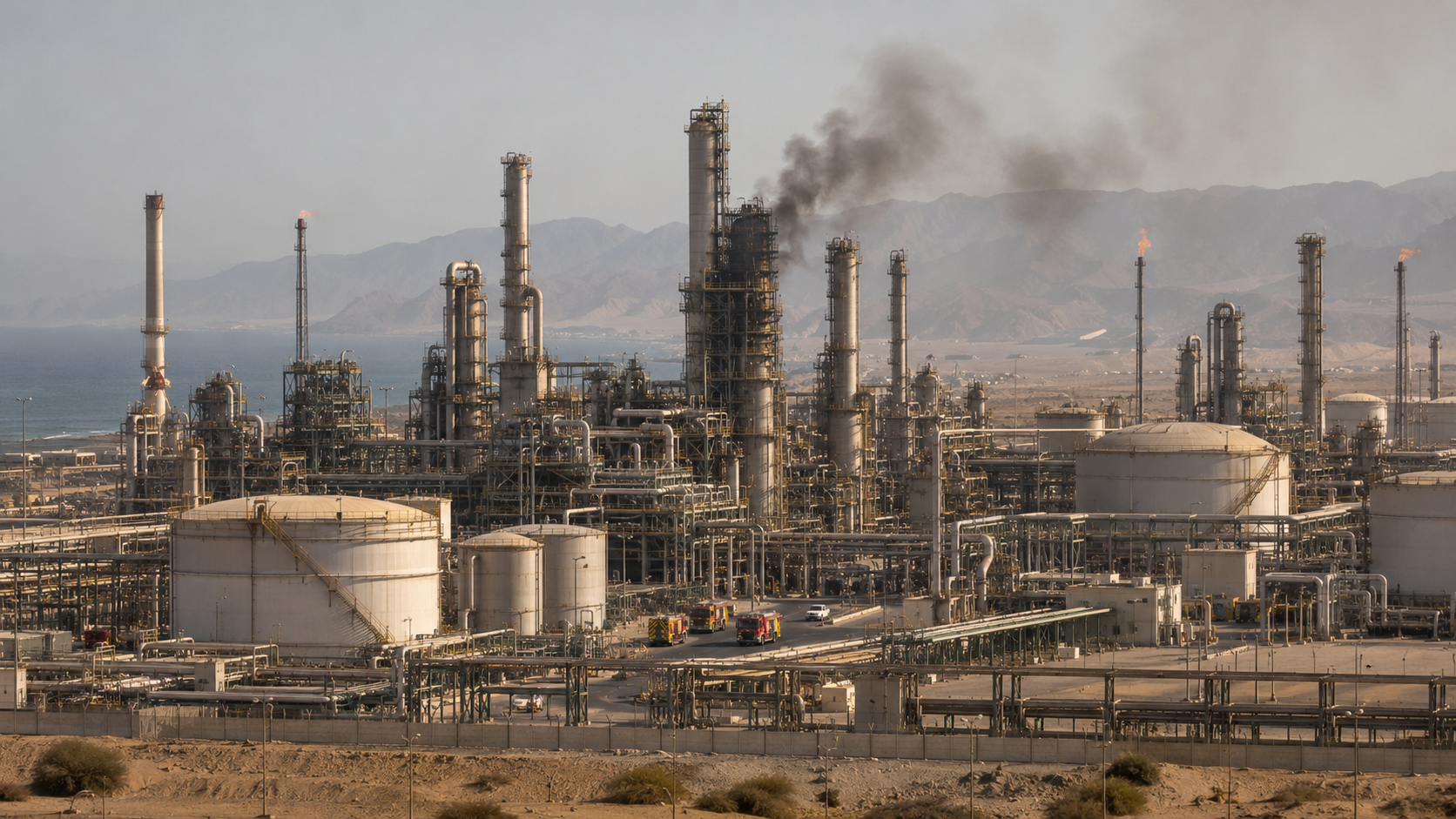
Houthi missile and drone strikes hit multiple energy sites in southern Saudi Arabia Tuesday, including the 400,000 barrel-per-day Jazan refinery, oil and gas distribution infrastructure in Najran and Abha, and a Saudi air base in Khamis Mushait, according to the Associated Press. Saudi officials called it a serious escalation and a violation of the kingdom's sovereignty, and said they would take the operational measures necessary to deter further attacks. Yemen's Houthi movement said any further Saudi action would be met with a firm response. Saudi-coalition sourcing relayed by wire services put the number of people wounded at 73.
Brent crude touched roughly $98 a barrel intraday, a six-week high, while U.S. crude traded near $93, according to Investing.com. Goldman Sachs and HSBC both raised their oil price forecasts in the attack's aftermath. Goldman told clients that risks are now tilted firmly to the upside and that markets are increasingly pricing in a prolonged Middle East conflict.
In the reported market snapshot, the S&P 500 slipped 0.36% to 7,690.84 and the Dow fell 0.95% to 52,908.91. Gold traded near $4,443.90 an ounce, down 0.6% from Friday’s close, while Saudi Aramco shares rose less than half a percent.
The divergence leaves investors weighing two possibilities: a widening conflict that disrupts production and exports, or another escalation with limited lasting effects on supply. The Jazan refinery has reportedly been struck more than once in recent months without confirmed lasting output damage. Gold’s decline is also consistent with concern about higher interest rates and a firmer dollar, although one session cannot establish the cause.
Bannockburn Capital Markets analyst Darrell Fletcher put the caution more bluntly, saying that buying gold at current levels in hopes of a near-term move higher is a tough strategy.
The market’s next test
What happens next depends heavily on whether Saudi Arabia or the U.S. government issues any assessment of actual production or export impact, and on how oil and gold trade once this week's inflation report and next week's Fed decision are in hand.