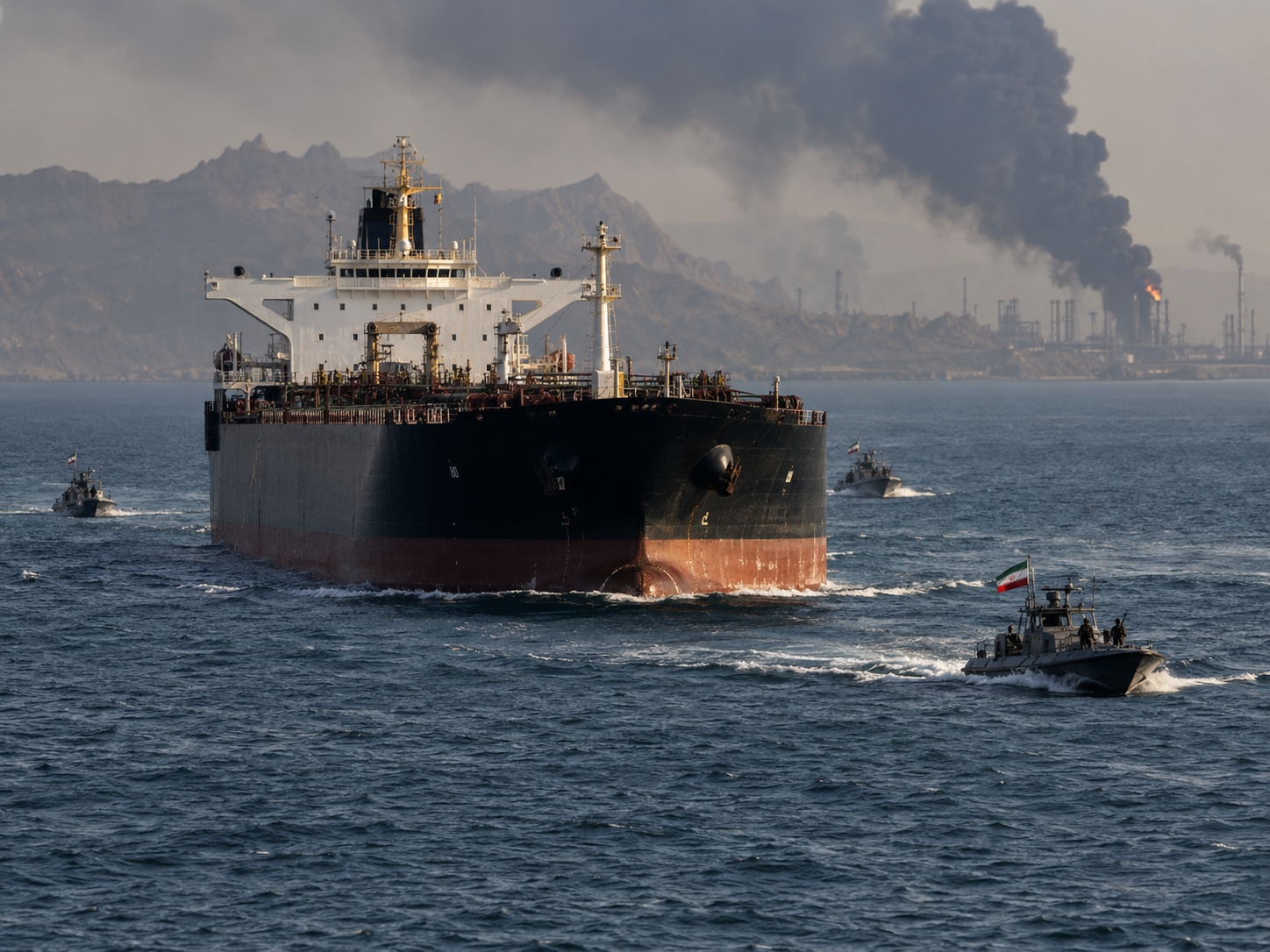
A second reported strike on a Saudi refinery and a Houthi attack that wounded dozens have pushed Brent crude toward $100 a barrel, widening the gap between a U.S. official's assurances and reports of collapsing tanker traffic.
Brent crude climbed to roughly $99 a barrel this week, its highest level in six weeks and its third approach toward the $100 mark this year, as fighting around the Strait of Hormuz intensified over the long holiday weekend. WTI traded in the low-to-mid $90s over the same stretch.
The escalation came from several directions at once. Iranian security official Mohsen Rezaei said "economic warfare" against Iran would be met with a maritime exclusion zone across the Persian Gulf, a measure not yet confirmed as implemented. Saudi Arabia's Aramco was reportedly struck a second time at its Jazan refinery, a 400,000-barrel-a-day facility; neither Aramco nor the Saudi government has confirmed the strike. Houthi forces struck multiple Saudi cities Tuesday, wounding 73 people, according to a spokesperson for the Saudi-led coalition. Iran said it fired a missile at U.S. warships near the Strait; the U.S. military said its vessels evaded the attack.
U.S. Central Command said it has redirected 94 commercial ships it describes as violating the blockade, up from 92 a day earlier, with three vessels disabled and two boarded since strikes began over the weekend.
The clearest tension in the story is a direct contradiction: a senior U.S. official said the Strait remains "fully open and under U.S. Navy control," even as shipping-data providers describe a sharp decline in vessel transits through the same waterway. Estimates of the decline vary, but every account points the same direction: fewer ships are moving through the Strait than before the conflict began, whatever the U.S. official's characterization suggests.
The scale of casualties has not been independently verified beyond official statements, and no lasting damage to Gulf energy infrastructure has been confirmed. What is confirmed is the price reaction: oil has now climbed for three straight weeks, and the gap between Washington's public assurances and the shipping data investors can see for themselves is becoming the story in its own right.
That gap should worry investors more than any single headline out of the region. A market that trusts an official's "fully open" characterization prices oil differently than one that trusts a shipping-data provider's account of falling transits, and right now those two readings point in opposite directions. Energy shares and shippers have caught a bid on the price move; refiners and airlines face the other side of the same trade. The Strait's actual, verified transit volume, not another round of statements from either side, is what will settle which reading holds up.