Treasury Secretary Scott Bessent has spent recent days previewing a new round of Iran sanctions in the most sweeping language available to him, calling the coming measures "the single greatest financial offensive ever marshalled against an adversary" and, separately, an "economic D-Day." Both phrases are his own characterization of scale and intent. As of this writing, the sanctions' actual contents, the mechanism, targets, and enforcement tools, have not been publicly unveiled.
That timing matters for reading Monday's price action correctly. On August 24, before any detail of the package was known, WTI crude fell to a range of roughly $85.29 to $85.74 a barrel, down 1.5% to 2.0% from Friday's settlement near $87.06, with the session's intraday range spanning $84.71 to $86.56. Brent slipped to about $92.76, down roughly 1.7%. This is a market reacting to rhetoric about a policy, not to the policy itself. If sanctions language this aggressive were reliably bullish for the commodity it targets, a falling price is not what that reaction would look like.
A Rally That Had Already Run
Context matters before reading too much into one down session. WTI rose 5.66% the prior week and Brent gained 6.39% over the same stretch, a sharp two-week advance that had already priced in a meaningful geopolitical risk premium. Monday's pullback looks at least partly mechanical: positioning built during that run needed to be trimmed, and a decline of under 2% after a gain of nearly 6% reads as a retracement, not a reversal of view.
Profit-taking alone does not fully explain why a market bracing for what its own Treasury Secretary calls history's largest financial offensive would sell the commodity rather than bid it higher ahead of the news. That points to a second, more specific explanation: much of the physical damage the announcement is meant to inflict may already be priced in, because much of it has already happened.
The Supply Shock Is Largely Already Visible
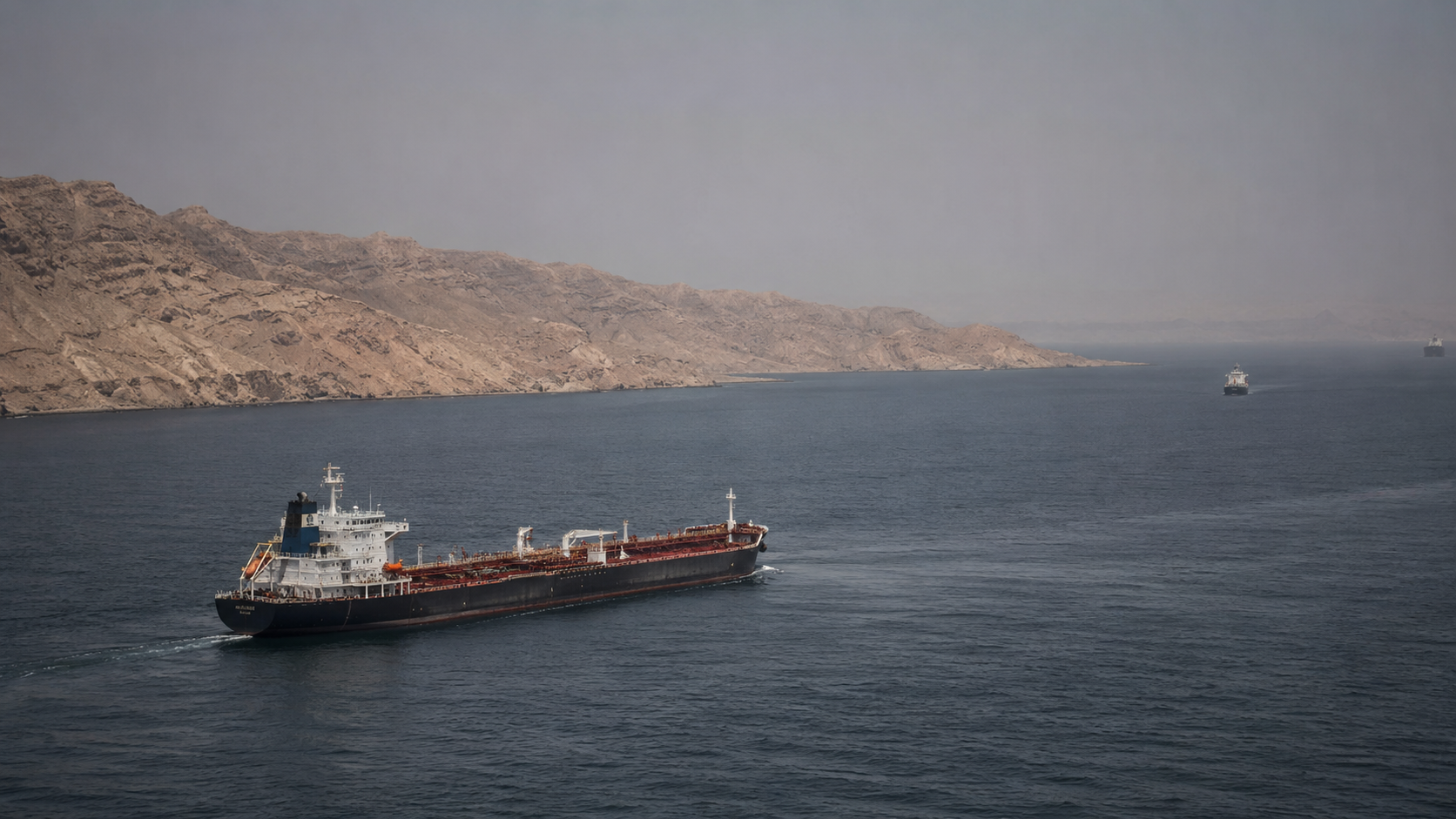
Iran's export collapse has been observable for months, not hypothetical. Reporting continues to put vessel traffic through the Strait of Hormuz at roughly 90% below pre-conflict levels. Iranian crude shipments to China, historically the primary outlet for Iranian barrels, have fallen to an estimated 534,000 barrels a day in August, down from roughly 1.4 million barrels a day in 2025.
A new sanctions package layered on top of an export flow that has already shrunk by roughly two-thirds does not remove as many incremental barrels as the "historic" framing implies, and that gap between rhetorical scale and remaining physical supply is the most defensible read of Monday's price action: traders appear to be weighing the marginal impact of new measures against a baseline that is already severely constrained, not treating the announcement as a fresh shock to an untouched flow of oil.
Hormuz traffic is depressed, not zero, and the composition of what Bessent eventually unveils still has room to matter. Measures aimed at shipping insurers, specific ports, tanker fleets, or the buyers still taking Iranian barrels directly could tighten the remaining flow in ways the export data alone does not capture. The size of the rhetoric describing the package is not what will move the physical market; the mechanism will.
A Different Signal in Gold
Not every market treated Monday's setup the same way. Gold rose 1.13% to $4,733.50 in the same session, a genuinely different response from an asset that often correlates with geopolitical stress. A separate FinancialMarkets.com analysis addresses gold's move directly.
What the Sanctions Text Will Show
Bessent's language so far describes scale and intent, not mechanism. Whether the package reaches shipping insurers, specific ports, tanker fleets, or downstream buyers will determine whether oil's pre-announcement pullback holds or gives way once traders can price the actual measures instead of the rhetoric describing them. The sanctions text itself, once released, is that next data point.