Brent settled at $116.72, its highest settlement since late April, and gained about 6% on the week. Spot gold lost more than 4% and the 10-year Treasury yield finished the week lower, a combination that looks more like a rate-hike scare than a rush to safety.
Oil traded all week like a market bracing for war. Gold traded like a market bracing for the Federal Reserve.
Brent crude futures settled at $116.72 a barrel on Friday, up $3.55, or 3.1%, the highest settlement since April 29. West Texas Intermediate settled at $103.27, up 3.8%. For the week, Brent rose about 6% and WTI about 2.3%. The front-month Brent contract kept climbing after the settlement and traded near $117.38 late Friday.
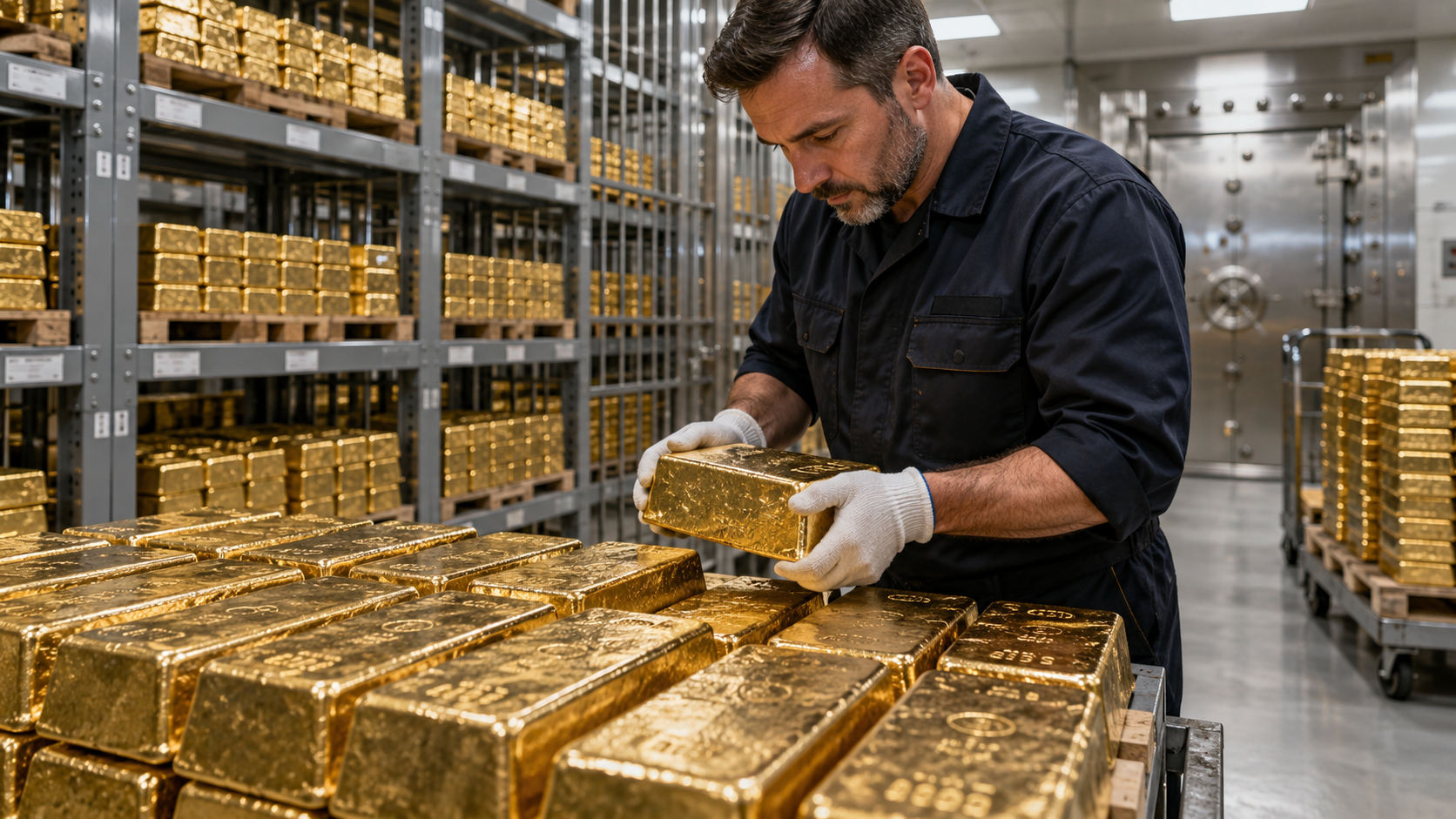
Spot gold, meanwhile, slipped below $4,000 an ounce on Friday morning for the first time since mid-July, recovered, then broke lower again to end the U.S. session near $3,992. It lost more than 4% on the week, its second weekly decline in a row. Gold futures settled at $4,007.90, down 1.3%.
Why gold did not behave like a haven
A geopolitical oil shock is the kind of event that usually draws money into gold. This week it did the opposite, and the reason appears to sit in the rate market.
Higher energy prices feed directly into inflation, and inflation is what the Fed has been fighting. The central bank began raising rates with a quarter-point increase in September, and prediction markets on Saturday priced about a 76% chance of another increase in December, while seeing a hold at the Oct. 27-28 meeting as overwhelmingly likely. Gold pays no interest, so the prospect of higher real rates raises the cost of holding it. On that reading, the metal is trading the Fed's response to oil rather than the oil shock itself.
The Treasury market sent a similar but more muddled signal. The 10-year yield ended Friday at about 5%, up about 4 basis points on the day, but lower for the week after Thursday's 19.3 basis-point drop, the largest one-day decline since March 2023. Friday's back-up was broad rather than concentrated in one part of the curve: the two-, five-, 10- and 30-year yields each rose about 4 basis points, leaving the five-year near 4.82% and the 30-year near 5.33%.
The curve says the shock is near-term
The oil market itself is betting that today's prices will not last. Brent for delivery in December 2027 traded at about $87, roughly $30 below the front-month contract. A curve that steep means buyers are paying a heavy premium for barrels now, and expect supply to normalize over the next year.
Two readings of the same week
The first reading is that markets are pricing an inflation problem. Oil is up, gold is down, yields rose across the curve on Friday, and December hike odds are high. Businesses reported this week that they are raising prices at the fastest pace since 2022.
The second reading is that markets are pricing a growth and risk problem. The 10-year yield is still lower on the week despite Friday's rise, global corporate bond spreads widened to their most in 17 months, consumer sentiment sits near record lows, and the Dow fell 1.2% on Friday, with consumer staples the weakest sector.
Both can be partly true. What the week showed is that gold, the asset most often bought as insurance against a crisis, is currently being priced as a bet on interest rates.
The weekend
The settlement came before a weekend of mixed signals from Washington and Tehran on whether the conflict escalates or moves toward a deal. Any development will first show up in prices when futures reopen at 6 p.m. Eastern on Sunday.
What to watch
The Sunday futures open and Monday's session, the Fed's decision at 2 p.m. Eastern on Oct. 28, September's personal consumption expenditures price index on Oct. 29, and the OPEC+ meeting on Nov. 1.