Record orders, raised guidance, and a 52-week low — the market wants the profit line to catch up to the backlog.
By FinancialMarkets.com · July 22, 2026
There is a version of Tuesday that Northrop Grumman''s executives must have imagined going differently. The company announced $20 billion in new orders, a record $104.7 billion backlog, faster sales growth and a higher earnings forecast. In most years, that is a victory lap. Instead, the stock dropped about 4% by midday, sank further at its worst and touched a 52-week low before finding a floor.
Markets are not usually that rude by accident. The selloff was a message, and a fairly precise one. Investors have stopped asking whether the defense boom is real. They are asking why so little of it is showing up in Northrop''s operating profit, and Tuesday''s report did not give them an answer.
The Good News Was Genuinely Good
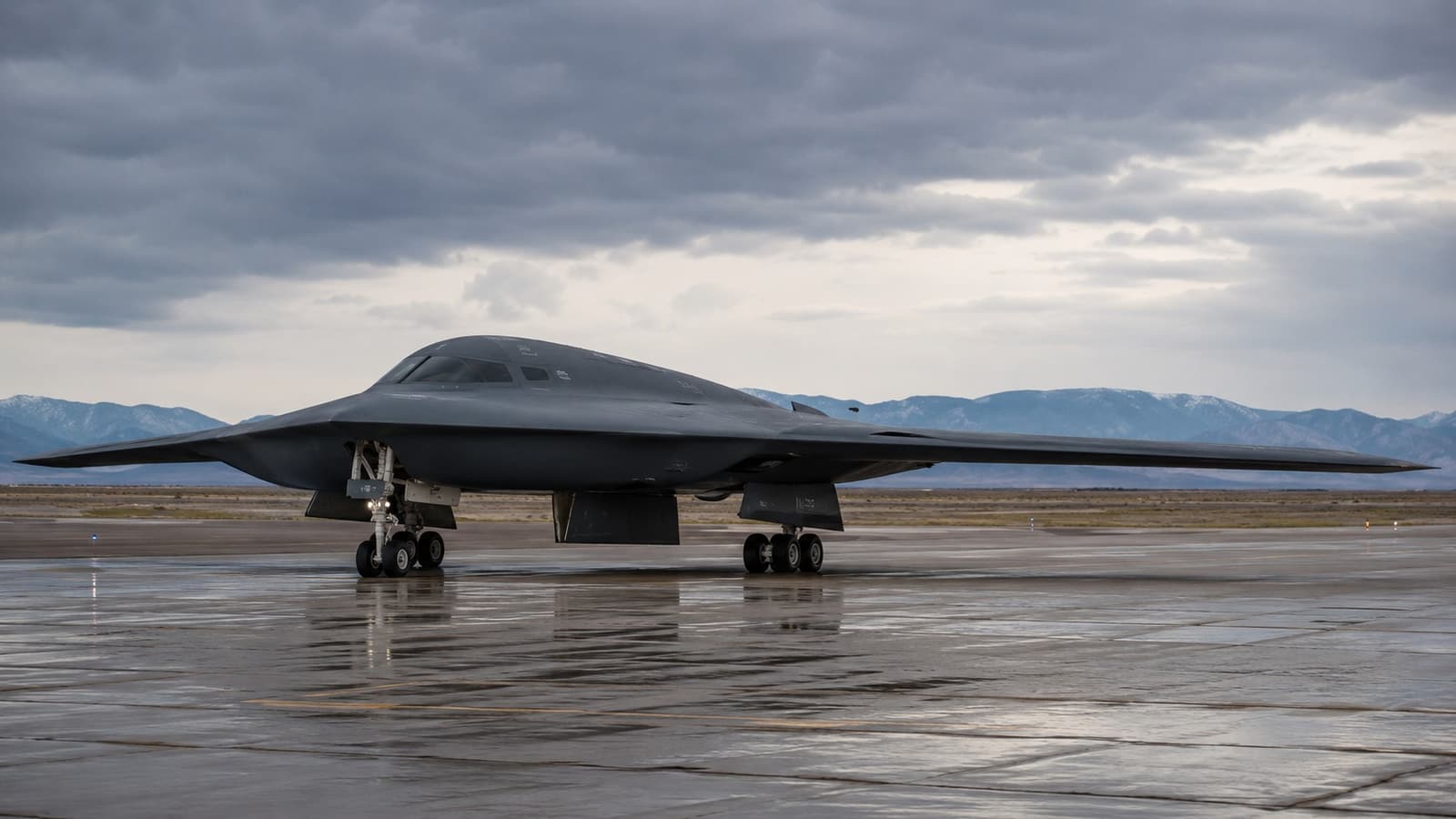
Let''s be fair to the quarter first, because the strength was real. Revenue climbed 5% to $10.88 billion, and the best part of the story came from Aeronautics Systems, which grew 13% to $3.52 billion. The drivers were the B-21 stealth bomber, classified programs and a $106 million ramp in the new E-130J TACAMO aircraft. Operating income in the unit rose 13% too, holding the margin steady at 10.3%.
Do not skip past that flat margin. The B-21 haunted this stock for two years after charges tied to pandemic-era inflation and early production stumbles. This quarter, the bomber delivered real growth with no new charge and no margin erosion. The program is starting to pay rather than merely promise. It is not out of the woods. Chief Executive Kathy Warden told a Bernstein conference this spring that speeding up production means roughly $2.5 billion in extra investment. But a ramp that adds volume without diluting returns is exactly what recovery from a troubled fixed-price contract looks like.
The order book was just as emphatic. Sentinel, the new intercontinental missile, brought in $7.6 billion. Classified programs added $4.3 billion. The F-35 contributed $1 billion, and the Glide Phase Interceptor $800 million. These are the programs Washington funds even in ugly budget years: nuclear deterrence, stealth, missile defense. Management lifted its sales outlook by $250 million, to between $43.75 billion and $44.25 billion, and Warden said the raise reflected "our confidence in our team and the demand for our technologies."
All true. All impressive. None of it was what Tuesday was about.
Follow the Earnings to the Tax Line
Northrop earned $7.68 a share against expectations of roughly $6.82, a beat of about 13%. Here is the uncomfortable part. The operating business did not generate that upside. The tax department did.
The company''s effective tax rate collapsed to 6.3% from 17.7% a year earlier, thanks to a remeasurement of old tax positions as talks with the IRS progressed. That alone saved $179 million. Pension income chipped in an extra $29 million. Gains on an investment sold during the quarter added $29 million more. A slightly smaller share count rounded out the help.
While all that was happening below the line, the core business went backward. Segment operating income fell 5%, a $61 million decline, on revenue that grew by $525 million. The segment margin shrank by 120 basis points to 10.6%. Per-share earnings were actually down 6% from a year ago, though last year''s figure included a $1.04 boost from selling the training business.
Now look at the guidance through that lens. Management raised its adjusted earnings forecast by $1.20 a share, to a range of $28.60 to $29.10, well above the roughly $27.97 Wall Street had penciled in. Sounds great. Except the forecast for segment operating income did not move from $4.85 billion to $5 billion. Neither did the free cash flow forecast of $3.1 billion to $3.5 billion. Higher sales, higher earnings per share, and not one additional dollar of expected operating profit or cash. The raise lives on the tax line. That was the single most revealing fact in the release.
Two Segments Keep Giving Profits Back
The margin damage was not spread evenly. It pooled in two places, and both involve the same uncomfortable theme.
Defense Systems grew sales 5%, or 7% once you strip out a divested training unit, on the strength of Sentinel and battle-command work. Yet operating income fell 38% to $156 million, and the margin dropped to 7.5% from 12.7%. Some of that is a harsh comparison, because last year''s quarter enjoyed a $76 million favorable adjustment on Sentinel. But this quarter brought its own bad news: a $68 million charge on the Stand-in Attack Weapon, a missile that Northrop now admits will cost more to develop and qualify than it thought.
Space Systems told the same story with different names. Sales rose 4% to $2.75 billion, but operating income fell 16% and the margin slid to 8.6% from 10.6%, courtesy of a $91 million charge on the GEM 63XL rocket motor. The projected cost to finish the program went up, so the profit came down. The company also nudged its full-year Space margin outlook lower, to about 10% from roughly 11%.
That is $159 million of unfavorable revisions in ninety days. Management would like investors to read these as investments in vital missile franchises, and there is something to that argument. But it deserves a hard look. Spending money to build a factory creates capacity you can sell from later. A cost revision on an existing contract means the profit you booked yesterday was too optimistic. The first is strategy. The second, if it keeps happening, is an estimating problem.
Mission Systems, to its credit, showed what the portfolio looks like when it works. Revenue rose 3%, operating income jumped 14% and margins expanded to 15.4%. The trouble is that this makes consolidated results a tug-of-war between segments having good quarters and segments having bad ones. That is not the profile that commands a premium valuation.
A Stock That Ran Out of Patience
Here is why the punishment was so severe. Northrop did not walk into this report priced for perfection. The shares were already down about 8% for the year while the broader market rose, and they sat roughly a third below their March record high. This was a stock full of holders waiting, with dwindling patience, for proof that the charge cycle was over. They got two new charges and an operating forecast that refused to budge.
The cash picture carried the same asterisk as earnings. Free cash flow rose 54% to $978 million, but mostly because cash taxes fell. Halfway through the year, the company has still burned $845 million, which is normal seasonality for Northrop but hardly a conversion breakthrough. Capital spending jumped 31%, and Warden has signaled it will run near 4.5% of revenue through 2028 as bomber and munitions capacity gets built.
The strange part is that Wall Street still likes the stock. Most covering analysts rate it at buy or better, none say sell, and the average price target sits far above where the shares trade. That gap between conviction and price is the whole debate in one number.
A year ago, Northrop''s job was to prove the demand existed. The backlog has settled that beyond argument. The job now is harder and less glamorous: close a quarter without a nine-figure surprise, and let the operating profit forecast rise alongside the sales forecast. The bulls say today''s charges are tuition for tomorrow''s production margins on Sentinel, SiAW and the B-21. The bears say fixed-price work keeps repricing against the company, and they have $159 million of fresh evidence. Until the profit line starts confirming the order book, the market will keep doing what it did Tuesday: admiring the backlog, and refusing to pay for it.