NiSource signed a 20-year agreement to serve a Microsoft data-center campus with about 1,100 megawatts of new capacity and raised its estimate of savings for existing customers to $1.75 billion. The financial terms wait for Oct. 28.
Utilities have spent the past year trying to answer one question for regulators: who pays for the power plants that data centers need? NiSource's answer on Friday was Microsoft.
The Indiana utility holding company said before the open that it signed a long-term energy agreement with Microsoft for the software company's previously announced campus in northwest Indiana. Microsoft is expected to begin taking electric service in 2028 under a 20-year term. NiSource's generation subsidiary, known as GenCo, will add about 1,100 megawatts to the pool of capacity it builds for large customers, and "Microsoft fully funds all generation and transmission required to serve its load," the company said.
NiSource raised its estimate of savings for existing customers of its Indiana utility to about $1.75 billion, from a previously disclosed $1.4 billion, or as much as $140 per customer a year. The increase of about $350 million is attributable to this agreement, by this publication's arithmetic.
"Microsoft has always been committed to paying our own way," said Jeff Riles of Microsoft.
What was disclosed
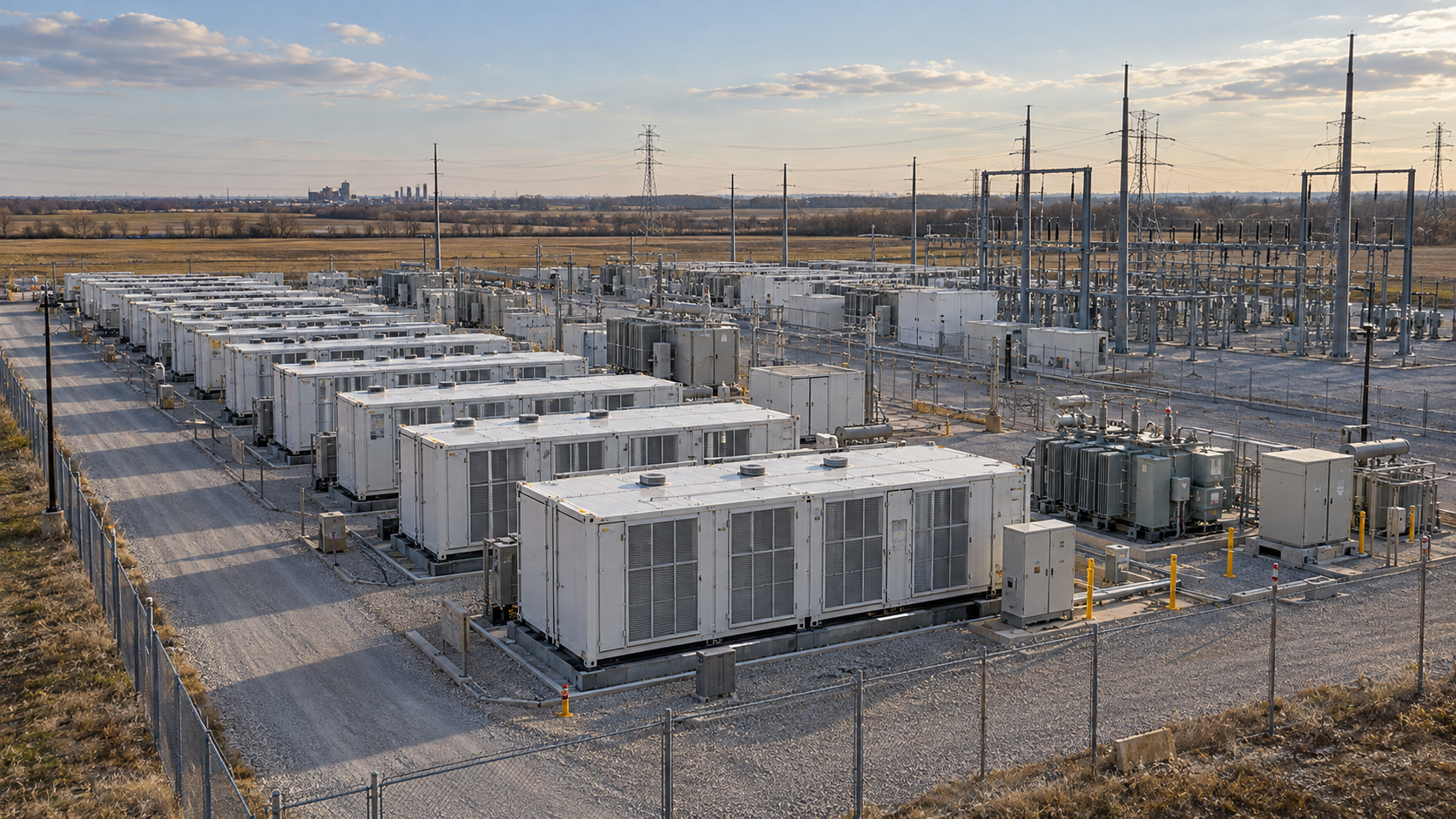
The only contract NiSource described in a securities filing is not with Microsoft. An 8-K disclosed that GenCo signed a tolling agreement for a 600-megawatt, 2,400-megawatt-hour battery storage system with an affiliate of AGP Group, entered into in connection with the Microsoft agreement. Over a term of about 20 and a half years, starting when the first phase begins operating, expected by Dec. 1, 2027, storage payments are expected to total about $2.2 billion. That is roughly $107 million a year on average. GenCo supplies the charging power and keeps the capacity, energy and other revenue.
NiSource expects to account for the agreement as a finance lease, which puts the obligation on its balance sheet. The contract takes effect only if AGP completes its construction and grid-connection agreements by Jan. 31, 2027.
Scale
The 1,100 megawatts would be a large addition to GenCo's shared pool for large customers, which NiSource said in April was expected to total about 340 megawatts after an agreement with an Alphabet subsidiary. It is smaller than the roughly 3 gigawatts of gas and battery capacity GenCo plans to build for Amazon under an arrangement announced last year.
What NiSource has not said is how much it will earn. Revenue, capital spending, rate-base and earnings effects will be shared on the third-quarter call on Oct. 28, the company said, and the agreement requires regulatory approvals.
The stock
NiSource traded at $42.56 in early afternoon, up 3.2%. Utilities rose broadly in a defensive session: the sector ETF gained about 1.3%, CMS Energy 2.5% and American Electric Power 1.9%. NiSource's outperformance relative to the sector was about 2 points, and less than a point against its closest Midwestern peer.
Market implications
One reading is that GenCo has found a scalable model. A creditworthy customer funds the generation and transmission it needs, existing customers save more rather than less, and a 20-year term gives NiSource a long runway of contracted growth.
A second reading is that the obligations come first and the economics later. The disclosed commitment is a $2.2 billion lease that GenCo pays regardless of how much large-customer load arrives, approvals are still required, and consumer advocates criticized GenCo's exemption from standard Indiana commission procedures last year. Until Oct. 28, investors are valuing a structure, not a profit stream.
What to watch
The Oct. 28 earnings call, any filings with Indiana regulators on the Microsoft agreement, and the Jan. 31, 2027, deadline for the battery project's construction and interconnection contracts. If NiSource holds its gain as the sector rally fades, investors will have credited the agreement itself.