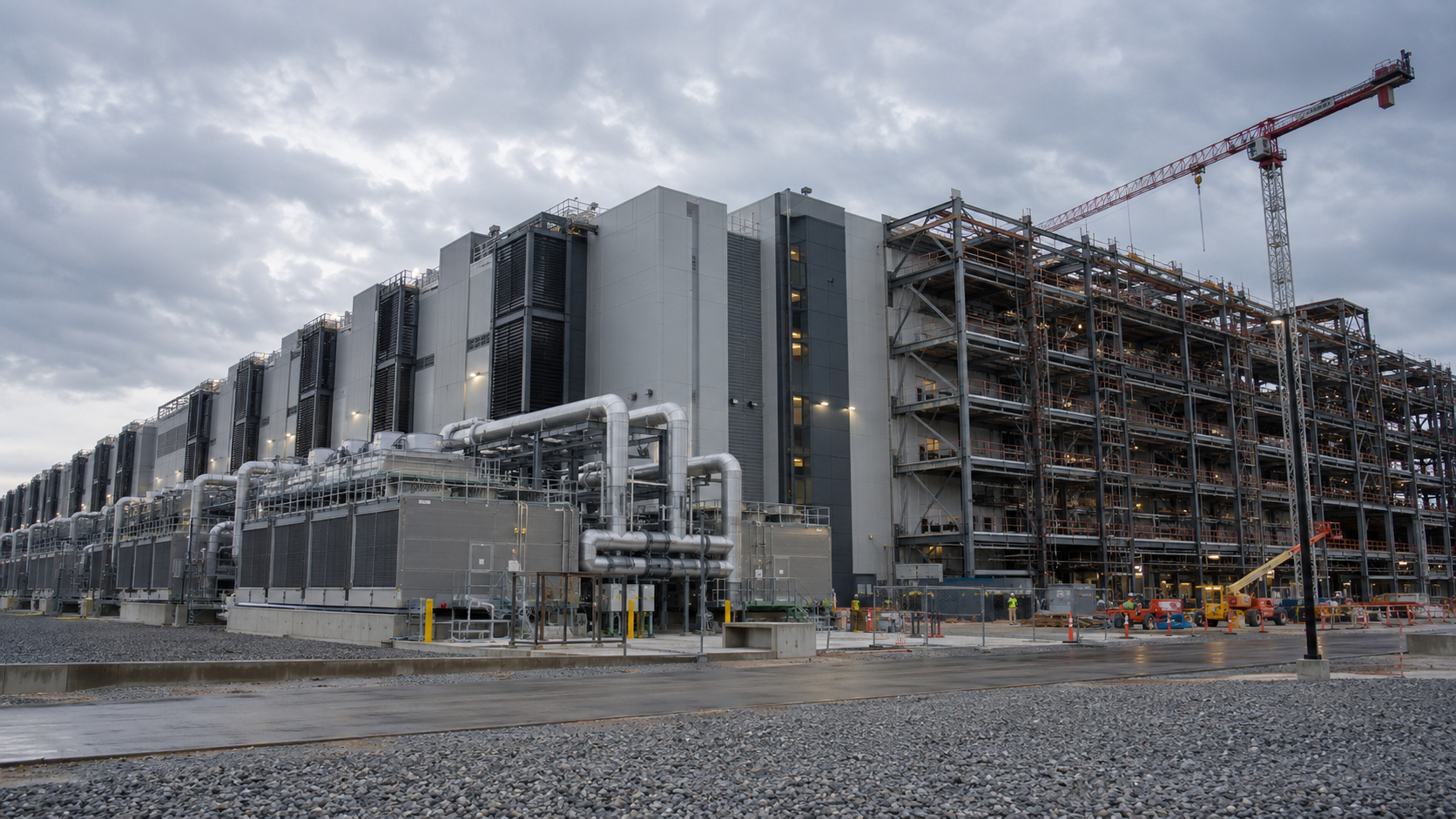
Microsoft and Alphabet report hours after the Fed decides on Oct. 28, and Amazon follows a day later. Amazon's chief executive has already said AWS capacity for 2027 is "largely sold out," which shifts the question from demand to what the build-out costs.
The biggest week of the earnings season arrives with the AI trade under more pressure than at any point since summer.
The Nasdaq Composite closed on Friday at 25,955.34, its lowest close since Aug. 3, and lost 0.7% for the week after Thursday's rout in technology stocks. More than 540 companies worth at least $2 billion each are scheduled to report next week, with Thursday the busiest day.
The schedule
Microsoft and Alphabet are scheduled to report after the close on Wednesday, Oct. 28, the same afternoon the Federal Reserve announces its rate decision. Amazon reports on Thursday evening, Oct. 29. Intel reports after the close on Thursday, and SK Hynix and Samsung Electronics report on Wednesday and Thursday.
The stocks went into the weekend mixed. Microsoft rose 0.7% on Friday, while Alphabet fell 1.2%, Amazon 1.0% to $248.00 and Nvidia 0.6%. Intel gained 1.7%.
Demand is not the question Amazon is answering
Amazon's chief executive, Andy Jassy, offered an unusually direct preview on a podcast released this week. "2027 is largely sold out," he said of Amazon Web Services' computing capacity. "We always leave a certain amount for on demand and our inference service Bedrock, or EC2, but largely sold out all the big chunks. A good chunk of 2028 is sold out." He added that Amazon could invest a lot more and "it wouldn't be a bad use of capital."
If capacity two years out is already committed, the main uncertainty for investors is not whether customers want AI computing. It is how much the companies must spend to supply it, how they finance that spending, and when the returns arrive.
Why the backdrop matters
That question has become more pressing this week. Global corporate bond spreads reached their widest since May 2025, default-swap prices for some AI-linked borrowers hit records, and SK Hynix shelved a planned listing for its Solidigm storage unit that was meant to help fund a U.S. factory.
The largest cloud companies can pay for much of their spending from cash flow, but their suppliers and partners often borrow. Any change in the scale or pace of capital spending from Microsoft, Alphabet and Amazon will ripple through chips, power and data-center construction.
Two ways the week could go
The bullish case is that sold-out capacity and rising spending plans will confirm that demand for AI computing remains well ahead of supply, and that Thursday's sell-off overstated the risks.
The cautious case is that investors have shifted from rewarding spending to questioning it. Higher capital-spending forecasts could be read as a burden rather than a signal of strength, particularly with borrowing costs rising and the Fed weighing another rate increase.
What to watch
Capital-spending guidance and cloud growth rates from all three companies, any comment on financing and power constraints, and how the Fed's decision on the same afternoon shapes the reaction to Microsoft's and Alphabet's results.