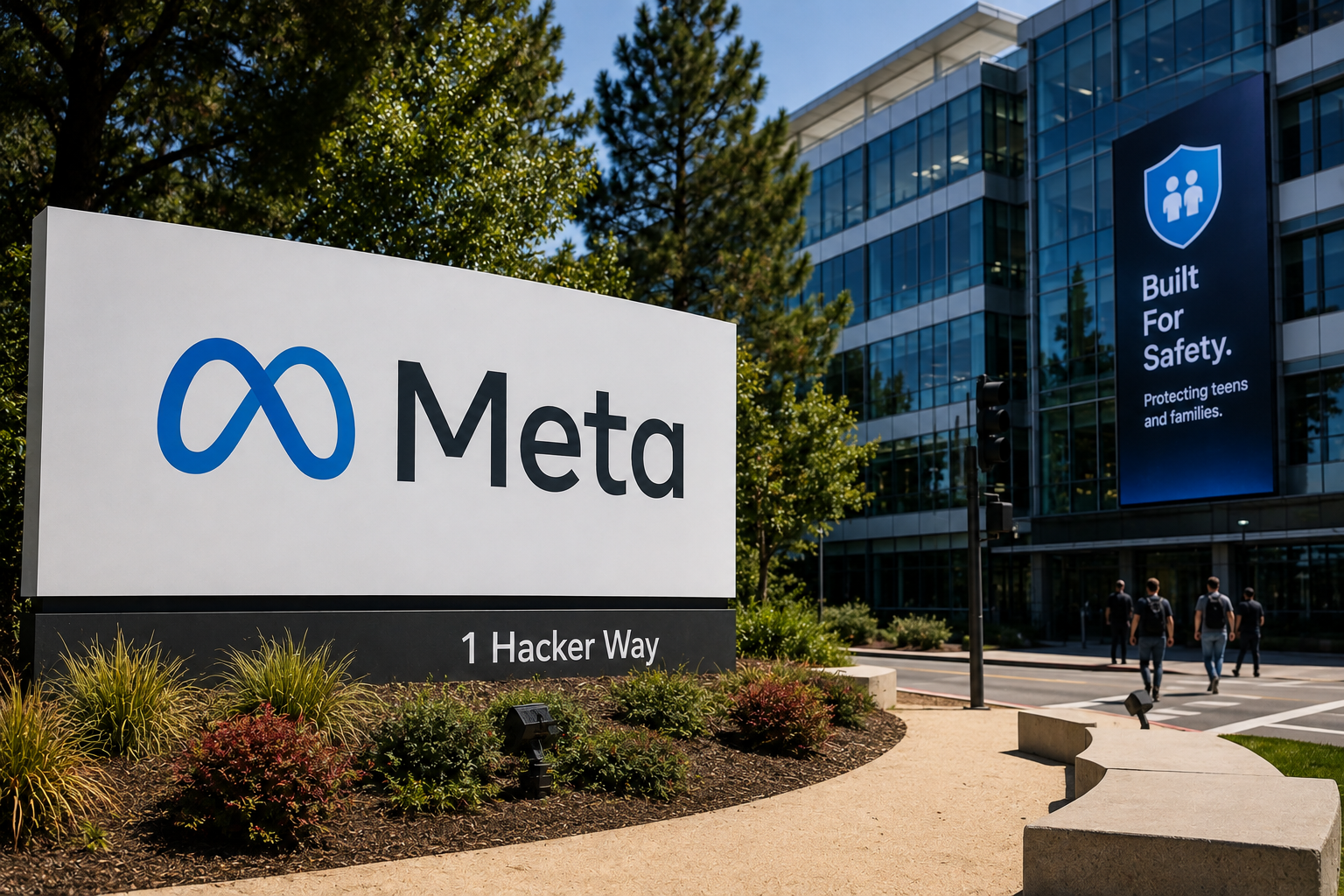
Meta and a coalition of state attorneys general settled multistate litigation over how Facebook and Instagram were built for minors. The stock opened sharply higher, briefly dipped below its prior close, and closed with a modest gain.
Meta Platforms agreed to a settlement resolving multistate litigation alleging Facebook and Instagram were designed to be addictive to minors, misled the public about platform safety, and improperly collected children's data. The agreement, reached with a coalition of 51 states and territories, ends a federal trial that had just begun in Oakland with 29 states as plaintiffs.
The settlement carries a two part structure. Meta will pay at least $12.1 billion guaranteed, plus up to $5 billion contingent on other platforms adopting comparable safety measures, for a ceiling of up to $17.1 billion over ten years. It is not yet final. The agreement is a proposed consent judgment awaiting court approval, and neither Meta nor the states' releases contain an admission of wrongdoing.
Meta committed to a set of product changes for users under 18. These include a default two hour daily time limit that can be reduced to one hour, a midnight to 6 a.m. usage block, notification blocks during school hours and from 10 p.m. to 7 a.m., removal of visible like and reaction counts, a ban on cosmetic procedure filters, an option for a non algorithmic feed, expanded parental controls, stronger age verification, and oversight from an independent auditor. Meta also called on other platforms, including YouTube, to adopt similar measures, a step that would trigger the settlement's contingent $5 billion tranche.
Shares opened up as much as 3.6% Wednesday, then reversed within minutes to briefly trade below Tuesday's close, before recovering through the session to finish near a 1.2% gain. That net move sits against a roughly flat sector and broader market. It is a real but modest result, not the outsized relief rally a settlement this size might otherwise produce.
The measured reaction has a basis in Meta's own numbers. The $17.1 billion ceiling equals roughly 1.2% of Meta's market capitalization, and the $12.1 billion guaranteed floor equals roughly 0.8%. Spread over ten years, the settlement costs Meta an average of about $1.7 billion a year, under 6% of a single quarter's operating cash flow. At that scale, the payment itself was always going to be a small line item for a company Meta's size.
The settlement does not touch a larger, separate legal track still facing the company. Roughly 1,200 school district lawsuits allege similar harms, with estimated aggregate exposure running close to $400 billion if the claims succeed at scale. Today's agreement resolves the states' claims and leaves the school district lawsuits entirely open. That unresolved exposure, several orders of magnitude larger than what was just settled, is a more plausible explanation for the stock's muted follow through than any specific term of the deal itself.
State officials have called this the largest child safety settlement a technology company has reached. Court approval of the consent judgment, and any move by YouTube or other platforms toward the safety standards Meta adopted, will determine what this settlement is ultimately worth.