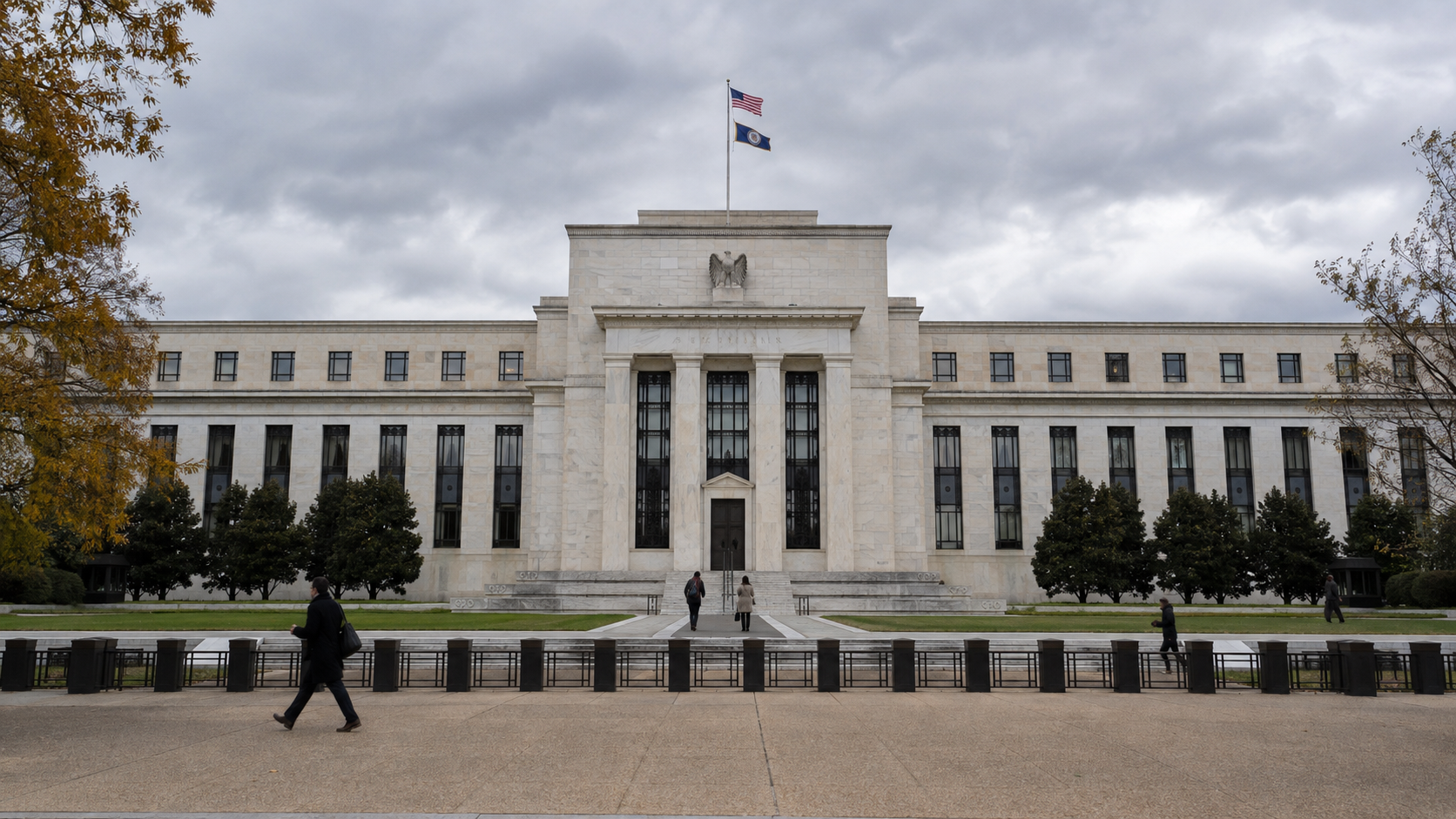
Futures and prediction markets both price roughly two-in-three odds that policymakers raise rates on October 28.
Investors are increasingly positioned for the Federal Reserve to raise interest rates at its October 27-28 meeting, a shift that would mark a return to tightening after a year in which much of Wall Street had hoped for relief.
Fed funds futures imply roughly a 67% chance of a hike at the October meeting. Prediction markets tell a nearly identical story: Polymarket's contract on the October decision prices a 25 basis point increase at 68%, with close to $12 million traded. When two very different sets of traders, one hedging institutional rate exposure and one betting on the outcome directly, converge on the same number, the signal is harder to dismiss.
How the market got here
The repricing gathered pace earlier this week after a hot inflation reading and hawkish remarks from Fed Governor Michael Barr. Those catalysts landed on a backdrop that was already unfriendly: oil prices remain elevated and economic data have stayed resilient, leaving little room for the argument that policy is restrictive enough.
The bond market has absorbed the shift. The 10-year Treasury yield is holding at 5.16%, close to its highest level since 2007, and short-dated yields have climbed alongside it as traders price out easing.
Reading the odds
A 67% probability is not a done deal. It means the market sees a one-in-three chance that the Fed holds, which leaves substantial room for a repricing in either direction over the next month. That makes the data calendar between now and October 28 unusually important.
A useful way to track the debate is to watch whether the futures-implied probability and the prediction market price stay together. If they diverge by more than a few points, it would suggest one group of traders is reacting to information the other is discounting. So far they have moved in lockstep.
What would change the call
A softer inflation print or a sudden cooling in the labor market would quickly pull the odds back toward a hold. On the other side, another hot reading or a further climb in energy prices could push the probability toward certainty and force a broader reset in risk assets.
For now, the market's message is plain. The debate over when the Fed cuts has been replaced by a debate over whether it hikes, and the market is leaning toward yes.