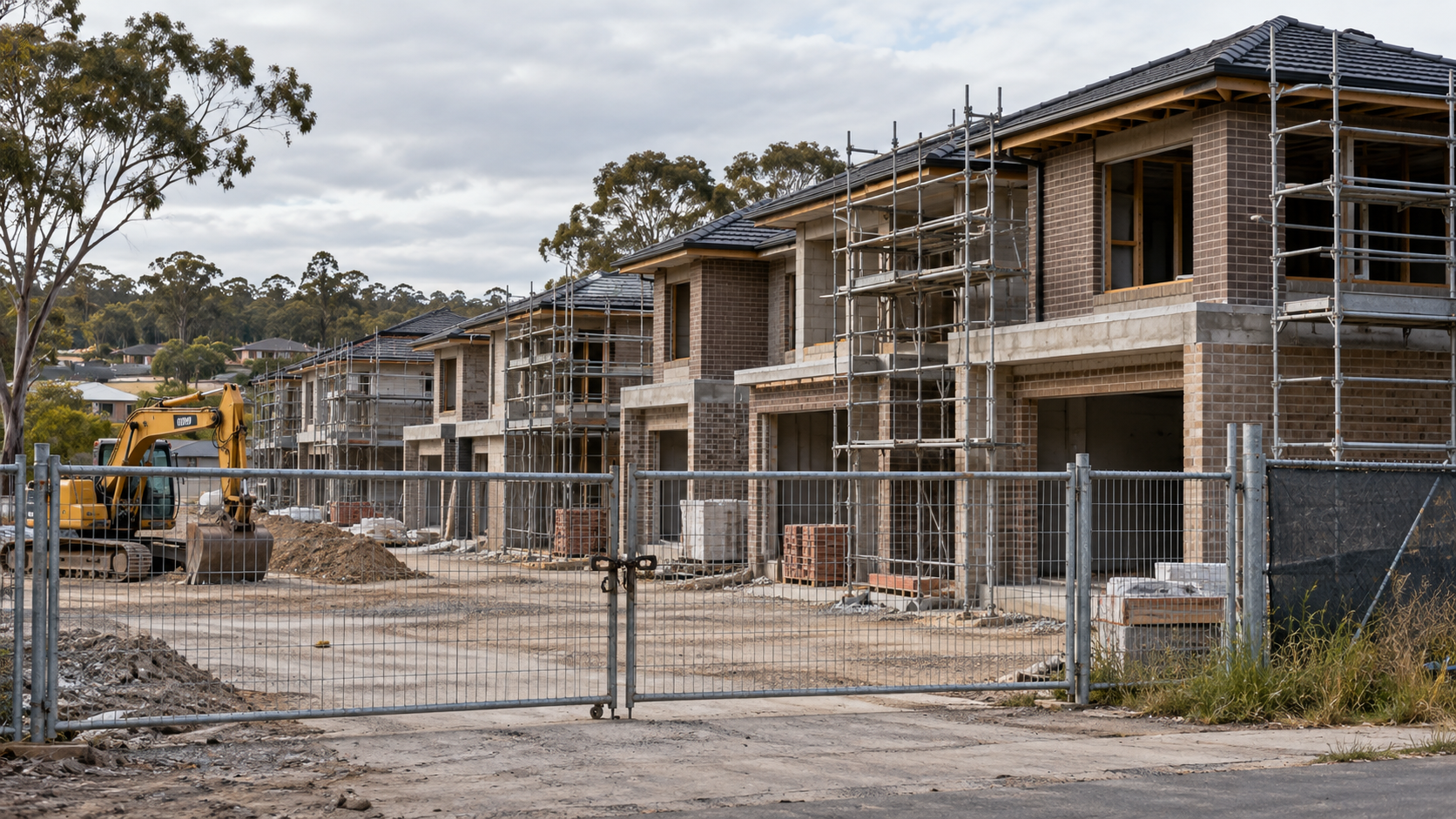
The Australian manager suspended all applications and redemptions in the MA Secured Loan Series, citing a weakening residential property market that is slowing loan repayments. Real estate credit is about 15% of its A$15.7 billion of assets under management.
Australia's retail private credit stress has moved from limits to a freeze.
MA Financial Group said in its third-quarter update on Wednesday, Sydney time, that its MA Secured Loan Series, a real estate credit fund, will temporarily suspend all applications and redemptions. In August, the fund had limited withdrawals to 1% of its assets per month. The suspension is reported to run until at least March 31, 2027, about five months.
The company cited deteriorating conditions in the residential real estate market, which are lengthening the time it takes to sell assets and refinance maturing loans, and "less certain repayment timings from some borrowers." Distributions are expected to continue monthly.
The size of the problem
The affected business is a minority of the firm. MA Financial reported group assets under management of A$15.7 billion, up 18% from a year earlier. Real estate private credit accounts for about 15% of that, or roughly A$2.4 billion, and what the joint chief executives called "significantly less" of earnings. About A$2.3 billion of property-related lending funds are reported to be affected by the halt, and an A$100 million retail fund that invests in the Secured Loan Series is reported to be winding up.
The rest of the credit book looks different. Asset-backed and direct corporate lending funds make up about 70% of the firm's private credit assets, and less than 0.05% of those assets are 90 or more days in arrears or in default, the company said.
The flows behind it
At group level, money was still coming in. Net flows into MA Financial's unlisted funds were a positive A$245 million in the quarter, down 14% from a year earlier, and gross flows rose 11%. The pressure was in private credit, where outflows "remained elevated," the company said. That combination suggests investors are moving money within the manager's range rather than abandoning it.
The suspension also follows a warning this week from Ares that Australia's A$200 billion private credit market faces further stress.
Why a freeze is different
Semi-liquid private credit funds sold to wealthy individuals usually manage withdrawals with caps, such as the 5% quarterly limits common in U.S. non-traded business development companies. A full suspension is the step beyond that. Investors cannot leave at any price until the manager reopens the fund.
The structures are not identical across markets, so the Australian case does not translate directly to U.S. vehicles. But the sequence, from a monthly cap to a freeze within two months, shows how quickly liquidity terms can tighten when the underlying loans take longer to repay.
Market implications
One reading is that the problem is contained to property. MA Financial's corporate and asset-backed books are performing, real estate is a small share of earnings, and the freeze protects remaining investors from a run on illiquid loans.
A second reading is that it is a warning for semi-liquid credit products everywhere. Retail investors were sold periodic liquidity on loans that cannot be sold quickly, and when repayments slow, that promise is the first thing to give.
What to watch
Updates on the wind-up of the A$100 million fund; any loan-level impairments or changes in fund valuations; similar actions by other Australian managers; redemption requests at U.S. non-traded credit funds; and Blue Owl's results on Oct. 29. A second Australian manager suspending redemptions would show the stress is spreading beyond one firm.