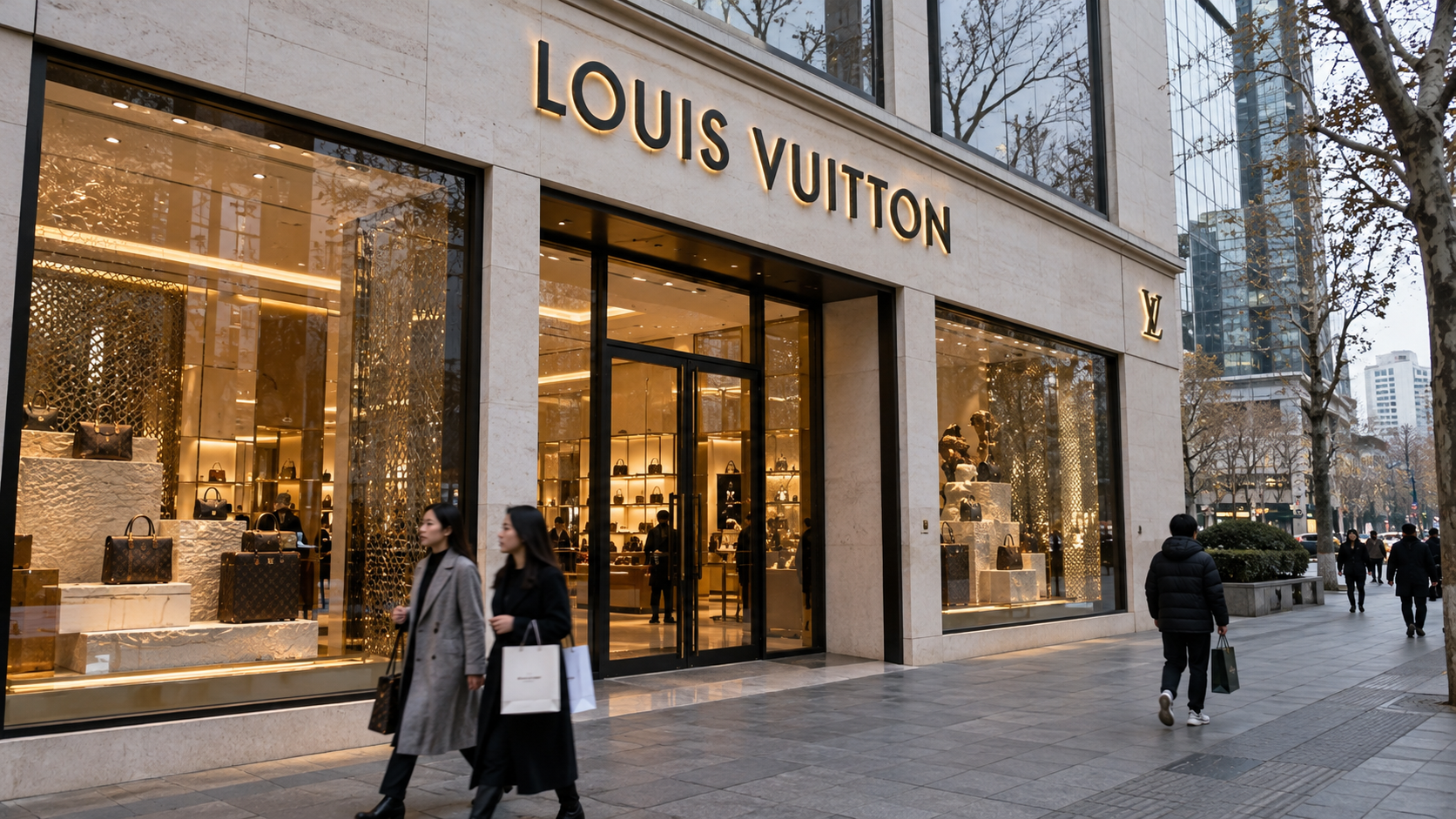
The Louis Vuitton and Dior division's sales fell 5% on an organic basis and about 3% as reported, missing forecasts by about 1.7%, with the company pointing to China. Group sales still grew 1% on an organic basis, unchanged from the same quarter of 2025.
In late July, LVMH said its biggest business had returned to growth. Monday's sales report showed it slipping again.
At its first-half results, LVMH said fashion and leather goods, the division led by Louis Vuitton and Dior, had returned to organic growth in the second quarter, with first-half revenue of €18.15 billion. Bernard Arnault, the chairman and chief executive, said "accelerating growth in the second quarter" came in particular from Jonathan Anderson's first designs for Dior, Louis Vuitton's new stores in Beijing and Seoul, and Tiffany and Bvlgari's jewelry lines.
For July through September, the division brought in €8.25 billion, about $9.2 billion. Sales fell 5% on an organic basis, which excludes currency and acquisition effects, and about 3% as reported. They came in about 1.7% short of the €8.39 billion analysts had expected.
Against last year
Third-quarter sales are seasonally below the first-half average, so the clearer signal is the year-over-year decline. In the third quarter of last year the division's organic sales fell 2%, an improvement from the quarter before. This year's decline is larger, and it follows a return to growth in the spring.
Where growth came from
Across all of LVMH's businesses, sales rose 1% on an organic basis, which removes currency effects and acquisitions. That is the same rate as a year ago. Watches and jewelry and wines and spirits each grew about 6% organically, and selective retailing about 8%, making up for fashion.
China
LVMH attributed the fashion shortfall to a slowdown in demand in China, and its finance chief cited "a sharp macro-led deterioration in Chinese consumer sentiment." Another European company exposed to China, Volkswagen, reported on the same day that its third-quarter deliveries there fell 38.5%.
RBC Capital Markets analysts wrote: "Overall, these results confirm a stalling in already fragile recovery momentum from earlier in the year." LVMH's stock has lost roughly two-fifths of its value in 2026. The sales figures were released after the Paris market closed.
Market implications
One reading is that the spring improvement depended on a few brand launches, and that without a pickup in Chinese demand the division will keep contracting into 2027.
A second reading is that the decline reflects a cyclical dip in Chinese sentiment that could reverse if conditions improve, and that growth in the group's other divisions shows its customers have not gone away.
What to watch
Any comment from LVMH on Chinese demand in the current quarter will show whether the slowdown is deepening or easing. Results from other European luxury groups over the coming weeks will show whether the weakness is LVMH's or the sector's, and fourth-quarter sales in January will show whether the fashion division returns to growth.