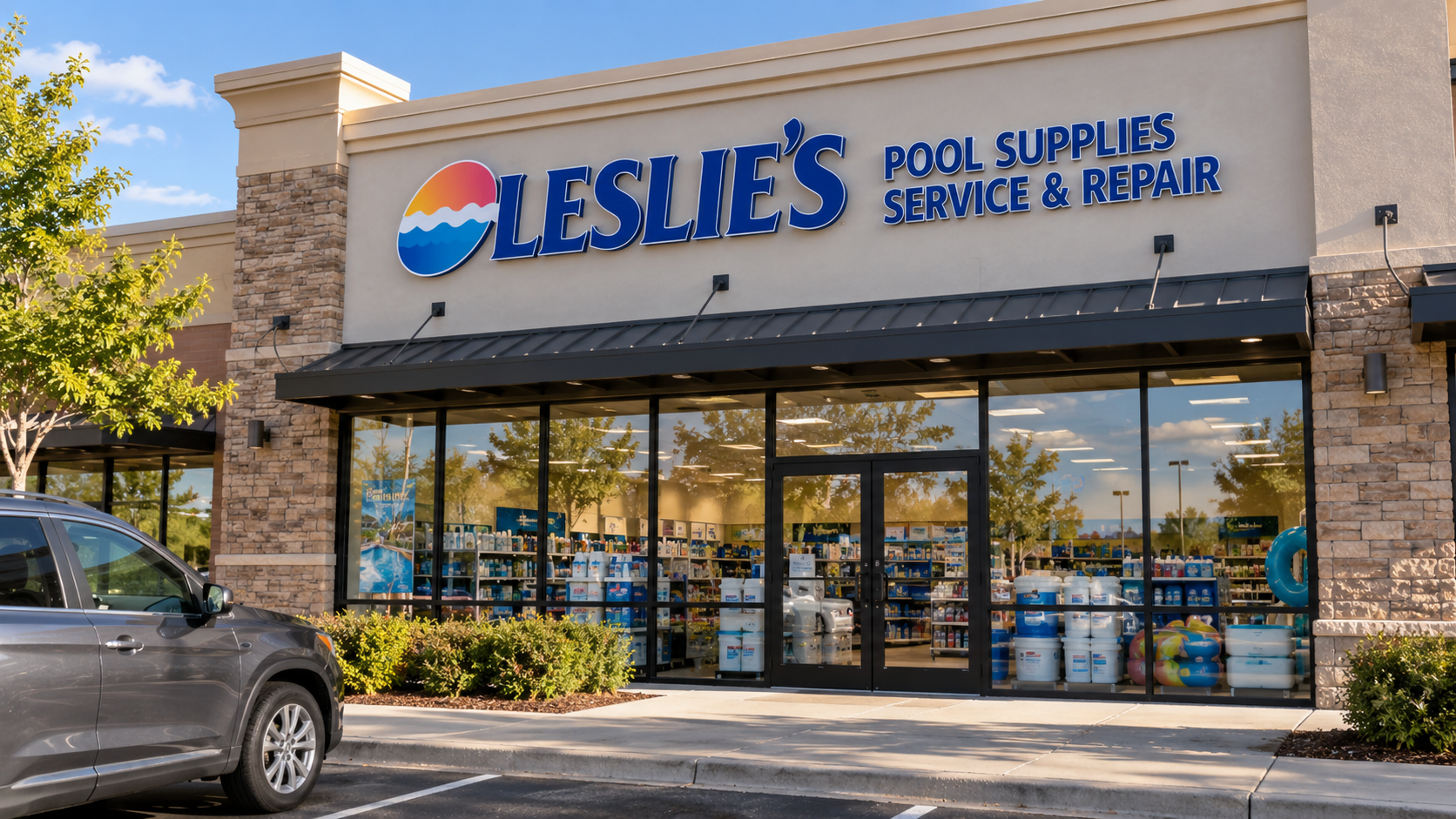
The pool-supply retailer filed a prearranged Chapter 11 that erases about $685 million of funded debt and leaves creditors owning most of the company.
Leslie's, the pool-supply retailer, is about to change owners. Its lenders are taking over.
The company filed a voluntary, prearranged Chapter 11 case in the U.S. Bankruptcy Court for the Southern District of Texas on Wednesday. Under a restructuring support agreement backed by more than 80% of its lenders, Leslie's will cut about $685 million of funded debt, roughly 90% of the total. When it emerges, targeted for early 2027, it expects to be majority-owned by a group of its existing lenders.
The financing package
Leslie's is raising $150 million of new capital, made up of a $90 million new-money debtor-in-possession loan and $60 million of equity financing, both fully backstopped by certain parties to the support agreement. Existing asset-based lenders are separately providing a fully committed $225 million debtor-in-possession asset-based facility to fund operations through the case. The company also plans to close 76 stores.
Reading the math
The numbers tell a familiar story about how lender-led restructurings work. If $685 million is about 90% of funded debt, Leslie's entered bankruptcy with roughly $760 million of it and will leave with something close to $75 million, plus its new financing. The lenders are not being paid back in cash. They are converting most of their claims into ownership, betting that a deleveraged Leslie's is worth more than the debt they are surrendering.
The $60 million of new equity, against $685 million of debt eliminated, shows how much of the value is being reset rather than repaid. For every dollar of new equity going in, more than $11 of debt is going away.
Lender-to-own as the 2026 template
Leslie's joins a run of consumer-retail restructurings this year in which creditors, rather than a new buyer or the old owners, end up in control. The structure appeals to lenders who would rather own a viable business than take steep losses in a liquidation, and it lets companies shed debt quickly through a prearranged plan.
The model shifts risk. Lenders become equity holders exposed to the same retail headwinds that drove the company into court, from weaker discretionary spending to higher borrowing costs. The bet works only if the operating business, smaller after 76 closures, can generate enough cash to justify the conversion.
What to watch
The first-day hearings will set the terms on which Leslie's operates during the case, including approval of the debtor-in-possession financing. Emergence in early 2027 is the endpoint. The identity of the lenders who will control the company, and whether they include private-credit funds, will indicate who now owns the downside of the pool-supply business.