
Lenders told Nvidia they'll underwrite its chips over three to four years, not a decade. Broadcom agreed to lend Anthropic up to $42 billion. Paramount's new bonds broke issue price within a day. Mortgage rates posted their largest weekly rise in four years.
The 10-Year Hit a New 24-Year High and Then Pulled Back. Stocks Fell Anyway.
The 10-year Treasury spiked to 5.338 percent intraday, a new 24-year high, then retreated sharply. That kind of swing in a single session is the bond market working out contradictions, not resolving them.
Stocks fell. The Dow and Nasdaq both ended lower. The Russell 2000 edged up.
Accenture (ACN) jumped sharply after saying AI was driving more client work, including expanded engagements with FedEx and BP. Micron (MU) edged lower despite Wednesday's blowout beat. Alphabet (GOOGL) gained on Gemini 4 Argon. KBW Bank Index fell again.
BofA's sell-side indicator rose to its highest level since March 2022, the month the Fed started hiking. It is a contrarian signal, and it is close to ringing.
Trump told Time magazine that inflation could pay down the national debt, and accused Fed officials of "Trump derangement syndrome" while sparing Warsh. Friday's jobs report is the next input on everything.
Investor Signal
The intraday spike-and-retreat in the 10-year is the session's most important signal. The yield moved enough to rattle bond buyers, then pulled back enough to close lower than the high. That is not a calm market finding its level. It is a volatile market with thin liquidity on both sides. A jobs number that surprises Friday would test whether the pullback holds.
Buy This $5 Stock Before Elon Musk Does
Rumors are spreading quickly...
Elon is gearing up to buy a tiny, publicly traded company.
Why? Because it holds the exclusive rights to a $16 trillion MOTHERLODE of the exact materials his empire runs on... rare metals like cobalt, manganese and lithium.
On January 1st, a new Pentagon rule cuts off his Chinese supply.
Today, it's a $5 stock... but once Elon makes his move, it could soar to $50 within 6 months.
Nvidia Says Its Chips Last a Decade. Lenders Are Underwriting Three to Four Years.
Nvidia's (NVDA) $500 billion financing plan with Blackstone, Apollo, and KKR proposed using chips as collateral with limited guarantees.
Some deals carried as little as a 25 percent residual-value backstop. Banks and asset managers have pushed back.
The gap is how long the hardware is useful. Nvidia's Jensen Huang has said GPUs earn revenue for up to a decade. Lenders disagree. Impax's Tony Trzcinka put the market standard at three to four years. Aircraft finance works because resale values have decades of history. GPUs don't have that, and until they do, lenders want something more than the chips.
Three banking sources said Nvidia may need to guarantee all its deals outright, or have them backed by an investment-grade customer's contract. CoreWeave's $8.5 billion GPU loan is highly rated largely because Meta is on the hook for payments. One source said early deals already layer chips, customer contracts, and Nvidia's own guarantee together.
What the Guarantor Debate Settles
If lenders insist on full guarantees, the exposure concentrates back on Nvidia's balance sheet. If they require investment-grade tenants, the buildout slows to however fast those tenants can sign contracts. Either way, the original plan assumed leverage that the market hasn't priced.
Broadcom Agreed to Lend Anthropic Up to $42 Billion to Lease Its Own Chips.
Anthropic's IPO prospectus discloses that Broadcom (AVGO) agreed to lend it up to $42 billion in convertible notes.
The loan could cover roughly a third of Anthropic's $125.2 billion five-year computing commitment. Broadcom can designate a financing partner, and the debt can convert into Anthropic shares. Broadcom also backstopped more than 80 percent of a separate $35 billion financing for Anthropic's computing capacity.
Anthropic is expected to become Broadcom's largest compute customer by next year, which makes Broadcom its supplier, its landlord, its lender, and a potential shareholder all at once. Seaport's Jay Goldberg described the dynamic. Nvidia is committing a large part of its balance sheet, and Broadcom is having to follow suit.
Anthropic's filing warns of "potential conflicts of interest" over compute access. It also discloses that certain defaults could accelerate the full lease obligation while limiting access to the $42 billion facility.
Supplier, Lender, Future Shareholder
Where the Nvidia story is about lenders resisting exposure, the Broadcom story is about a supplier absorbing it because no one else would at scale. That makes Broadcom's largest customer also its biggest credit bet. The default clause in the final prospectus, which could simultaneously accelerate Anthropic's debt and freeze its access to the backstop, is the detail that should concern buyers of the IPO.
Porter Stansberry's Critical New Warning:
Trump Is Replacing The U.S. Dollar
"The last time America reset its money, it created 1,300 millionaires every day. This could be bigger."
Paramount's New Bonds Fell to 95 Cents the Day After Selling at Par.
Paramount sold $52 billion of bonds and loans Wednesday to fund its Warner Bros. Discovery buyout. The eight-year dollar junk notes, sold at 100 cents, were changing hands near 95 today. The cost of betting against Paramount's credit hit a 17-year high. Paper losses on the investment-grade notes alone topped $200 million.
The timing was largely forced. Litigation blocked the borrowing earlier, yields surged while the deal waited, and the company owed $7 million a day in late fees past September 30. The order book peaked at $109 billion and ended near $80 billion after Paramount cut yields. A large part of initial demand was price-sensitive rather than committed.
SpaceX's $25 billion June sale broke issue price in similar fashion, with similar order attrition. Two of the year's largest deals both failed to hold par within days of pricing.
Two for Two
Underwriters normally price deals to leave a small gain, because the next issuer depends on the previous one working. Breaking issue price twice in four months on the two biggest deals of the year tells you something about how much committed demand actually exists at these yields. The spread between peak demand and final orders is now a better read on true conviction than the headline coverage ratio.
Claims at 197,000 and Input Prices at a Four-Year High
The labor market is near 1969 levels of stability. Factory costs are not.
Initial jobless claims fell to 197,000, near levels last seen in 1969. Continuing claims dropped to their lowest since April 2023. Layoffs tracked by Challenger fell sharply in September and are down for the quarter.
The hiring side is less decisive. Announced hiring plans rose sharply from August but are down from a year ago and the lowest for any September since 2011. Challenger's read is that companies are in a wait-and-see period rather than actively building headcount.
ISM manufacturing held at 54.5 for its ninth consecutive month of expansion. The prices-paid gauge jumped to 77.9 from 71.1, with no commodity reporting a decline. Input respondents named fuel, tariffs, and the Middle East. Capital Economics' Thomas Ryan flagged the transmission risk. The longer energy-driven price pressure lasts, the greater the chance it feeds through to consumer prices.
Jobs Are Strong and Getting More Expensive to Keep
October hike odds sit around 37 percent, down from nearly 70 percent a week ago. Friday's jobs report, expected near 90,000, is what the market is actually waiting on. A beat would snap odds back up. A miss would confirm Williams' "no urgency" framing. Both outcomes are in the range of current forecasts, which is why the 10-year is oscillating.
Hidden in Tesla's Filing: A $12 Billion "Super Startup"
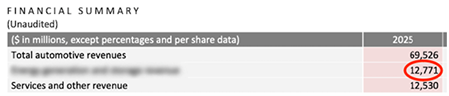
Pull up Tesla's most recent SEC filing. Page 5.
And you'll see a single line showing $12 billion in revenue from a brand-new "super startup" Elon Musk has been quietly incubating inside Tesla.
This new "super startup" has nothing to do with cars or robots or space or AI…
But it sits at the center of what Blackstone calls "a $23 trillion investment opportunity."
And on Oct 21st, Elon is expected to pull back the curtain and reveal exactly what he's building.
But Adam O'Dell already knows… and he reveals it all in this urgent video.
Fed Hike Odds Fell by Half. The Mortgage Rate Posted Its Largest Weekly Jump in Four Years.
7.03% to 7.28% in a week, and the Fed didn't move.
Freddie Mac's 30-year fixed rate rose to 7.28 percent from 7.03 percent the week before.
That is the largest one-week move in four years and the highest level since November 2023. Mortgage rates follow the 10-year Treasury, not the Fed's benchmark rate, so when the 10-year closed Wednesday at a 2002 high, the mortgage market moved with it regardless of what Williams said about urgency.
Bright MLS economist Lisa Sturtevant said demand is pulling back, sellers are offering more concessions, and pricing expectations are adjusting. She does not expect a crash because owners holding pandemic-era rates are unlikely to list at lower prices, keeping inventory from flooding the market.
Hike odds fell by half this week and the mortgage rate rose by the most in four years. The driver is the 10-year, not the Fed's next move.
Volume, Not Price, Takes the Hit
A market where sellers won't cut prices but buyers pull back resolves through fewer transactions, not sharply lower values. That puts pressure on businesses that depend on deal flow rather than price levels. Homebuilder backlogs, title company volumes, and mortgage origination are where this shows up before the median price does.
Lenders told Nvidia its chips last three to four years, not ten. Broadcom lent Anthropic $42 billion and may become a shareholder. Paramount's bonds fell to 95 the day after a $109 billion order book. Claims are near a 1969 low while factory costs are near a four-year high. And mortgage rates posted their largest weekly jump in four years without the Fed moving once.
The buildout's backers price their assets for a decade. The people being asked to fund it are pricing them shorter, and the chipmakers are covering the difference.
3 Market Signals Most Investors Aren't Watching
The headline is usually the last place the story shows up.
By the time everyone is talking about a stock… the signals underneath it may have been changing for weeks.
• Institutional money moves.
• Options activity changes.
• Management confidence shifts.
• Fundamentals improve, or quietly begin telling a different story.
That’s exactly what our analysts found in three stocks where the evidence stopped agreeing with itself.
And in all three cases, the story is still developing.