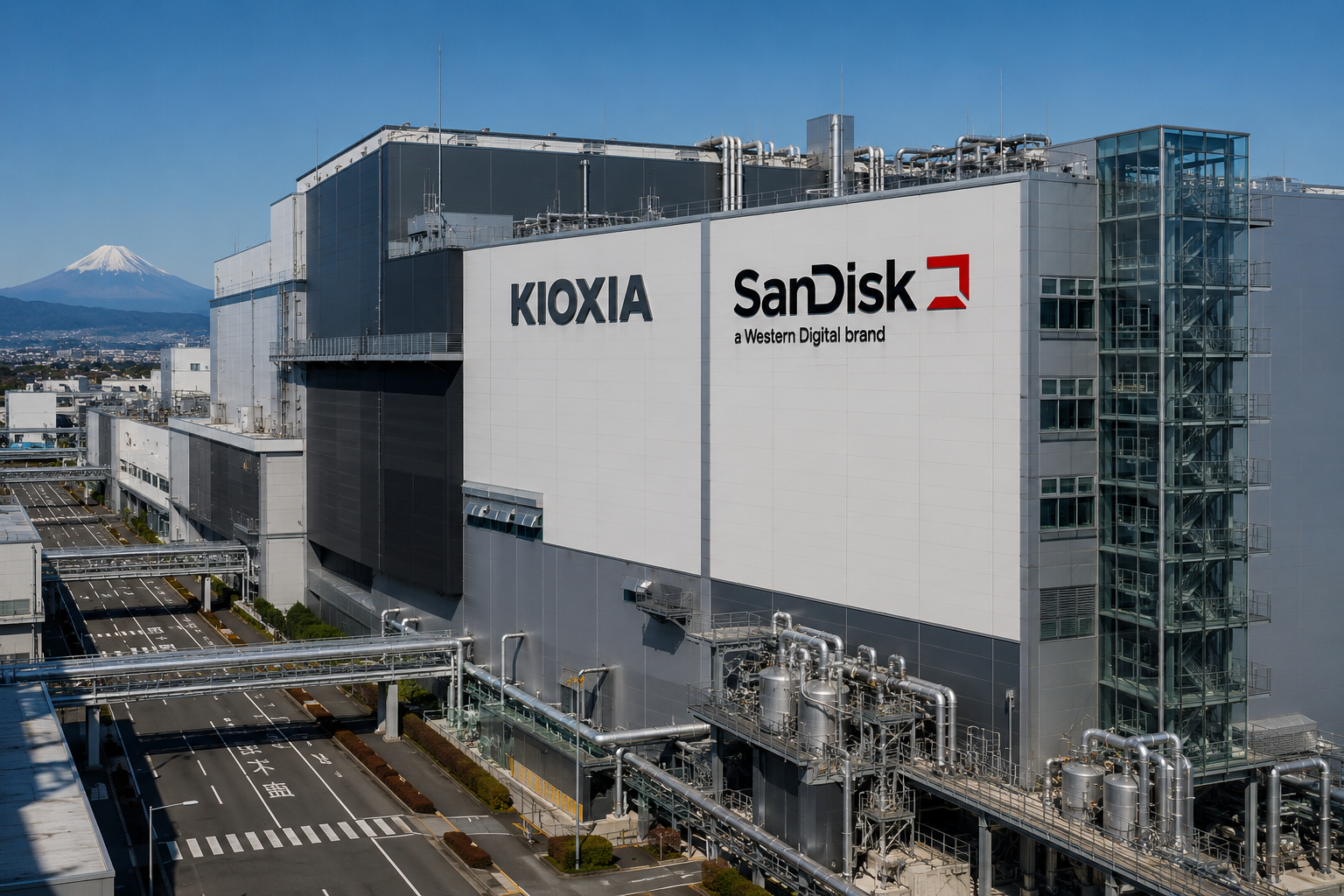
A six-year capacity commitment of this size is a genuine long-horizon supply signal for the memory-chip industry. The companies haven't disclosed how the cost splits between them or how it's financed.
Kioxia and SanDisk plan to invest more than $31 billion in memory-chip manufacturing capacity in Japan through 2032, according to a report published this week. The report doesn't disclose how the total splits between the two companies, nor does it identify the financing structure behind it.
A commitment on this scale, spread across roughly six years, is the kind of decision that shapes an industry's supply picture years before it shows up in quarterly output. Memory-chip capacity takes years to plan, permit and build; a number this large, attached to a named 2032 horizon, is a long-dated bet that demand for the capacity being built will still be there when it comes online, not a read on near-term pricing or volumes.
What isn't yet known limits how far that reading can go. Without the capex split, it isn't possible to say how much balance-sheet capacity either company individually is committing, or what it implies for each company's own capital-allocation priorities relative to shareholder returns. Without the financing source, it isn't possible to say whether this is funded from existing cash flow, new debt, government incentives, or some combination, each of which would carry a different read for credit investors specifically.
Both gaps are the natural next things to confirm, from either company's own investor communications or a more detailed follow-up report, before this figure becomes a company-specific investment view rather than an industry-level capacity data point.