
The riskiest corporate bonds crossed 1,000 basis points. Micron beat by $3 billion and guided $4.5 billion higher. A Fed president warned the buildout could be malinvestment. And the CEOs who signed the accord had just questioned the one warning about the risks.
Oil Jumped on a Chinese Refiner Export Ban. The 30-Year Didn't Pull Back.
WTI opened lower then reversed sharply after reports that Chinese refiners suspended October fuel exports, adding another supply squeeze on top of what the Hormuz closure already created. Nasdaq futures rose. S&P 500 futures edged up. Dow futures slipped.
The 10-year eased fractionally from Wednesday's 5.306 percent close but stayed near a 2002 high. The 30-year held above 5.62 percent. The 30-year mortgage rate hit 7.60 percent overnight. Jobless claims drop today, the last major labor data before Friday's payrolls. Nike (NKE) reports after the close.
Alphabet (GOOGL) rose premarket after launching Gemini 4 Argon, its most advanced model yet, which it says leads on real-world software engineering and ties for first on cybersecurity benchmarks. Japan's Nikkei jumped over 3 percent, led by semiconductor names. Europe opened lower.
Investor Signal
The Chinese refiner export ban news is the morning's most important data point for bond investors. If it holds, it adds another layer of energy inflation at exactly the moment the yield curve is running out of structural reasons to come down. Wednesday's soft PCE reading gave the bond market one session of calm. A new oil supply shock removes the argument behind it.
The 7 Stocks Built to Outlast the Market
Some stocks are built for a quarter… others for a lifetime.
Our 7 Stocks to Buy and Hold Forever report reveals companies with the strength to deliver year after year - through recessions, rate hikes, and even the next crash.
One is a tech leader with a 15% payout ratio - leaving decades of room for dividend growth.
Another is a utility that’s paid every quarter for 96 years straight.
And that’s not all - we’ve included 5 more companies that treat payouts as high priority.
These are the stocks that anchor portfolios and keep paying.
This is your chance to see all 7 names and tickers - from a consumer staples powerhouse with 20 years of outperformance to a healthcare leader with 61 years of payout hikes.
The report is free for a limited time - go here to get it now.
Not a Return to Pre-Crisis Normal. A Return to Before the Crisis Was Imaginable.
The 10-year Treasury closed at 5.292 percent Wednesday after touching 5.306 percent, its highest since 2002. The quarterly rise was the biggest since 1994. The 30-year mortgage hit 7.60 percent overnight.
The significance is the framing it kills. The consensus read all year was that yields were normalizing back to their pre-2008 range. Crossing the 2007 peak ends that. T. Rowe Price's Blerina Uruçi named three structural forces keeping yields elevated. Government debt, the AI investment boom, and trade barriers. None of them will be resolved by a Fed pause.
The 10-year was below 4 percent on February 27, the day before the conflict began. That is the clearest single number for where the war added to yields. On Tuesday, the short end fell when Williams said there was no urgency. The long end barely moved, then resumed climbing. A long end that ignores a dovish Fed is pricing something that guidance can't reach.
Structural Beats Cyclical
The old frame, that yields would eventually return to where they were, assumed the forces pushing them up were temporary. Two of Uruçi's three, the AI boom and trade barriers, were either absent or running the other way before 2008. That changes the math on when this reverses.
CCC-Rated Bonds Crossed 1,000 Basis Points for the First Time Since SVB Failed.
CCC bonds, the lowest tier of the junk market, traded at 1,007 basis points over Treasuries. That is up from 860 at the start of September. The last time they crossed 1,000 basis points was March 2023, when Silicon Valley Bank collapsed and a banking crisis spread briefly across the regional sector.
A spread of 1,000 basis points is where credit investors typically price in a high probability of default or restructuring. The mechanism is rates plus energy. Rising yields raise the cost of refinancing just as a large tranche of lower-rated debt comes due. Smaller companies, which make up much of the CCC bucket, are also more exposed to energy costs they cannot pass through.
The pain is concentrated. More than half the worst-performing CCC names are in technology, media, and telecom. Getty Images, cut to CCC by S&P, has missed interest payments. CCCs are 8.5 percent of the high-yield index now, down from 9.7 percent a year ago. That limits contagion risk, for now.
Distress Stays in One Bucket, Until It Doesn't
Yesterday's send noted AI-related borrowers paying 9 percent or more while investment-grade spreads held firm. This is the same yield pressure arriving at the lowest credit tier. B-rated spreads have held relatively steady. If they start moving, the story shifts from a sector problem to a credit cycle.
The REAL Reason Trump Is Invading Iran
For a moment…
Forget about Trump’s ties to Israel.
Forget about reports of Iran’s nuclear program.
Because my research has led me to believe we’re risking World War 3 with Iran for a completely different reason.
Click here to find out what it is.
If you have even a single dollar invested in the U.S. stock market, this is going to directly impact you.
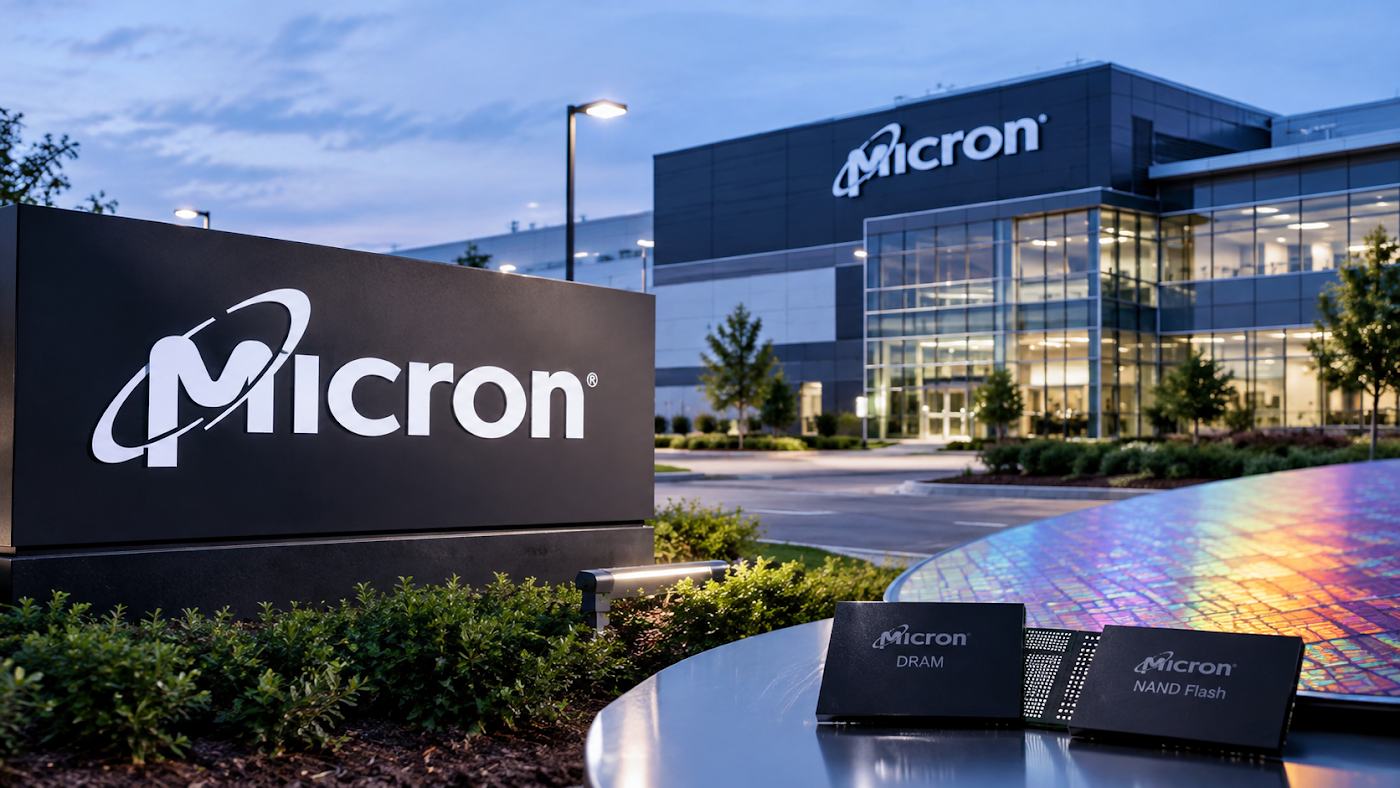
Micron Beat Its Own Guidance and Then Set a Higher Bar.
Micron (MU) reported revenue of $54.23 billion, beating the $51.07 billion consensus. The company had guided to as much as $51 billion. Adjusted EPS was $33.42 against $31.61 expected. Data-center revenue was up elevenfold year over year.
The guidance was the bigger number. Micron sees about $61.5 billion in revenue for the current quarter against a $57 billion consensus, a $4.5 billion beat before the quarter started. Its stock has risen more than 500 percent in a year and now carries a market cap above $1.2 trillion. Micron is the only US maker of the high-bandwidth memory that AI accelerators require.
Micron is investing $250 billion across two new facilities, with the first new Idaho fab coming online next year.
Demand Is Clear. Returns Aren't.
Micron trades at roughly seven times its guided quarterly earnings annualized. That multiple reflects how the market prices memory, as a boom-and-bust commodity. The guide argues the boom isn't over. Micron confirms demand for the inputs. What remains open is whether the data centers filled with those inputs earn enough to justify the cost.
A Fed President Called the Buildout Potentially 'Malinvestment' and Raised His Neutral Rate.
Minneapolis Fed President Neel Kashkari said that inflation is running at around 3 percent and has been elevated for more than five years. The softer PCE print did not change his view. He raised his estimate of the long-run neutral interest rate to 3.25 percent and said the AI boom is the likely cause, because demand for investment capital has pushed the neutral rate up.
That framing makes AI a monetary variable, not just a sector story. A higher neutral rate means elevated rates persist longer, even after hiking stops.
Then the warning. If the buildout is not nearly as productivity-enhancing as assumed, he said, "this will have been malinvestment" with "big economic consequences for the economy writ large." He added that AI companies may need to learn to be more efficient with capital in a higher-rate environment, while acknowledging that hyperscalers specifically may not slow down much regardless.
Two Ways AI Raises the Neutral Rate Split on One Answer
Barclays argued this week that a genuine productivity boom takes the 30-year's fair value to 6 percent, because a more productive economy means the Fed never cuts back to where the forward curve assumes. Kashkari also sees AI lifting the neutral rate, but conditionally. His version requires the productivity to actually arrive. Both raise long-term rates. They split on whether the spending pays, which is the single open question underneath every other story this quarter.
Renowned tech investor James Altucher – the man who called the rise of Nvidia, Apple and SpaceX years in advance – just uncovered Elon Musk’s latest breakthrough idea…
And according to James, it’s going to be even bigger than the SpaceX IPO – creating up to 1.8 million new millionaires over the coming years.
The pieces behind it are inside this briefcase – which he reveals 100% FREE in this video.
Before the Photo, CEOs Questioned the One Person Sounding the Alarm.
Before the tech leaders assembled outside the White House to announce Tuesday's voluntary accord, a smaller group that included Nvidia's Jensen Huang asked Dario Amodei why he was being so public about AI risks. Amodei said he thought honesty with the public was important and that playing down the risks wasn't something he would do.
The disagreement has had one concrete consequence. This summer, Anthropic, OpenAI, and Google backed a self-regulatory body modeled on FINRA, the regulator that governs US brokers. Nvidia's Huang, Meta's Mark Zuckerberg, and Elon Musk told Trump it would concentrate too much power in a few leading labs, and it was scrapped. Tuesday's accord kept many of the same principles but without any enforcement structure.
Zuckerberg worked directly with the Commerce Secretary to shape the final accord. When Amodei raised safety concerns at lunch, Zuckerberg said the industry should address them by following through on the principles it had just agreed to.
What Got Scrapped Was the Mechanism
The FINRA-style body had an enforcement structure. Tuesday's accord does not. The FTC opened an investigation the next day. Florida's attorney general is in court. The gap between what the industry agreed to police and what agencies are now checking is the direct result of the room disagreeing on who should hold the power. Anthropic, with an IPO targeting roughly $2 trillion a few weeks out, carries more of that exposure than anyone else in the room.
The 10-year closed at a 2002 level after its largest quarterly rise since 1994. CCC bonds turned distressed for the first time since the SVB crisis. Micron beat by $3 billion and guided $4.5 billion above consensus. A Fed president raised his neutral-rate estimate and warned of malinvestment. And the executives who signed a safety accord had just privately questioned the one voice pressing for stronger rules.
Nobody doubts the buildout is enormous. Bond strategists, a sitting Fed president, and the industry itself still disagree on what it will produce.
3 STOCKS OUR SIGNAL ENGINE SAYS TO WATCH CAREFULLY
Three stocks. Three signals. Two weeks later, the story changed.
On September 2, we published three market questions around KLAC, HPE and PG&E.
Two weeks later, every one of them produced new evidence.
One company delivered record revenue and raised its outlook.
Another saw weakness spread across its entire peer group.
And in the third, a market risk that had only been showing up beneath the surface suddenly became explicit.
Yet none of these stories is finished.
That’s why we built Market Tell.
To track the signals that keep moving after the headline is gone — and show you what investors should be watching next.
We’ve put the latest analysis into a new FREE Special Report:
3 Stocks at a Major Turning Point
See what changed… what still hasn’t been resolved… and the signals we’re watching now.