Adjusted earnings of $2.59 a share topped forecasts and the company lifted its full-year target, but reported earnings collapsed 96% on a charge for a proposed talc settlement. MedTech sales grew just 2.5%, and the selling deepened through the session.
Johnson & Johnson gave investors a higher forecast on Tuesday. They sold the stock harder as the day went on.
The healthcare company reported third-quarter adjusted earnings of $2.59 a share, above the $2.54 analysts expected, according to LSEG, and raised its full-year adjusted earnings guidance by 6 cents at the midpoint, to $11.10. Sales rose 5.9% to $25.4 billion.
Reported earnings told a different story. Net earnings fell 95.9% to $210 million, or 9 cents a share, from $2.12 a year earlier, after a one-time special charge for the company's proposed resolution of ovarian talc litigation, along with costs tied to its acquisition of Firefly Bio and a collaboration with Sail Biomedicines. The talc charge has been reported at about $5.5 billion.
Shares were down about 6% at $247.74 shortly before 2 p.m. Eastern, near the session low. They had opened about 3.5% lower. No session since April 2025 has taken a bigger percentage bite out of the stock.
Two businesses, two speeds
The quarter split cleanly between J&J's two segments. Innovative Medicine, its drug business, grew sales 7.7% to $16.76 billion, even after the loss of exclusivity on the immunology drug Stelara cut about 6.9 percentage points from the segment's growth. Tremfya, Darzalex, Carvykti and the depression treatment Spravato led the gains.
MedTech, the medical-device business, grew 2.5% to $8.64 billion. Electrophysiology products, Shockwave, contact lenses and trauma implants drove what growth there was.
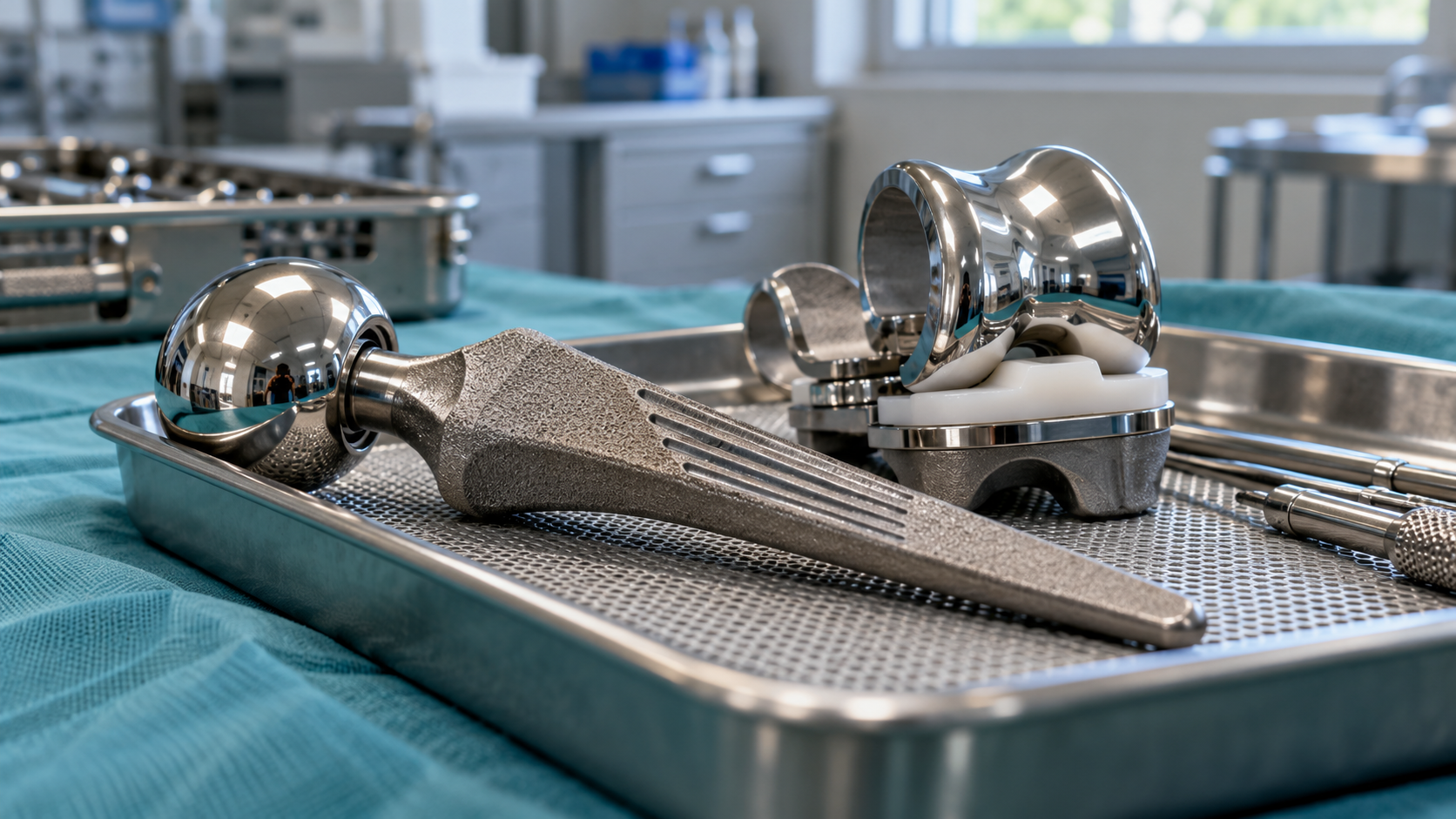
Management singled out cardiovascular and surgery outside the U.S. as the weak spots. "We are clear on where MedTech performance needs to improve," Chief Financial Officer Joe Wolk told analysts. Abiomed, the heart-pump maker J&J paid $16.6 billion for, has been a drag. J&J, which already plans to separate its DePuy Synthes orthopaedics business by mid-2027, said it is leaning toward a spinoff rather than a sale.
What the guidance raise contains
The new guidance calls for adjusted earnings of $11.05 to $11.15 a share, up from $10.96 to $11.11. That midpoint is 2.9% above last year. The quarter itself moved the other way: adjusted earnings per share fell 7.5% from $2.80 a year earlier, partly because the adjusted figure absorbs the costs of the Firefly and Sail deals.
Expected reported sales rose by $100 million at the midpoint, to $101.2 billion.
Chairman and Chief Executive Joaquin Duato said the results "reflect the accelerating momentum of our focused portfolio" and give the company "clearer line of sight to double-digit growth by the end of the decade."
The talc proposal
The proposal moves a long-running legal liability onto the income statement as a quantified charge. Whether it ends the litigation depends on how many claimants accept it.
Market implications
One reading is that the selloff is about MedTech, not talc. A charge for settling litigation is a one-time cost investors have long expected, while 2.5% device growth against an expensive acquisition raises questions about a business that makes up about a third of sales.
A second reading is that the market is pricing uncertainty around the settlement itself. Until claimant participation is known, the charge may not be the final cost, and the guidance raise was small relative to the size of the charge.
What to watch
Claimant participation in the talc proposal, the form of the DePuy Synthes separation and fourth-quarter MedTech growth will show whether Tuesday's decline marks a reset or the start of a longer revaluation.