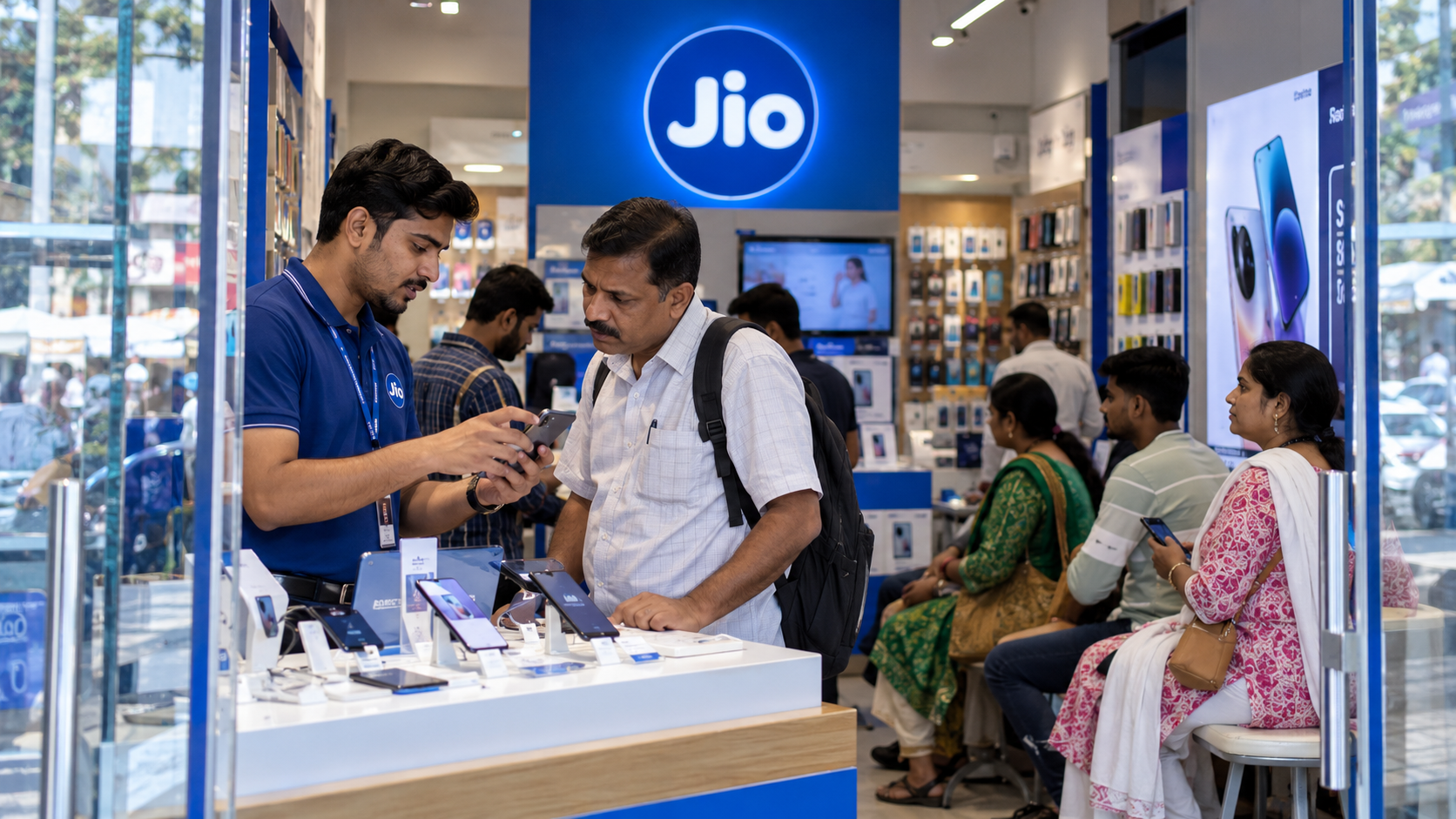
Institutional buyers bid for more than 70 times their allocation. Every share sold is new, so the private equity and sovereign investors that backed Jio in 2020 are keeping their stakes.
Demand for Jio Platforms' initial public offering was overwhelming. The investors who bought into the company six years ago chose not to take any of it.
Bidding for the IPO closed on Friday with the offering subscribed 22.19 times overall, according to exchange data. Qualified institutional buyers bid for 70.55 times the shares reserved for them, and non-institutional investors about 14 times. Including the anchor book, bids totaled about 7.4 lakh crore rupees, or 7.4 trillion rupees. Bids in the public offer, excluding anchor investors, were about 4.9 lakh crore rupees. Final figures from the exchanges may differ slightly.
All new money
The offering consists entirely of new shares, worth about 30,213 crore rupees, with up to 27,500 crore rupees earmarked for repaying debt. There is no offer for sale, the part of an IPO in which existing shareholders sell their stakes.
That means the private equity and sovereign wealth investors that bought into Jio during its 2020 fundraising are not using the listing as an exit. They will remain shareholders when the stock begins trading.
Why that matters for private markets
For private investors, an IPO is usually a chance to sell. Holding through a listing is a bet that public markets will value the company more highly over time than the IPO price does, and a signal of confidence that new buyers tend to watch.
It also leaves the original investors' exit for later, which means their returns will depend on how the shares trade after listing rather than on the offering price.
The scale of institutional demand stands in contrast to at least one other planned Indian listing. Oravel, the parent of OYO, is facing investor bids well below its asking valuation for its planned offering.
What to watch
Share allotment on Oct. 26, the stock's listing on Oct. 28 and its first-day performance, and any eventual sale by the 2020 investors once lockups expire.