

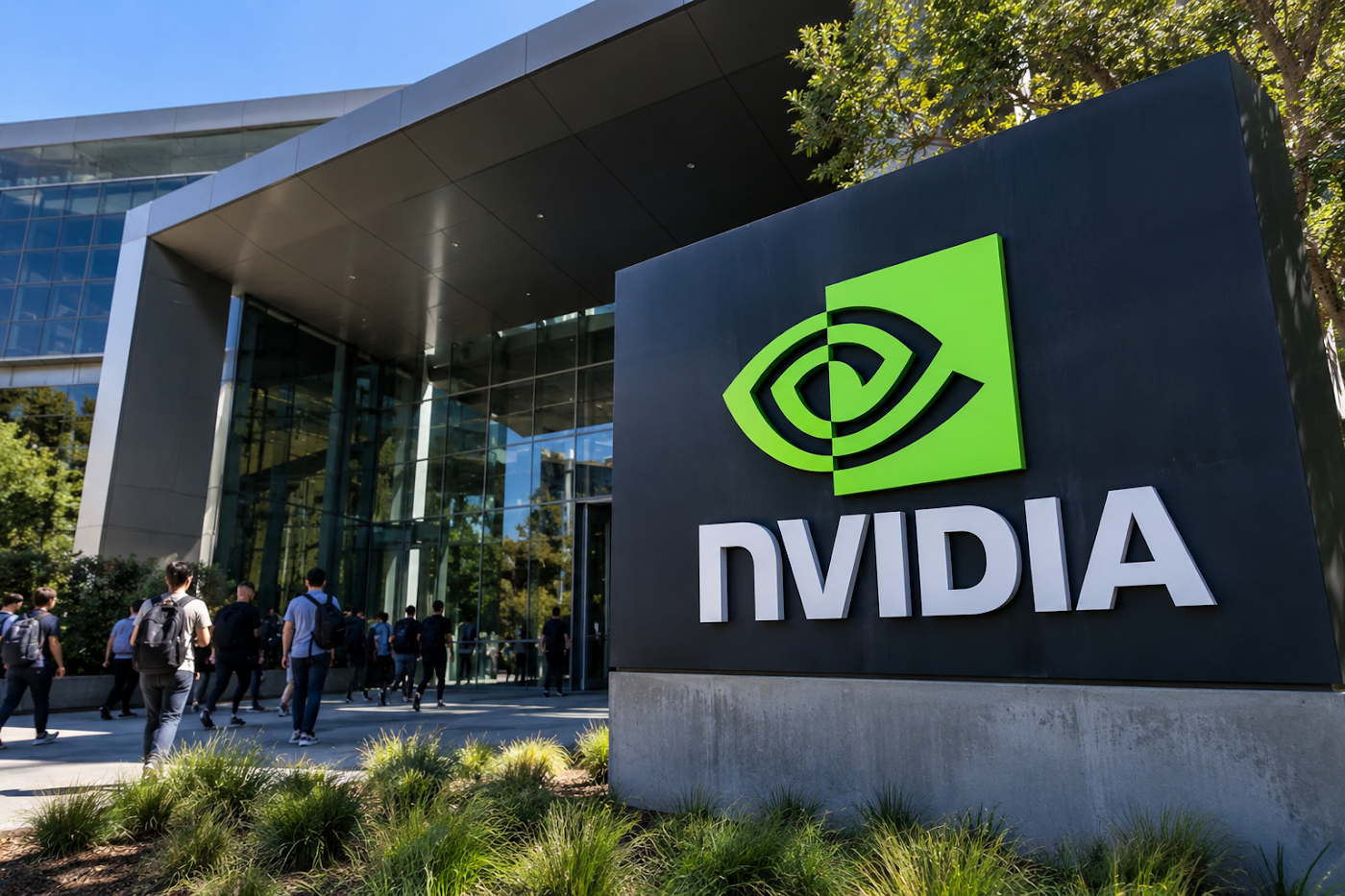
The most valuable public company on Earth announced the largest stock buyback in American corporate history yesterday. And the stock barely moved 2%. Nvidia (NVDA) is printing money at a pace we have never seen from a chipmaker, yet it trades at a lower earnings multiple than Procter & Gamble. So what does Jensen Huang do? He writes a $150 billion check to himself. The question is whether that's conviction or capitulation.
But before we get to that, let's take a quick look at the markets and what matters today…
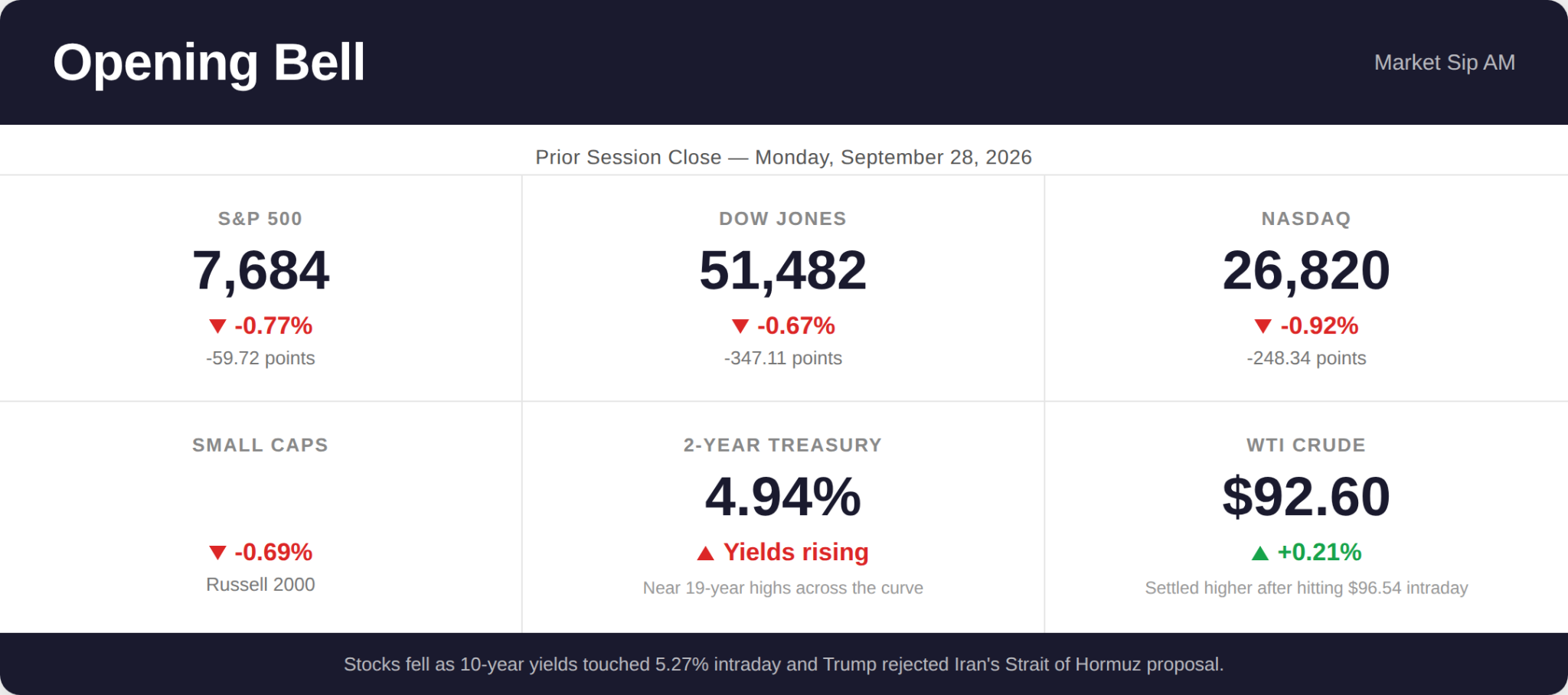
3 Movers in 3 Minutes
1. Nvidia's record buyback rewrites capital return playbook. Nvidia authorized an additional $150 billion in share repurchases on Monday, the largest single increase in U.S. corporate history. It beats Apple's (AAPL) $110 billion record from 2024 and lifts Nvidia's total remaining buyback capacity to $235 billion. The stock rose about 1.7% on the session, closing near $229, even as the broader market sold off.
2. US and China release "30-for-30" tariff cut lists. Following last week's Trump-Xi summit in Washington, the two countries published reciprocal lists covering roughly $30 billion of goods each that will receive reduced tariff treatment. The deal covers American coal, agricultural products, and medical devices entering China, and Chinese toys, kitchenware, and holiday decorations entering the U.S. Notably absent from China's list: soybeans, the single largest U.S. agricultural export to Beijing.
3. Gold crashes below $4,200. Spot gold plunged more than $100 on Monday, touching $4,141 per ounce, its lowest level since early August. Rising Treasury yields (the 10-year touched a 19-year high of 5.27% intraday), a firmer dollar, and surging oil prices all conspired to crush the non-yielding metal.
3 Signals for Today
August JOLTS report drops this morning. Job openings have been trending lower for months. A number below 7 million would reinforce the cooling-labor narrative and test whether markets reprice October rate hike odds.
September Consumer Confidence (Conference Board) releases at 10 AM ET. The University of Michigan's final September sentiment reading already came in at 48.1, with 1-year inflation expectations jumping to 4.6%. A weak Conference Board read could deepen the consumer-pessimism theme.
OpenAI DevDay keynote begins at 1 PM ET from Fort Mason, San Francisco. Sam Altman teased on Sunday that "we have found a new thing." Leaks suggest a consumer-facing agent called "o." Any major product announcements could ripple through AI hardware and software names before the close.
There's a Strategy Behind the Iran War.
I know because I've seen the evidence firsthand.
On March 2nd — three days after the first missiles hit — I sat across from two U.S. Congressmen in back-to-back private meetings.
Those meetings pointed me toward something I spent weeks verifying.
The real purpose behind the strikes. The real objective. And the single company at the dead center of all of it.
This isn't random. It's a calculated Two-Front Economic War.
And there's one company positioned right at the heart of it.
See the strategy behind the Iran war — and the company at the center of it
The sooner you understand what's really happening — the better positioned you'll be before
— Dylan Jovine, Founder, Behind the Markets
And with that out of the way, let's get to today's big story: what Nvidia's $150 billion buyback really tells us about the AI trade.
The Sip
A Number That Doesn't Add Up
Here is a number that should not exist.
Nvidia (NVDA) is the most valuable public company on the planet. Its market capitalization sits above $5.4 trillion, roughly $500 billion more than Apple. It reported $96.2 billion in revenue last quarter. Revenue doubled year over year. It printed nearly $60 billion in net income in a single quarter.
And yet, Nvidia trades at roughly 24 times forward earnings. That is its cheapest valuation in four years. By some estimates, the forward multiple is closer to 16.5 times, depending on how aggressively you model next year's earnings growth.
To put that in context, Procter & Gamble (PG) trades at about 24 times forward earnings. Coca-Cola (KO) trades above 22 times. These are companies whose revenue grows in the low single digits. Nvidia's revenue is growing at 106% annually.
Something in the market's math is broken. And on Monday, Jensen Huang decided he'd had enough.
$150 Billion Worth of Frustration
Nvidia's board authorized an additional $150 billion in share repurchases, bringing the total remaining program to $235 billion. It is, by a wide margin, the largest single buyback authorization increase in American corporate history, surpassing Apple's $110 billion record set in 2024.
The $150 billion figure alone exceeds the market capitalization of approximately 84% of all S&P 500 companies. Nvidia's buyback budget is larger than most publicly traded corporations.
And the company has the cash to back it up. Nvidia generated roughly $39.8 billion in buybacks in just the first half of this fiscal year. Analysts project its free cash flow will reach $329 billion through fiscal 2028, with projected net income of $387 billion over the same period. In other words, the $235 billion authorization is not aspirational. It is feasible.
Huang framed it diplomatically: "Our cash generation gives us the capacity to invest in the technologies that advance this transformation and return capital to shareholders."
But the real message was less polished. As Yahoo Finance's Brian Sozzi reported: "I think this is Jensen saying, 'I'm tired of my stock trading at these valuation levels.'"
Why The Market Won't Pay Up
The paradox is worth sitting with.
Nvidia is the undisputed supplier of the most important technology being built right now. Every hyperscaler, every AI lab, every sovereign government investing in compute is, in one way or another, writing checks to Nvidia. Combined hyperscaler capital expenditure is projected to exceed $1.3 trillion by 2027. Huang himself said the company would double chip sales in 2027.
So why does the market refuse to assign Nvidia the premium it once commanded?
Three reasons.
First, durability anxiety. The market has seen hardware booms before. It watched Cisco during the dot-com era. It watched Intel during the PC era. The fear is that Nvidia's current dominance is cyclical, not structural, and that at some point the hyperscalers will design their own chips, build their own alternatives, or simply slow their spending. A trailing P/E of 30 and a forward P/E of 16 to 24 tells you the market is already pricing in deceleration.
The Man Who Called Nvidia Before It Soared 1,000% Issues New Elon Musk BUY Alert

Luke Lango was ranked America's #1 stock picker in 2020. He was mentored by two hedge fund billionaires from the Soros network and trained at Caltech. His readers have had the chance to see gains as high as AMD +8,500%... Nvidia +5,000%... Tesla +3,500%... Palantir +1,000%... and Apple +890%. Now he's releasing his next big pick.
This ad is sent on behalf of InvestorPlace Media at 1125 N. Charles Street, Baltimore, Maryland 21201. If you're not interested in this opportunity, please click here.
Second, the concentration risk. Nvidia's top customers are also its potential competitors. Amazon, Google, Microsoft, and Meta are all developing custom silicon. When your four biggest buyers are also your four biggest threats, the market applies a haircut.
Third, the macro overhang. With 10-year Treasury yields touching 5.27% intraday on Monday and rate hike odds climbing, the entire growth-stock trade is under pressure. High-duration assets suffer most when the risk-free rate rises, and even Nvidia is not immune.
The Apple Playbook, or Something Else Entirely
The natural comparison is Apple. Tim Cook's company spent the last decade reducing its share count by more than 40%, transforming Apple from a growth story into a capital return machine. CNBC's Jim Cramer explicitly invoked the Apple model, comparing Nvidia's potential to how former Apple CFO Luca Maestri "was always there when the stock dropped" and "gobbled it up."
But there is a critical difference. Apple began its massive buyback program as its revenue growth decelerated to the low teens. The buyback was, in part, an admission that the days of explosive topline growth were behind it, and the best use of cash was to shrink the share count and boost earnings per share mechanically.
Nvidia's revenue is growing at 106%. Its earnings nearly doubled last quarter. This is not a company compensating for slowing growth. This is a company at the peak of its growth curve, generating so much cash that it can simultaneously invest aggressively in R&D, build new chip architectures on an annual cycle, and still return hundreds of billions to shareholders.
That distinction matters. It suggests the buyback is not a defensive move. It is an offensive one, designed to force a re-rating of the stock by putting a floor under the share price while earnings continue to climb.
What The Buyback Is Really Saying
Strip away the financial mechanics and the buyback delivers a single, uncomfortable message to the market.
You are mispricing the most important company of the AI era.
The market sees Nvidia's forward multiple and shrugs because it is worried about what happens in three years. Huang sees the same multiple and concludes the market is wrong about what happens in three quarters. The $150 billion is the size of that disagreement.
Whether Huang is right depends on one question: does AI spending keep accelerating, or does the cycle turn? If the hyperscalers keep building, Nvidia's earnings will outgrow the buyback, and the stock will re-rate higher on its own. If spending plateaus, the buyback will soften the fall but will not prevent it.
And buried in the details is one more tension worth noting. While the board authorized $150 billion in buybacks, Nvidia insiders sold approximately $2.2 billion in shares over the past 12 months with no insider buying reported. The company is buying. The people running it are selling. That gap deserves more attention than it is getting.
Buffett, Gates and Bezos Quietly Dumping Stocks—Here's Why
The world's wealthiest individuals are making huge moves with their money.
Warren Buffett just liquidated billions of shares. Bill Gates sold 500,000 shares of Microsoft. Jeff Bezos filed to sell Amazon shares worth $4.8 billion.
What is going on? One multi-millionaire believes they are preparing for a catastrophic event. But not a crash, bank run, or recession. It’s something we haven’t seen in America for more than a century.
The MarketSipsTakeaway
Nvidia's $150 billion buyback is the most expensive bet a company has ever made on its own stock. It works if AI infrastructure spending sustains its current trajectory. It fails if the cycle turns before the buyback absorbs enough shares to matter. But the real takeaway is simpler: when the most valuable company in the world announces the largest buyback in history and the stock moves less than 2%, that tells you the market is not just cautious about Nvidia. It is cautious about the entire AI thesis. Watch whether that skepticism holds through earnings season. If Nvidia reports another blowout quarter in November and the stock still won't re-rate, the valuation gap becomes a structural feature of this market, not a temporary mispricing.
Until then, sip slowly!
The Market Sip Desk
Reply prompt: Nvidia's buyback is bigger than the market cap of 84% of the S&P 500. Is the market mispricing the AI trade, or is Nvidia just early to the correction?
3 STOCKS OUR SIGNAL ENGINE SAYS TO WATCH CAREFULLY
Three stocks. Three signals. Two weeks later, the story changed.
On September 2, we published three market questions around KLAC, HPE and PG&E.
Two weeks later, every one of them produced new evidence.
One company delivered record revenue and raised its outlook.
Another saw weakness spread across its entire peer group.
And in the third, a market risk that had only been showing up beneath the surface suddenly became explicit.
Yet none of these stories is finished.
That’s why we built Market Tell.
To track the signals that keep moving after the headline is gone — and show you what investors should be watching next.
We’ve put the latest analysis into a new FREE Special Report:
3 Stocks at a Major Turning Point
See what changed… what still hasn’t been resolved… and the signals we’re watching now.
Tickers: UI MS NVDA AAPL JOLTS ET PM PG KO PC AMD CNBC WATCH KLAC HPE POLL