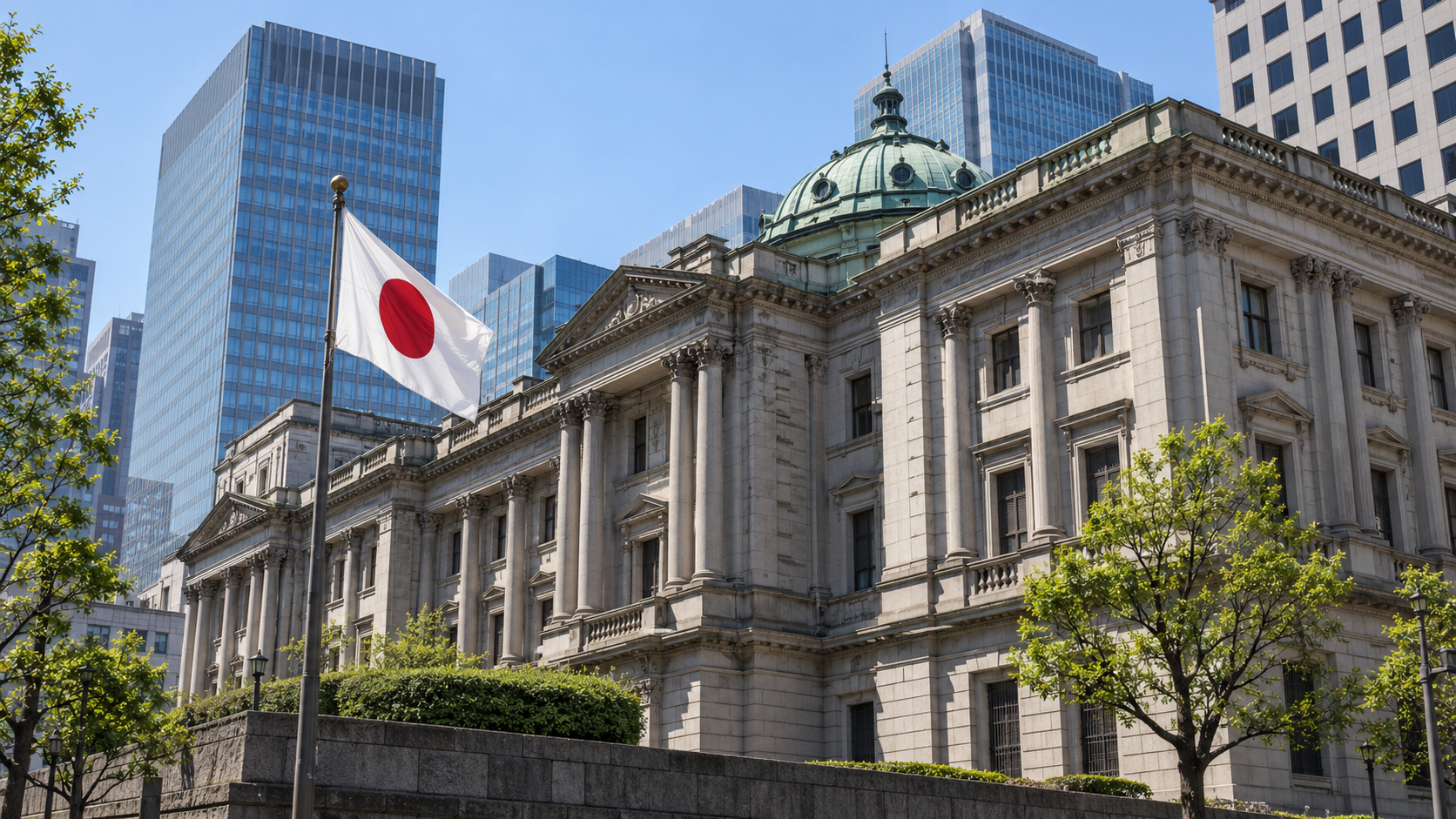
Tuesday's auction cleared with a bid-to-cover of 3.76 and a tiny tail. That deep domestic demand could matter for Treasury buyers as much as for Tokyo.
Japan's Finance Ministry sold 10-year government bonds on Tuesday with a 3.1% coupon, the first time the benchmark has paid more than 3% in about 30 years. What stood out was not the yield but the queue.
Investors bid for 7.40 trillion yen of the bonds and the ministry accepted 1.97 trillion yen, a bid-to-cover ratio of 3.76. That is a clear step up from 3.29 at the auction. The average yield was 3.101% and the highest accepted yield was 3.103%, leaving a tail of just 0.02 in price terms, compared with 0.12 in September. A narrow tail means dealers did not have to stretch to clear the sale.
The sale came on the same day Bank of Japan Governor Kazuo Ueda reaffirmed that rate increases will continue. "It has become more important than before to ensure underlying inflation becomes anchored around 2%," Ueda said, adding that "financial conditions remain accommodative." His remarks did little to change market expectations that the central bank will hold off at its October meeting, and the yen weakened slightly to 158.18 per dollar. The Nikkei Stock Average rose 1.05% to 70,683.98.
The global context makes the auction notable. On Monday the U.S. 10-year Treasury yield touched its highest level since 2002 and France's 10-year yield stood at 4.90%, as investors in both countries demanded more compensation to hold long-dated debt. Japan, the country with the heaviest public debt load in the developed world, just found a deeper bid at a lower yield.
The spread explains part of it. With Treasuries near 5.31% and JGBs at about 3.1%, U.S. debt still pays roughly 2.2 percentage points more. But for a Japanese insurer or pension fund, that gap shrinks or disappears once the cost of hedging the dollar is included. A domestic coupon above 3% is now competitive with hedged foreign bonds, which gives Japanese institutions a reason to keep more money at home.
That is the mechanism to watch. If Japanese investors buy more of their own government's debt, they buy less of everyone else's at the margin. Japan has long been one of the largest foreign holders of U.S. Treasuries, so a sustained shift toward JGBs would remove a source of demand just as Washington steps up issuance.
There is a second reading. Ueda has warned that war-driven energy prices, artificial intelligence demand and the weak yen could push inflation beyond the central bank's target. If so, 3% is a waypoint rather than a ceiling, and today's buyers may have locked in too early.
The next signal comes from the yen. A stronger currency alongside steady JGB demand would suggest repatriation is underway. A yen that keeps sliding toward 160 would suggest investors still prefer to take their chances abroad, and that the Bank of Japan's October decision matters more than markets currently expect.