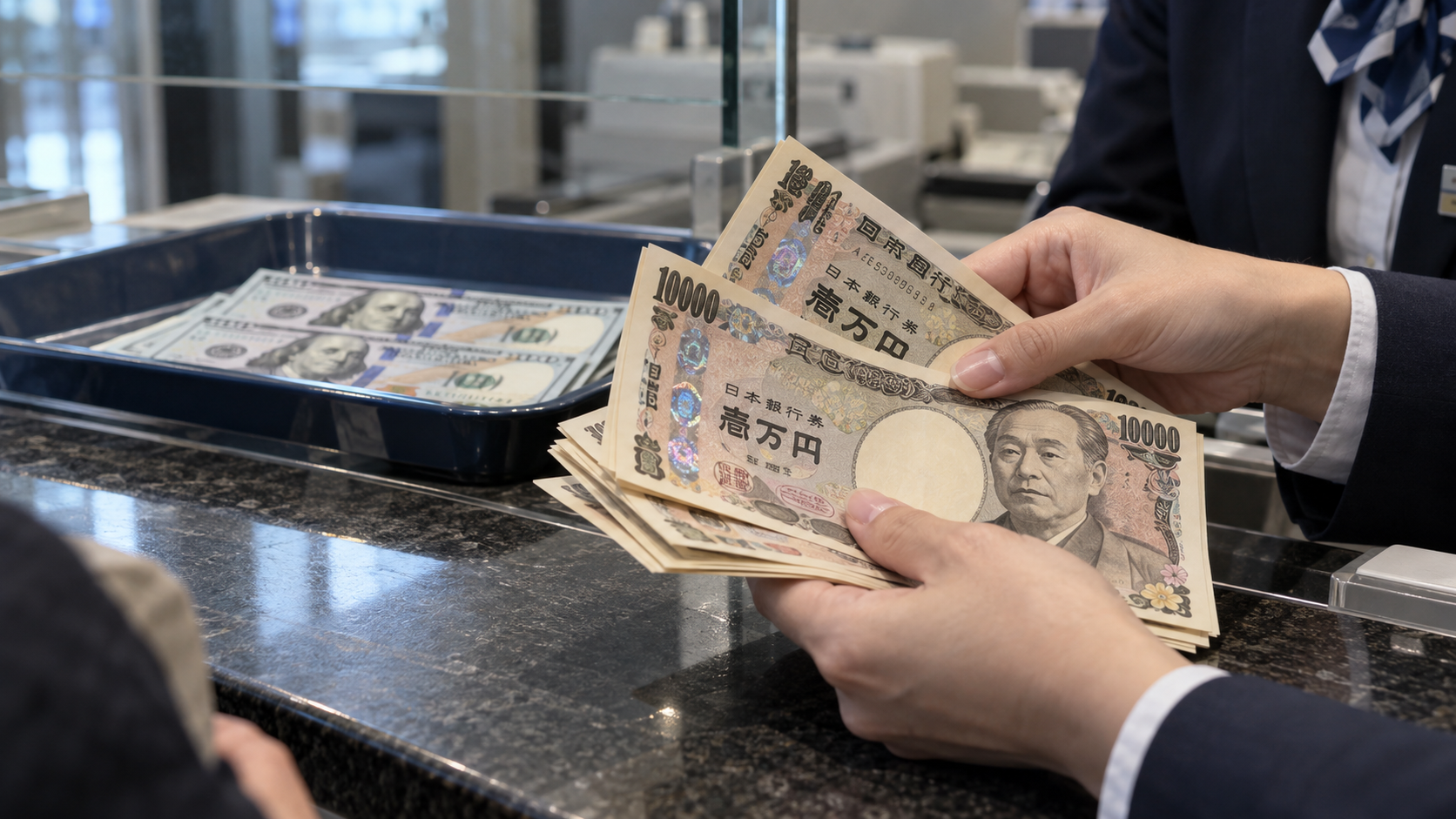
A senior U.S. Treasury official said Japan's deflation era is over and its currency level and monetary policy must change accordingly. The dollar held near 158 yen, a reminder that an interest-rate gap of nearly four percentage points outweighs words.
The United States has told Japan, in public, that the yen is too weak. Currency traders shrugged.
Speaking in Bangkok on Friday, U.S. Treasury Under Secretary Erin Browne said Japan no longer faces the deflationary environment that existed for more than a decade, and that the level of its currency and its monetary policy must change accordingly. She warned about the consequences of a disorderly adjustment. "Sharp, disorderly currency moves can ... really create much wider consequences that force investors to unwind positions and creates volatility across markets, and potentially raises financing costs in both the United States, and really globally," Browne said.
The dollar traded near 158.0 yen early Friday, in a range of about 157.8 to 158.2, essentially unchanged.
Why the comments matter
The message is not new. After July's joint intervention, Treasury Secretary Scott Bessent said Washington strongly supported Japan's "decisive market and monetary steps to correct the substantial undervaluation of the yen." Browne went further by tying the yen's level to the end of deflation itself: the problem, in Washington's framing, is not speculators but a central bank keeping rates too low for an economy that no longer has a deflation problem.
The timing is pointed. The Bank of Japan meets Oct. 29-30, two weeks from now, and has been reported to lean against raising rates this month and toward December instead. Japanese core consumer prices for September, due next week, are expected to exceed the central bank's 2% target, according to economists' forecasts.
The arithmetic that keeps the yen weak
The obstacle is the gap in yields. The Bank of Japan's overnight policy rate is 1.25%. The 10-year U.S. Treasury yield closed Thursday at 5.10%, according to Treasury data, a gap of 3.85 percentage points between the two benchmarks, though they cover different maturities. Investors who borrow in yen and hold dollar assets collect that difference, and as long as it stays this wide, words alone rarely change the trade.
That is also the risk Browne described. A large, crowded carry trade can unwind suddenly, forcing investors to sell dollar assets to repay yen loans. Her warning about forced unwinds and higher financing costs "in both the United States, and really globally" reads as an argument that a gradual BoJ tightening now is safer than a disorderly move later.
Market implications
One reading is that this is a policy nudge with teeth. Public U.S. pressure, inflation above target and a BoJ meeting two weeks away raise the odds of either a rate increase or, if the yen weakens further, coordinated action to support it. The two countries have intervened jointly once already this year.
A second reading is that it changes nothing until the rate gap does. The dollar did not move on the remarks, the BoJ has signaled caution, and U.S. yields remain near 5%. On that view, the yen will follow the spread, and the spread is set in Washington as much as in Tokyo.
For Japanese exporters, a stronger yen would erode the currency gains that have flattered earnings. For Japanese banks, a BoJ increase would lift lending margins.
What to watch
Any response from Japan's Ministry of Finance, the September consumer-price data next week, and the dollar-yen rate around the 160 level. A BoJ increase on Oct. 30, against the reported preference for December, would show Washington's message landed.