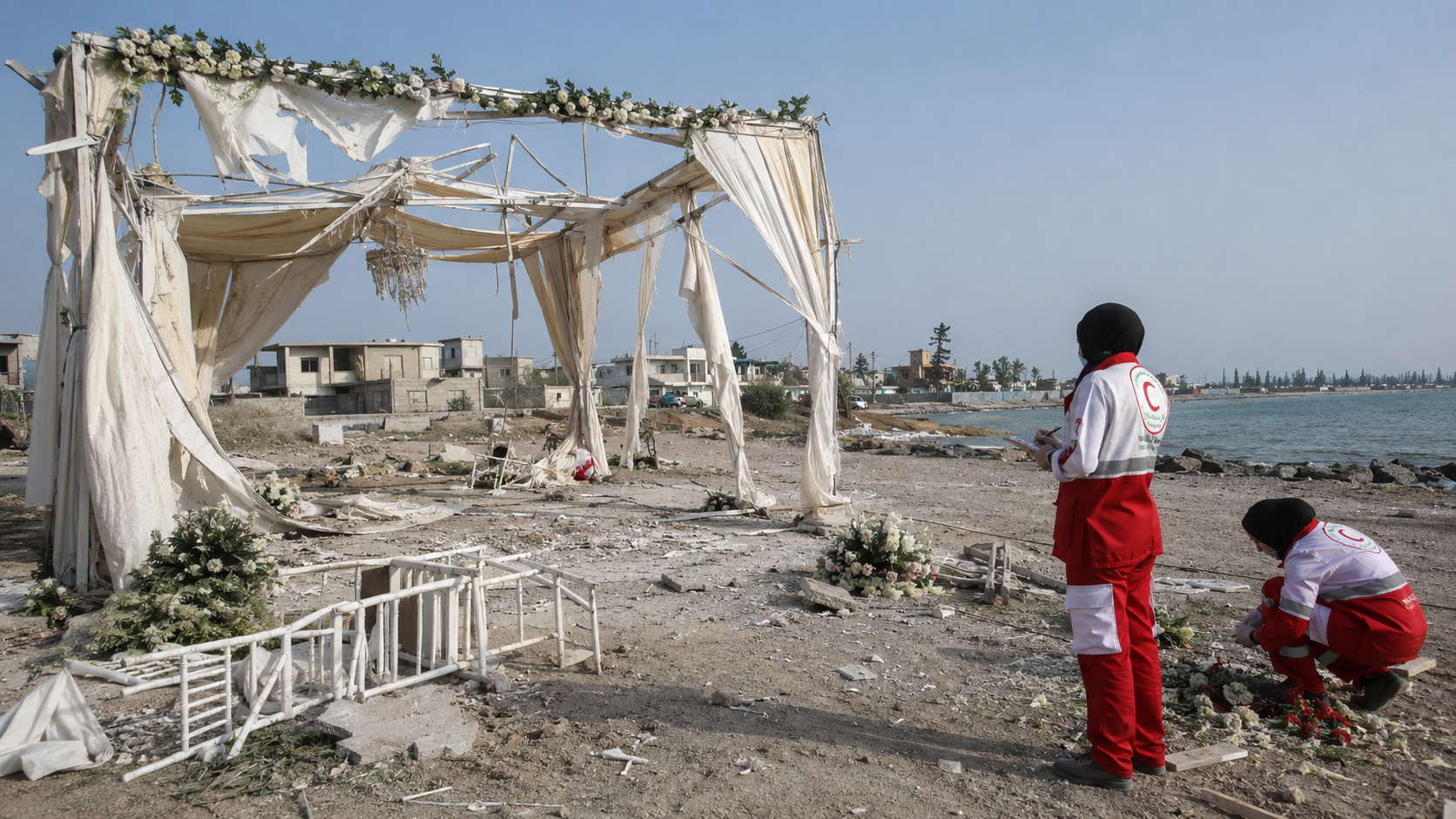
A claim that a U.S. strike killed civilians at a wedding has moved from disputed allegation to a formal complaint before the International Criminal Court, and Washington has responded publicly for the first time. Oil and stocks moved the opposite direction from what that kind of escalation would suggest.
CENTCOM struck Iranian Revolutionary Guard Corps air defense sites, radar systems, maritime assets, mine-laying capabilities and communications facilities inside Iran on September 1. Iran retaliated with roughly 13 ballistic missiles aimed at Jordan, 10 of which were intercepted and three of which landed in remote areas, along with drones aimed at Bahrain that were also intercepted. Kuwait reported additional Iranian drone activity. The IRGC said its "offensive operation will continue as a lesson against the Americans until they regret their crime" and warned it would no longer exercise restraint toward Bahrain and Kuwait.
Separately, Iran's government escalated a disputed civilian-casualty claim. Foreign Ministry spokesman Esmaeil Baghaei, Sirik county governor Reza Shahidiyan and the Iranian Red Crescent Society say a U.S. strike hit a wedding gathering in Kuhestak, in Iran's Sirik county, killing at least four to five people, including two children, and wounding dozens. The Red Crescent submitted a formal letter to the International Criminal Court alleging the strike constitutes a war crime, and Baghaei used that language publicly. The claim rests entirely on Iranian government and quasi-governmental sources; no independent observer has verified it. CENTCOM spokesman Tim Hawkins responded that the U.S. military "never targets civilians, unlike the IRGC," a general institutional statement rather than a specific admission, denial or confirmation regarding the Kuhestak strike itself.
President Trump said he "couldn't care less" if Iran signs a "worthless" agreement and warned that further Iranian retaliation would be met with strikes "at a much higher level." Treasury Secretary Scott Bessent said the administration's goal is to "economically asphyxiate" the Iranian regime.
Despite the rhetorical and legal escalation, markets moved the other way on Wednesday. Oil eased, with West Texas Intermediate down about six tenths of a percent to $89.71 a barrel. Gold rose about half a percent to $4,418.20, reversing the prior session's decline. U.S. equities gained, with the S&P 500 up two tenths of a percent and the VIX falling toward 15.90. That combination, a rising legal and diplomatic cost to the conflict alongside a calmer market tape, is not a pattern that resolves cleanly in either direction. Whether the International Criminal Court acts on the referral, and whether CENTCOM issues a strike-specific response rather than a general denial, are the next developments likely to move the story.