

U.S. forces struck Iranian rocket launchers on Larak Island Sunday. Iran answered Monday with missiles at two U.S. bases in Jordan. Brent jumped toward $90, while September hike odds climbed above 60% after Kevin Warsh’s hawkish Jackson Hole speech. Payrolls land Friday.
The calm around Hormuz lasted one week.
U.S. forces struck two Iranian rocket launchers on Larak Island Sunday after CENTCOM said the IRGC was preparing rockets loaded with sea mines for the Strait. Iran responded Monday with missiles aimed at two U.S. bases in Jordan. Jordan intercepted eight, with limited damage reported.
Asia sold off hard at the open, then recovered.
South Korea’s Kospi went from down 3.5% to down 0.52%. Japan’s Nikkei recovered from a 2.16% drop to finish about 0.57% lower. U.S. futures are softer rather than panicked, with S&P 500 futures down 0.36% and Nasdaq 100 futures off 0.4%.
Markets also enter the week with Friday’s Fed reset still fresh. Warsh’s Jackson Hole speech pushed September hike odds from roughly 35% to above 60%.
The week now turns to data and earnings.
ISM Manufacturing lands Tuesday alongside Dell (DELL) and Palo Alto Networks (PANW). Broadcom (AVGO) and HPE report Wednesday. JOLTS and ADP arrive midweek, with payrolls Friday.
The Signal
Markets now have to price two risks at once: another Hormuz shock and a Fed that is closer to hiking than investors thought.
In January, Gold Touched Nearly $5,600 an Ounce. Today It's Around $4,100.
So the story's over, right?
Then explain this.
The metal is still leaving the vaults. Physical deliveries still running at levels the exchange rarely processed before. Central banks still buying. Dealers charging 30-40% premiums over paper price for real coins.
When price falls but physical demand doesn't — only one of those two is telling the truth.
The paper market sets the price. The physical market sets the deadline.
Anyone who wished they'd bought miners before January's run just got handed the entry back.
One company I've been tracking controls an 88 million ounce deposit — trading near $4 billion. About 1% of the value of its metal in the ground.
That gap is the whole opportunity.
The mine-clearing story reversed almost as soon as it started.
CENTCOM said last week that shipping lanes through the Strait had been cleared of mines. Sunday’s strike shows how fragile that progress remains. U.S. forces hit the launchers because the IRGC was preparing to mine the waterway again.
Brent jumped about 2% toward $90 after the attack, though it remains below the war’s earlier peaks above $100.
The physical market has improved. Goldman estimates Gulf exports have recovered to roughly two-thirds of pre-war levels. Before the war, Hormuz handled around 20 million barrels a day.
Washington is also building a hedge elsewhere. Trump announced Friday a 100-year agreement giving the U.S. a 55% stake in more than 65 billion barrels of Venezuelan reserves.
That does not solve Hormuz today. It does show how seriously Washington is treating long-term supply security.
Energy Signal
The 2% oil move is the surface. The structure is more important: mine clearing and mine laying are now happening within the same week, while Washington looks outside the Gulf for a backup supply base.
Warsh finally gave markets the tightening signal they had been waiting for.
The Fed chair used Jackson Hole to say the Fed still has work to do if inflation does not move toward 2% clearly and fast enough. He called recent softer inflation readings encouraging, but not enough to prove the trend has changed.
Markets reacted fast.
September hike odds jumped from about 35% before the speech to 60.4% by Monday.
The 2-year Treasury yield rose about 11 basis points to 4.34%, while the 10-year climbed to 4.72%.
That move explains much of Monday’s pressure on Asian tech. Investors are not questioning Nvidia’s demand story. They are questioning the multiple they should pay when the discount rate moves higher.
Warsh also put himself at odds with a White House that wants lower rates. His repeated focus on the 2% target reads as a defense of Fed independence.
Macro Signal
Warsh opened the door to a September hike without promising one. Friday’s payrolls report decides whether the Fed has reason to walk through it.
Hidden in Tesla's Filing: A $12 Billion "Super Startup"
Pull up Tesla's most recent SEC filing. Page 5.
And you'll see a single line showing $12 billion in revenue from a brand-new "super startup" Elon Musk has been quietly incubating inside Tesla.
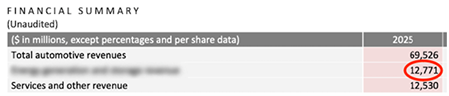
This new "super startup" has nothing to do with cars or robots or space or AI…
But it sits at the center of what Blackstone calls "a $23 trillion investment opportunity."
And on Oct 21st, Elon is expected to pull back the curtain and reveal exactly what he's building.
But Adam O'Dell already knows… and he reveals it all in this urgent video.
The chip trade is being hit by rates, not earnings.
The Philadelphia Semiconductor Index fell 3.47% Friday after Warsh’s speech. That pressure carried into Asia, where Samsung and SK Hynix fell more than 2% premarket even after Nvidia’s strong quarter.
Samsung also unveiled its next-generation HBM4 memory Monday, another sign that the AI infrastructure cycle is still advancing.
The demand story has not changed. The financing environment has.
That makes this week’s earnings important. Dell and Palo Alto report Tuesday, while Broadcom and HPE follow Wednesday. Strong bookings would support the view that the selloff is a valuation reset rather than the start of an AI demand slowdown.
Korean chips are the cleanest signal. They are being sold on a U.S. rate call, not a local earnings problem.
Capital Signal
AI capex is still strong. The cost of owning that growth just rose.
Bitcoin gave back its weekend gains as the same rate story hit crypto.
BTC touched $81,455 Thursday before sliding back into the $77,000s by Sunday. The Larak Island strike hurt sentiment, but Warsh did more damage to the macro setup.
Bitcoin had rallied through August as a debasement hedge, helped by lower yields and expectations for easier financial conditions. A more hawkish Fed weakens that case.
Ether and Solana also fell more than 3%.
The bigger structural story is security. Ripple published a four-phase plan to make the XRP Ledger quantum-resistant by 2028. Bitcoin and Ethereum released migration plans the same week.
The urgency increased after an Anthropic Claude model reportedly cut the work needed to break a leading post-quantum signature candidate by 67 million times. No production chain was compromised, but the lesson is clear: AI may speed up the timeline for cryptographic risk.
ETF demand remains firm. August bitcoin inflows topped $3 billion, the strongest month of 2026.
The Verdict
Price is moving with rates. Infrastructure is moving with a much longer clock. Bitcoin, Ethereum and XRP now have to defend against a security risk AI itself may accelerate.
Navellier Warns: This Could Leapfrog Elon's SpaceX IPO
Elon Musk could take SpaceX public in 2026, at an estimated $1.75 trillion valuation. The IPO would include Elon's AI model, Grok. But according to Louis Navellier, a radical new AI model will launch this year… over 1,000 times more powerful than Elon's. And the company behind it could outperform SpaceX in the process.
Click here for full details (including Louis' new pick — free).
This ad is sent on behalf of InvestorPlace Media at 1125 N. Charles Street, Baltimore, Maryland 21201. If you're not interested in this opportunity, please click here.
Monday reopened two risks markets thought were fading.
Hormuz was cleared, not secured. Warsh was cautious, not dovish.
Both now sit live heading into the most important labor report since he became Fed chair.
Chip stocks show the tension clearly. AI demand remains strong, but higher yields are cutting what investors will pay for it. Bitcoin is showing the same fight between the debasement trade and the Fed’s inflation mandate.
Friday is the fulcrum.
A weak payrolls print gives markets room to treat the rate selloff as an overreaction. A strong one confirms Warsh’s hawkish turn and forces chips, bitcoin and long Treasurys to keep adjusting.
The war risk is back.
The rate risk never left.