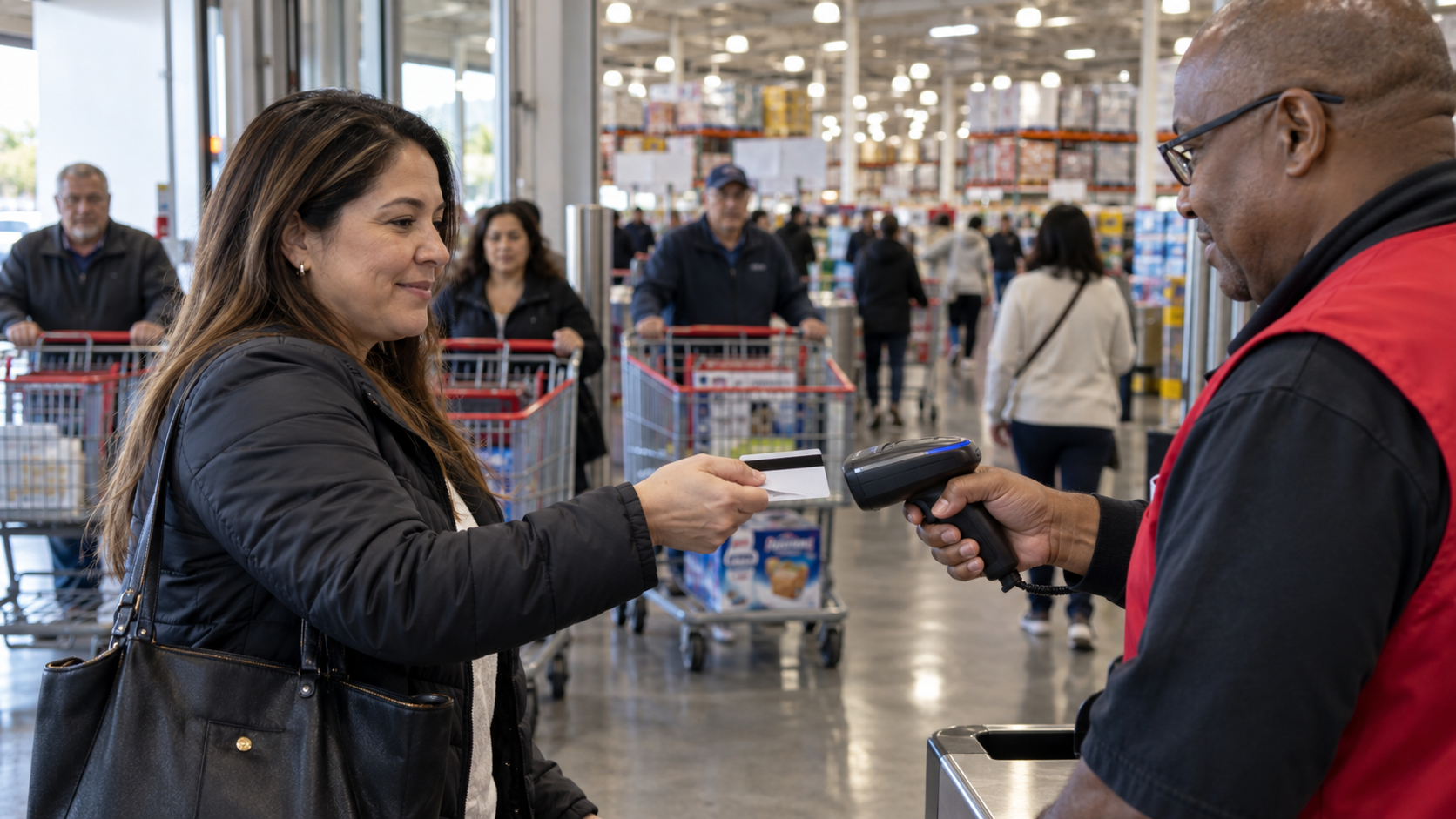
A 15 cent refund boosted the quarter. The renewal rate and executive upgrades explain the business.
Costco's fourth quarter came with an asterisk: a 15 cent per share benefit from tariff refunds. The more durable story sits in a line most shoppers never think about, the annual fee they pay to walk through the door.
Membership fees totaled $5.91 billion in fiscal 2026. Set against full-year net income of $9.2 billion, those fees equal roughly 64% of the company's profit. Costco sells groceries, televisions and tires at thin margins; the membership card is where much of the money is made.
The membership numbers
Paid memberships grew 3.8% to 84.1 million. Executive memberships, the higher-priced tier, rose 9.4% to 42.3 million, meaning the premium tier is growing at more than twice the pace of the overall base. Executive members now make up roughly half of all paid members. The renewal rate in the United States and Canada reached 92.3%.
Those figures describe a customer base that is not just sticking around but paying up. Each upgrade lifts fee income without requiring Costco to sell a single extra item.
Sizing the tariff benefit
The tariff refund is real money but modest in context. With net income of $3.0 billion and earnings of $6.75 per share in the quarter, Costco's diluted share count works out to about 444 million. A 15 cent benefit across that base comes to roughly $67 million, less than 4% of the quarter's membership fee income.
Management framed the refunds as a pricing tool rather than a crutch. Company leadership described using refund-funded price cuts as "giving value back, not a demand rescue."
The lawsuit in the background
The refunds carry a legal overhang. Shoppers in Seattle sued in March, arguing they, not shareholders, deserve a share of the refunds, which could top $1 billion after the Supreme Court threw out a group of tariffs in February. A judge has yet to certify the class. Its outcome will shape whether future refunds flow to earnings, to prices or to plaintiffs.
What management is watching
Chief Financial Officer Gary Millerchip said management "feels good about the trajectory" of underlying comparable sales excluding gasoline and currency, which have held in a 6% to 7% range for about a year. He added that "members still spend on discretionary goods when the item and price are right."
That steady underlying pace, paired with rising fee income, is the case for Costco's valuation. The tariff refund makes a good quarter look better. The membership base is what makes the next one likely.