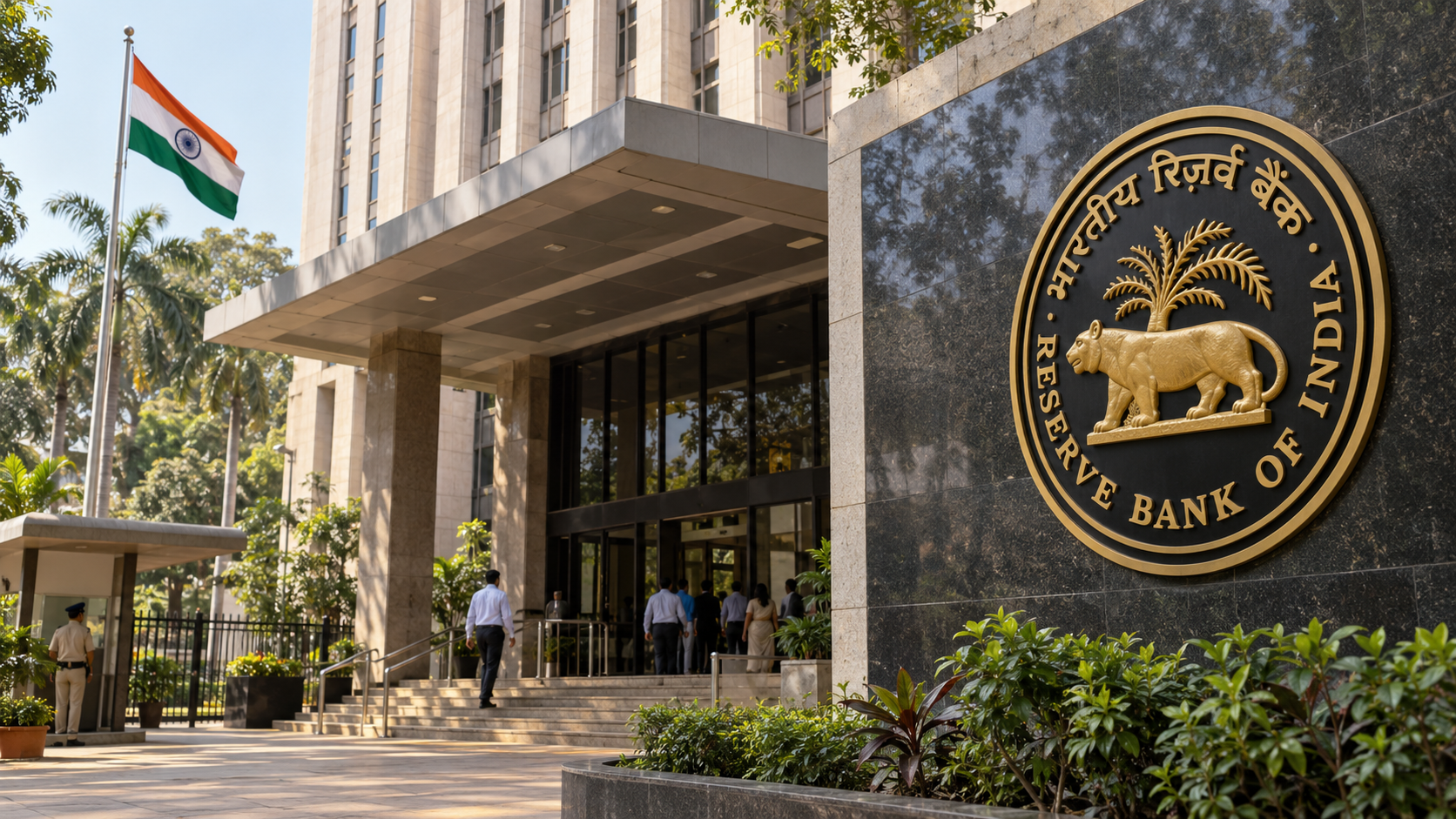
A quarter-point increase ends a hold that dated back to 2023. Consumer prices have accelerated for ten months and sit 0.8 point above the central bank's goal.
The Reserve Bank of India ended a long pause on Wednesday, and the wording it chose leaves room for the first increase not to be the last.
The Reserve Bank of India lifted the repo rate, its main policy rate, by a quarter point to 5.50%. That is the highest in a year, and economists had expected the move. The bank had not raised rates since 2023. The monetary policy committee also shifted its stance to what Governor Sanjay Malhotra called "calibrated tightening."
The inflation picture
Consumer prices have accelerated in every month since last autumn, ten in a row, and annual inflation stood at 4.8% in August. The RBI's medium-term goal is 4%. With the repo rate at 5.50%, the gap between the policy rate and the latest inflation reading is about 0.7 percentage point.
"Inflation and its outlook are not benign, as they were last year," Malhotra said. He also said India's economic growth has been strong despite global challenges.
The global setting
The RBI acts alongside other central banks that have tightened this autumn. The Federal Reserve raised its target range in September, and minutes released Wednesday showed most U.S. officials expected another increase by the end of the year. Oil is a shared problem for all of them, and Brent was at about $100 a barrel on Wednesday.
Asian stock markets fell on the day. Japan's Nikkei 225 lost about 0.9% and South Korea's Kospi nearly 2%.
What the stance change signals
The RBI's choice of words carries weight beyond the quarter-point move. "Calibrated tightening" tells markets that the committee sees further increases as possible while keeping the size and timing tied to data. A neutral stance would have left the next move open in either direction.
The case for and against
One reading is that the RBI is moving early to keep imported energy costs from feeding into broader prices, and that a positive real rate of 0.7 point gives it room to hold if inflation peaks.
Another reading is that a tightening stance in an economy the governor describes as strong leaves the door open to more increases if oil stays near $100 and price pressures broaden.
The next inputs
India's September consumer price figures will show whether the ten-month climb has continued. The RBI's next policy statement will show whether "calibrated tightening" turns into a series of moves or a single step.