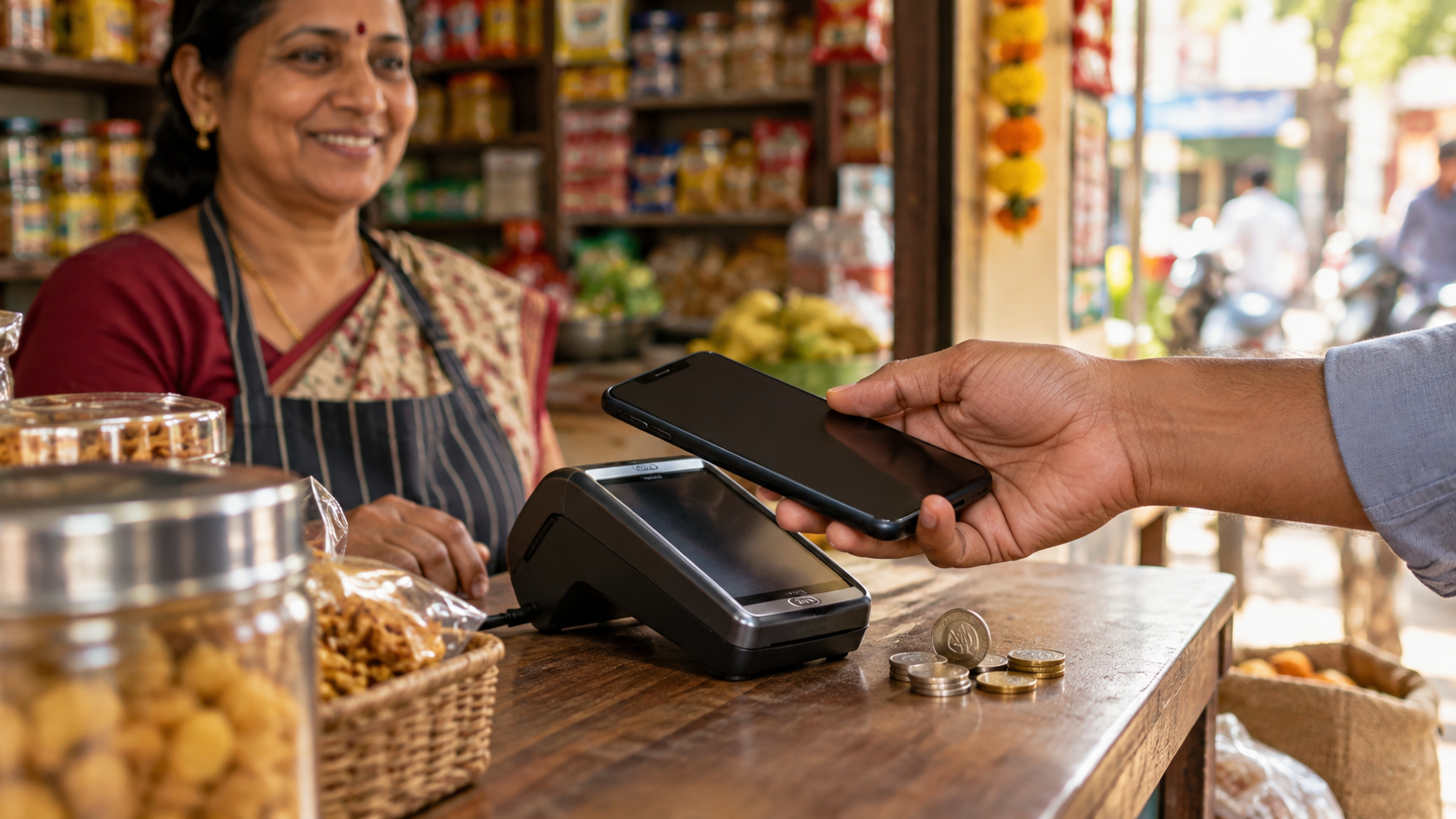
A 0.4% charge on person-to-merchant transactions above 2,000 rupees, effective October 15, introduces revenue into a system built explicitly to be free.
India's payments authority has introduced a 0.4% fee on select person-to-merchant Unified Payments Interface transactions above 2,000 rupees, effective October 15. Shares in payment services companies including Paytm, One Mobikwik and Yes Bank rose on the announcement.
Why a small fee is a large change
UPI was designed as zero-cost public infrastructure. That design achieved extraordinary adoption and created an obvious commercial problem: the companies building interfaces, merchant tools and fraud systems on top of it were carrying real costs against effectively no transaction revenue.
A 0.4% charge on higher-value merchant transactions does not change the consumer experience for the small everyday payments that dominate UPI volume. It does create a revenue line on the subset of transactions where merchant value is high enough that a fee is economically bearable, which is the segment payment processors have been serving at a loss.
What the market is pricing
The equity reaction reflects an expectation that a meaningful share of that fee accrues to the intermediaries rather than being entirely absorbed by the network or passed through to merchants. That expectation is reasonable but not established, and the distribution mechanics matter enormously to how much of the fee reaches any listed company's income statement.
The second-order question is merchant behaviour. A 2,000 rupee threshold creates an obvious incentive to split transactions or to steer higher-value payments toward cards or bank transfers. How much volume migrates will determine whether the fee produces the revenue the market is currently pricing.
Elsewhere in Indian corporate news
HDFC Bank's board approved submitting two candidate names for managing director and chief executive to the Reserve Bank of India for approval, and reappointed two whole-time directors. Chief executive succession at India's largest private-sector bank requires regulatory approval, which makes the submission a procedural step rather than a decision.
Dr. Reddy's Laboratories disclosed that the U.S. Food and Drug Administration completed a records assessment at its Mexico active pharmaceutical ingredient facility between July 17 and September 8, issuing a Form FDA 2953 with two observations. A Form 2953 documents records received during an inspection and is a lighter-touch outcome than a Form 483, a distinction worth stating precisely because the two are frequently conflated.
The October 15 UPI effective date is the near-term marker, and the first monthly volume data after it will show whether the threshold changed behaviour.
# PRIVATE MARKETS