The joint venture would run trading in permissioned Uniswap pools on OKX's blockchain, settled in stablecoins. Issuers have 30 days to object, and Cerebras already has.
Crypto · FinancialMarkets.com · · Tickers: ICE, COIN, HOOD, MSTR, CRCL, NVDA, AAPL
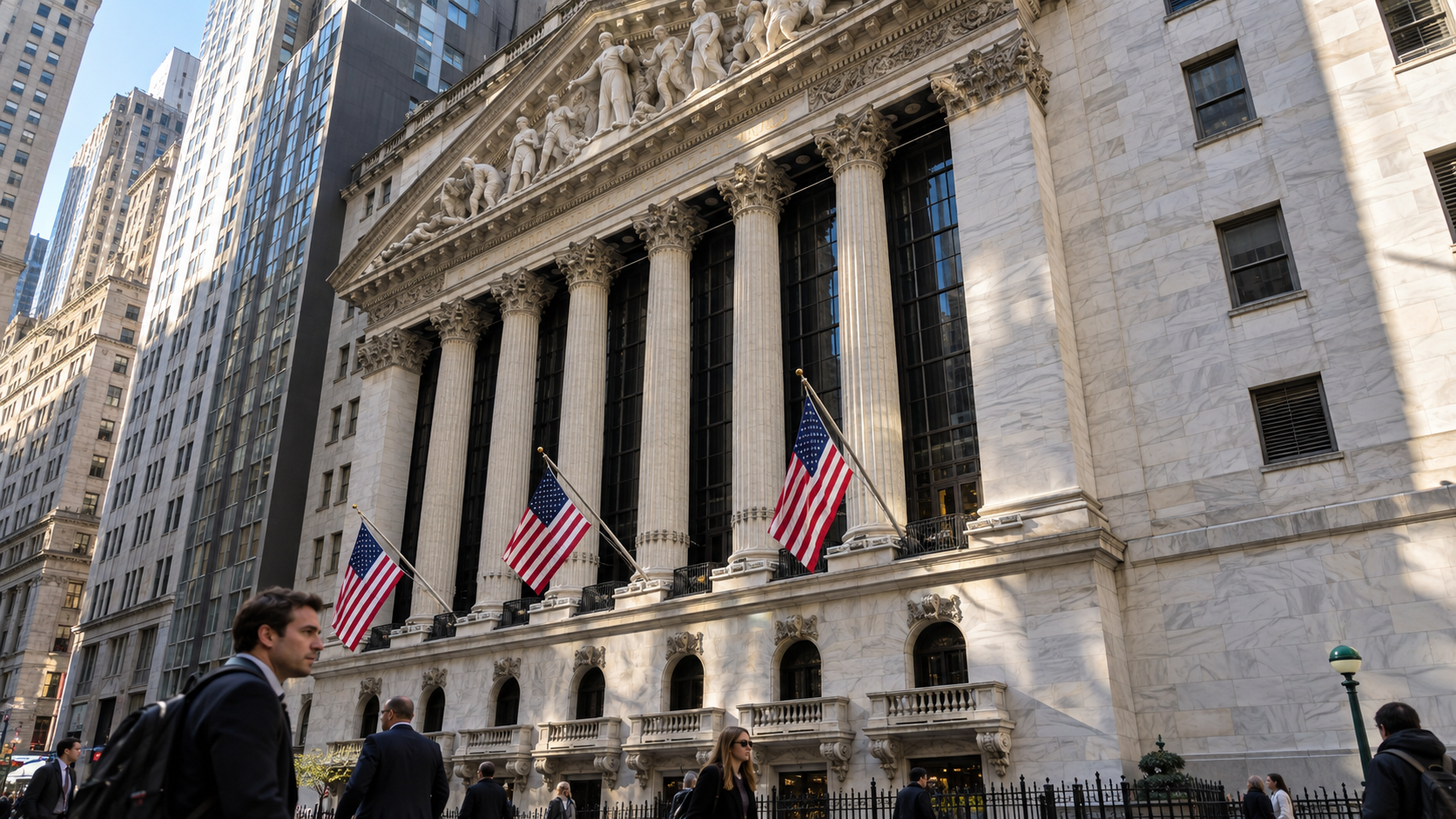
The company that owns the New York Stock Exchange has put its name on a plan to trade U.S. stocks on a blockchain, every hour of every day.
The vehicle is OKXICE, which Intercontinental Exchange and OKX own equally. In a notice to the Securities and Exchange Commission dated , it set out plans to list token versions of 63 U.S.-listed stocks, relying on the five-year innovation exemption the SEC granted on . Few venues have filed under that exemption so far.
What would trade
The list includes Nvidia, Apple, Microsoft, Amazon, Alphabet, Tesla, Broadcom, AMD, Netflix and JPMorgan Chase. It also includes the crypto industry's own listed companies: Coinbase, Robinhood, Strategy and Circle.
Trading would take place in Uniswap v4 pools on X Layer, a blockchain developed by OKX. Each tokenized stock would trade against one of three dollar stablecoins: USDC, USDG or USDT.
How it would work
The design is narrower than the phrase "24/7 stock trading" suggests. Only wallets holding a valid soulbound token, a non-transferable credential, could trade or supply liquidity. Every trade must be fully funded, with no margin, no borrowing and no netting of positions. The notice states that the venue is not a national securities exchange or an alternative trading system and is not subject to Regulation NMS, the rules that link prices across U.S. exchanges.
The venture is co-chaired by former New York Governor Andrew Cuomo and Trabue Bland, ICE's senior vice president of futures markets. ICE invested in OKX in March at a $25 billion valuation and took a board seat.
The objection window
Under the SEC's exemption, a venue must give each issuer 30 days' notice before trading a tokenized version of its stock. An objection blocks the listing. Cerebras has already objected. The number of companies that follow will determine how much of the 63-stock list survives, and trading cannot begin until the notice period runs.
What it means for the listed players
The list puts OKXICE in direct competition with the tokenized-stock products of Robinhood and Coinbase, while offering tokenized versions of those same companies' shares. The stablecoin choice is a distribution win for Circle, Paxos and Tether, whose tokens would serve as the settlement currency.
Shares of the crypto names moved modestly on Monday. Coinbase rose about 1.6%, Circle about 2.6% and Strategy about 1.5% in afternoon trading, and Robinhood was little changed. ICE rose about 1.1%.
The questions
One reading is that an exchange group's backing turns tokenized equities from a crypto experiment into a structural step toward round-the-clock stock trading.
The other is that liquidity will be the constraint. Fully funded pools without margin may trade at wider prices than NYSE and Nasdaq, the exemption is temporary, and objecting issuers can shrink the list.
The 30-day mark
The count of issuer objections when the notice period expires is the first test. After launch, the gap between pool prices and exchange prices during U.S. trading hours will show whether the venue can attract enough liquidity to matter.