AQAv2 activated Wednesday, directing stablecoin reserve yield toward buying back HYPE. The mechanism it's supplementing has seen its monthly purchasing power fall by roughly two-thirds since its peak.
Hyperliquid activated Aligned Quote Asset v2, or AQAv2, on Wednesday. The framework extends the protocol's reserve-yield-sharing structure to stablecoins circulating on Hyperliquid that are not exclusive to the network. Under the mechanism, roughly 90% of cost-adjusted USDC reserve yield generated from the roughly $5 billion in USDC supplied to Hyperliquid will go to the protocol's Assistance Fund, which uses it to buy HYPE on the open market. Revenue accumulates over 30-day cycles, with the first transfer expected around October 3. Coinbase and Circle serve as the treasury and technical deployers, each staking 500,000 HYPE as part of the arrangement. Market estimates put the mechanism's potential annual revenue at $135 million to $160 million, a figure Hyperliquid has not confirmed.
AQAv2 supplements the protocol's existing buyback engine rather than replacing it. That engine has historically run mostly on trading-fee revenue, and its recent trend is the less encouraging half of this story. Monthly HYPE purchases funded by the Assistance Fund have fallen from roughly $111 million to about $37 million in recent months.
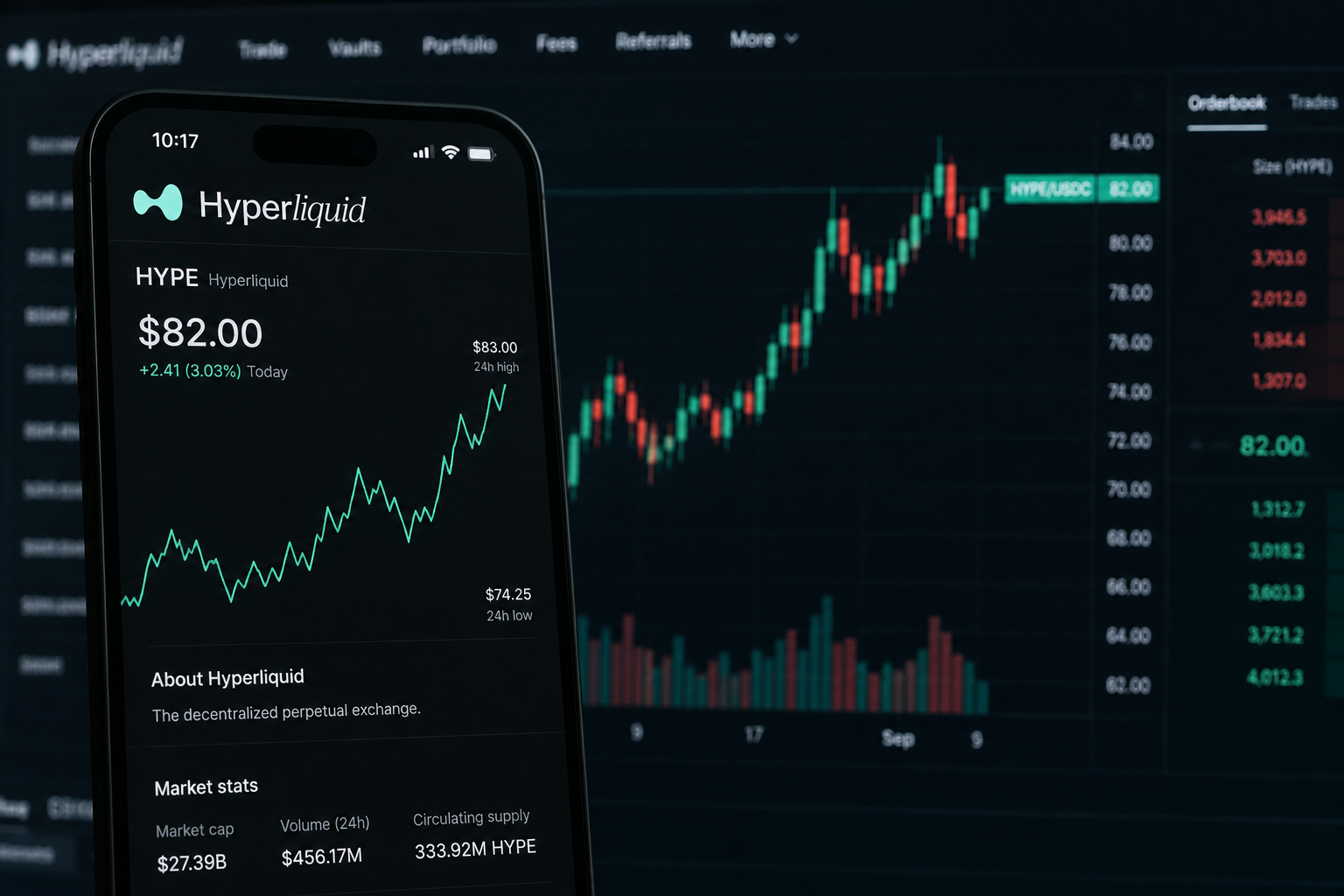
HYPE traded near $82 at AQAv2's activation, close to a fresh all-time high of $83 reached the same day after President Trump said the CFTC is working on a regulatory pathway for Hyperliquid. Even near that high, HYPE remains roughly 28% below its prior peak. A recent unstaking of 519,480 HYPE, worth about $28.6 million, added fresh potential supply the same week.
The mechanism activated Wednesday is real, and the dollar figures behind it are large relative to Hyperliquid's recent buyback pace. Whether it changes the token's supply-demand balance is a separate question. Monthly buyback purchasing power has been shrinking for months, and new supply from unstaking and unlocks keeps arriving. A bigger funding source for buybacks matters only if the buybacks it funds are large enough to offset that.