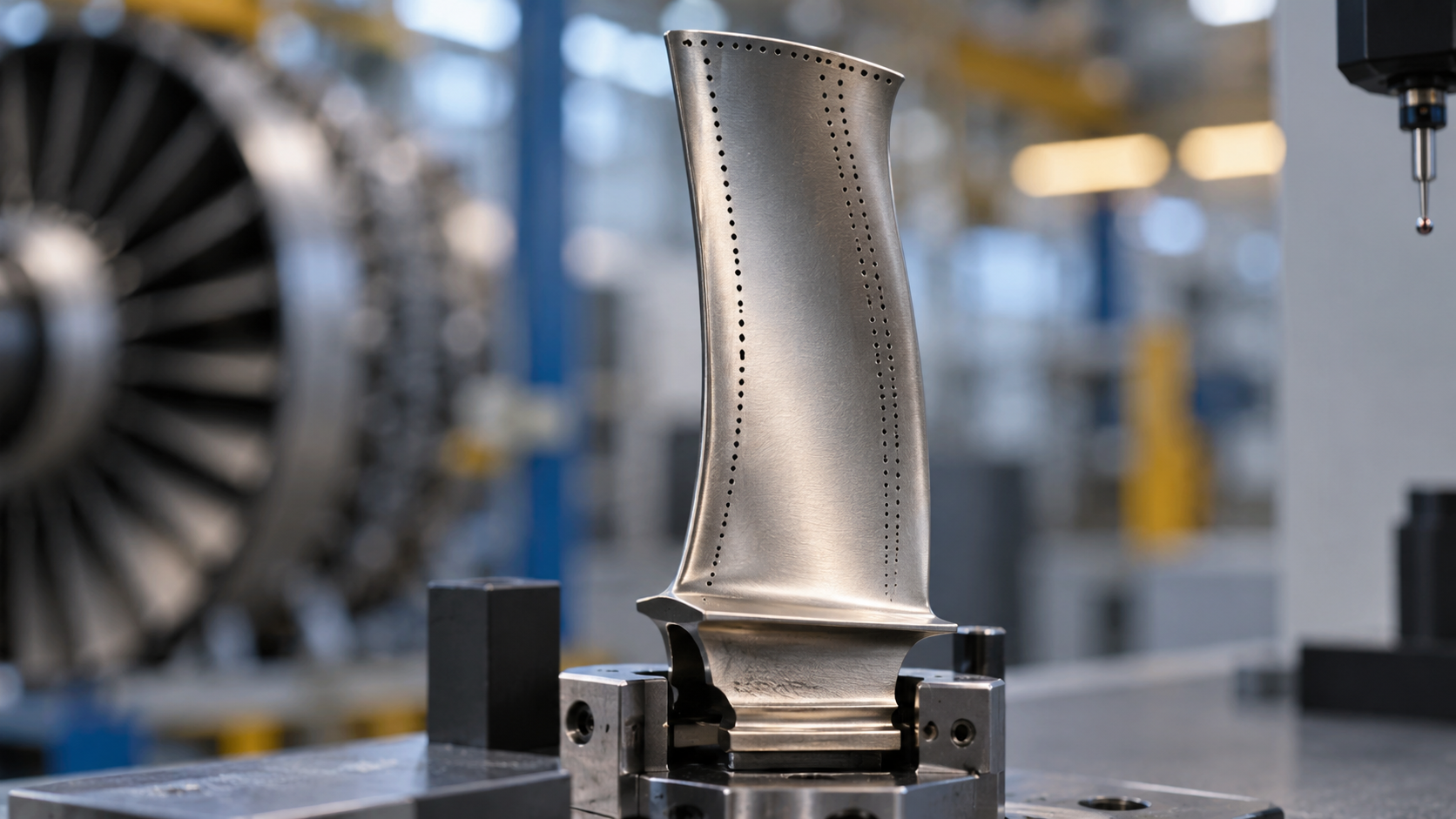
A 7.51% drop on August 31 followed SpaceX's casting plans. A larger 10.70% drop on September 8 followed GE Aerospace's purchase of a rival supplier. The two keep getting merged into one story.
FINANCIALMARKETS.COM | AFTERNOON EDITION
Howmet Aerospace has fallen twice in nine sessions on two separate pieces of news, and the sequence has been widely compressed into a single narrative that attributes the wrong move to the wrong cause.
Here is the actual order. On August 29, Elon Musk posted on X confirming that SpaceX will bring gas-turbine blade and vane casting in-house, elaborating on reporting that the company had bought roughly 830 acres near its Bastrop, Texas site between March and June 2026. Howmet closed August 31 at $244.95, down 7.51% from $264.85, its worst single session since April 2025. It then partially recovered over the following four sessions, rising 4.06%, falling 0.76%, rising 2.98% and falling 0.47%.
Then on September 8, GE Aerospace announced a definitive $11.75 billion agreement to acquire Consolidated Precision Products, a competing independent castings supplier. Howmet closed that day at $231.53, down 10.70% from $259.27, a larger decline than the August 31 move. GE's own shares fell about 0.6%. On September 9 Howmet closed at $232.01, up 0.21%.
So the SpaceX-driven drop was the smaller one, and it happened a week earlier than the date it is usually paired with.
The distinction is not pedantic, because the two events transmit through completely different channels. There is no public record of SpaceX having ever been a Howmet customer, which means no identified revenue is at risk from that announcement. Its mechanism is precedent. A technically capable buyer in-sourcing a historically oligopolistic process could, over years, encourage other buyers to consider the same investment. Jefferies estimates SpaceX is roughly four years from meaningful output and notes that four firms control an estimated 70% to 80% of the specialized single-crystal casting market. The GE transaction is different in kind. GE is a substantial Howmet customer, and it will in time own a castings supplier of its own, which is a concrete channel that requires no metallurgical learning curve to matter.
Chief executive John Plant addressed both on the record Wednesday at the Jefferies Global Industrials Conference, expressing confidence in Howmet's competitive position against each and framing capacity and facilitization, rather than competitive displacement, as the company's central near-term operating challenge. Bernstein and Citi have each described the post-selloff level as a buying opportunity, and Siemens Energy is separately expanding its own casting capacity, which supports a reading of Musk's move as confirmation of turbine capacity scarcity rather than a threat aimed at Howmet. Those are analyst views, and none of them is evidence about Howmet's order book.
What Howmet has disclosed itself is that its industrial gas turbine segment generated about $1 billion of revenue in 2025, roughly 12% of $8,252 million in total revenue, with a company target of exceeding $2 billion within three to five years. The stock trades at a rich multiple, which is a plausible reason it reacted more violently to both headlines than the near-term cash-flow implications of either would justify.
Plant indicated Howmet plans to update its multi-year revenue guidance on an upcoming call. Third-quarter results are expected in mid-to-late October, and that update, not the last nine sessions of price action, is where the competitive question gets tested against numbers.