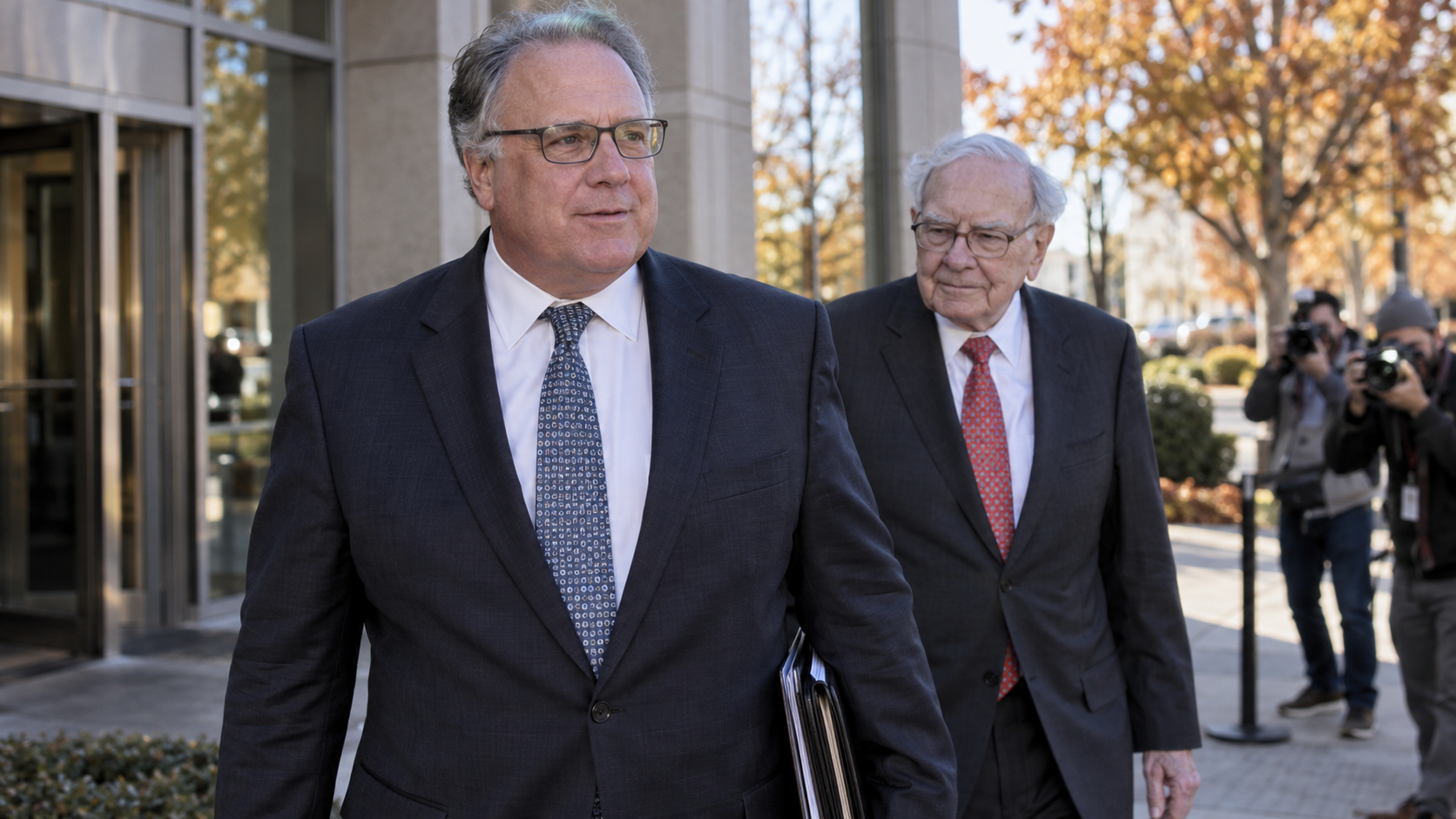
The succession long telegraphed by Warren Buffett is now complete, with his son taking the chairmanship while Greg Abel keeps running the company.
Warren Buffett stepped down as chairman of Berkshire Hathaway on September 18, 2026, closing out more than half a century leading the company. He becomes Chairman Emeritus and will remain a director. His son, Howard G. Buffett, 71, who has served as a Berkshire director since 1993, was elected Chairman effective immediately. Greg Abel continues as Chief Executive Officer, a role he took on at the start of 2026 when Warren Buffett stepped back from the CEO post, and Susan Decker remains Lead Independent Director.
The change was announced through a company news release and a letter from Warren Buffett, who framed the new arrangement plainly. "Greg runs the company; Howard will guard its culture and values, both worth more than anything on our balance sheet," he wrote. He described serving as chairman as "the privilege of a lifetime, and I have never taken your trust for granted," and added that "the company is in excellent hands, and I look forward to remaining a shareholder alongside you."
Greg Abel offered his own tribute, saying "Warren's impact on Berkshire and its owners is without parallel in the history of American business. Warren built Berkshire to endure, and we are grateful beyond measure for what he put in place." Howard Buffett, for his part, described his mandate in narrower terms than his father's decades of hands-on leadership, saying his job is to "lead the Board well and help protect the culture and values that make this company exceptional."
The market's reaction was muted. Berkshire's Class A shares fell modestly, between 0.2% and 0.3%, on the day of the announcement, consistent with a transition investors have expected for years. More notable is where the stock sits relative to its own history: Berkshire remains roughly 5% to 6% below the all-time high it set in May 2025, even as the S&P 500 has climbed more than 30% over that same stretch. Some analysts have pointed to that gap as evidence of a fading "Buffett premium" now that he has fully stepped back from both the CEO and chairman roles.
The succession comes as Abel has already put his own stamp on capital allocation. Under his leadership, Berkshire has revived a share buyback program that had been dormant since 2024, made a $10 billion investment in Alphabet, and agreed to acquire homebuilder Taylor Morrison in a $6.8 billion deal.
For investors, the questions now shift from "who succeeds Buffett" to "how does Berkshire perform without him." Abel controls operating and capital decisions, Howard Buffett is charged with preserving the culture that has underpinned Berkshire's decentralized model for decades, and the stock's underperformance relative to the broader market will be the clearest early signal of whether the market believes that structure can hold.