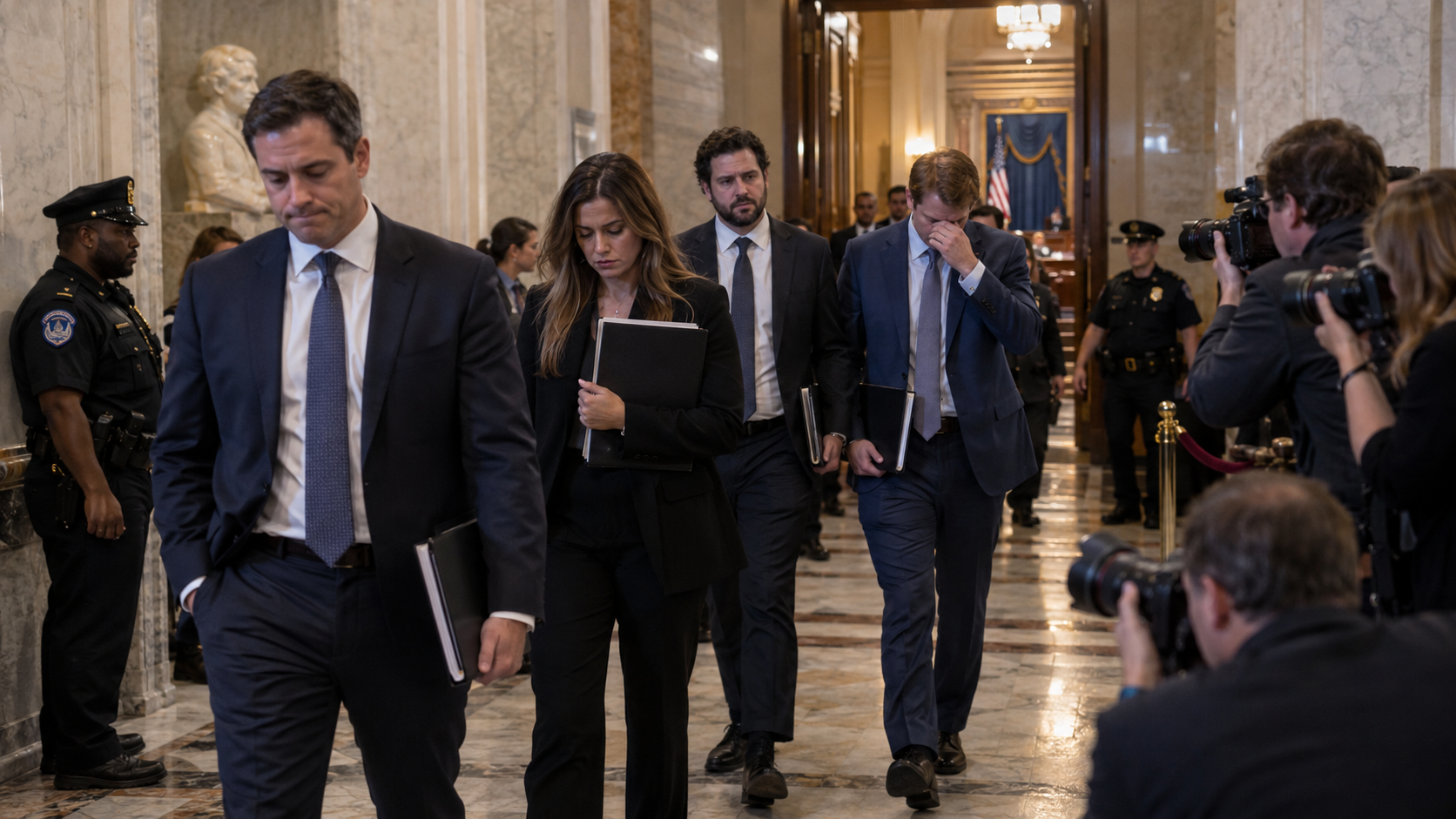
The CLARITY Act was supposed to be the industry's crowning achievement in Washington. Instead, a fight over stablecoin interest payments between Coinbase and the banking industry dragged on for months, and the bill died on a procedural vote this week.
The CLARITY Act, a sweeping bill meant to give the crypto industry a permanent regulatory framework across its various subindustries, failed to advance in the Senate this week after months of increasingly strained negotiations, marking a sharp setback for an industry that had recently begun celebrating its growing influence in Washington. The bill was meant to be a sister piece of legislation to the GENIUS Act, the stablecoin regulation bill signed into law last summer, but its far broader scope, touching nearly every corner of the crypto business, made it a much harder deal to close.
Coinbase Chief Executive Brian Armstrong sat at the center of the fight as the industry's most visible and, by most accounts, most influential voice in the negotiations, visiting Washington 13 times between the 2024 election and this week's vote. The central sticking point was a provision that would have restricted Coinbase's ability to continue paying reward-like yields on stablecoins held on its platform, a practice the banking industry argued functions as an end run around the long-standing prohibition on stablecoins paying direct interest, and one banks feared would pull deposits out of the traditional banking system. Coinbase has a revenue-sharing arrangement with Circle, issuer of the USDC stablecoin, tied to how much USDC sits on its exchange, and separately advertises annual rewards of 3.75% on USDC balances, arrangements the banking industry views as functionally identical to paying deposit interest without calling it that.
Armstrong pulled his support for an early version of the bill in January, just as it appeared close to advancing, posting publicly that the industry would "rather have no bill than a bad bill." That decision triggered a public feud with the banking industry that spilled into view when Armstrong went on television accusing banks of lending out customer deposits without consent, prompting JPMorgan Chase Chief Executive Jamie Dimon to confront him at the World Economic Forum in January and, according to people who witnessed the exchange, call him "full of" expletive-laced criticism. Five months of negotiation over the stablecoin-rewards question followed before Senators Angela Alsobrooks and Thom Tillis brokered a compromise in May that would not ban the rewards outright but would require Coinbase to modify its program, a concession the company described as significant and the banking industry said did not go far enough.
The bill's momentum eroded further as unrelated political pressures mounted. President Trump's disclosure in June of $1.4 billion in personal income from his family's crypto and meme-coin businesses handed Democrats a fresh line of attack heading into the midterms, and the party pushed harder for ethics provisions that would force Trump and his family to divest their crypto holdings entirely, provisions Republicans eventually agreed to include, up to and including a blind-trust requirement, without securing enough Democratic votes to offset the loss of momentum elsewhere. Republican staff for Senator Cynthia Lummis of Wyoming, one of the bill's key architects, reportedly grew frustrated enough with Armstrong's team's continued objections to specific provisions that they stopped meeting with a member of his lobbying staff altogether at one point in the negotiations.
The bill failed to reach the 60 votes needed to advance past a procedural hurdle this week, and Coinbase shares fell more than 10% on the news. The stock recovered much of that loss two days later, rising 12%, after the Securities and Exchange Commission cleared a separate regulatory path for tokenized stocks to trade in the United States, a reminder that the industry's setback in the Senate did not stop regulators elsewhere from continuing to open doors for crypto-adjacent products. Armstrong, writing on social media early the following Saturday, called the final version of the bill an improvement over earlier drafts even though it ultimately failed, saying he was "proud to have done it, and would do it again, because it helped create a better bill."