Attacks on facilities in Abha, Najran and Jazan pushed oil toward $100 while the production impact remained unclear.
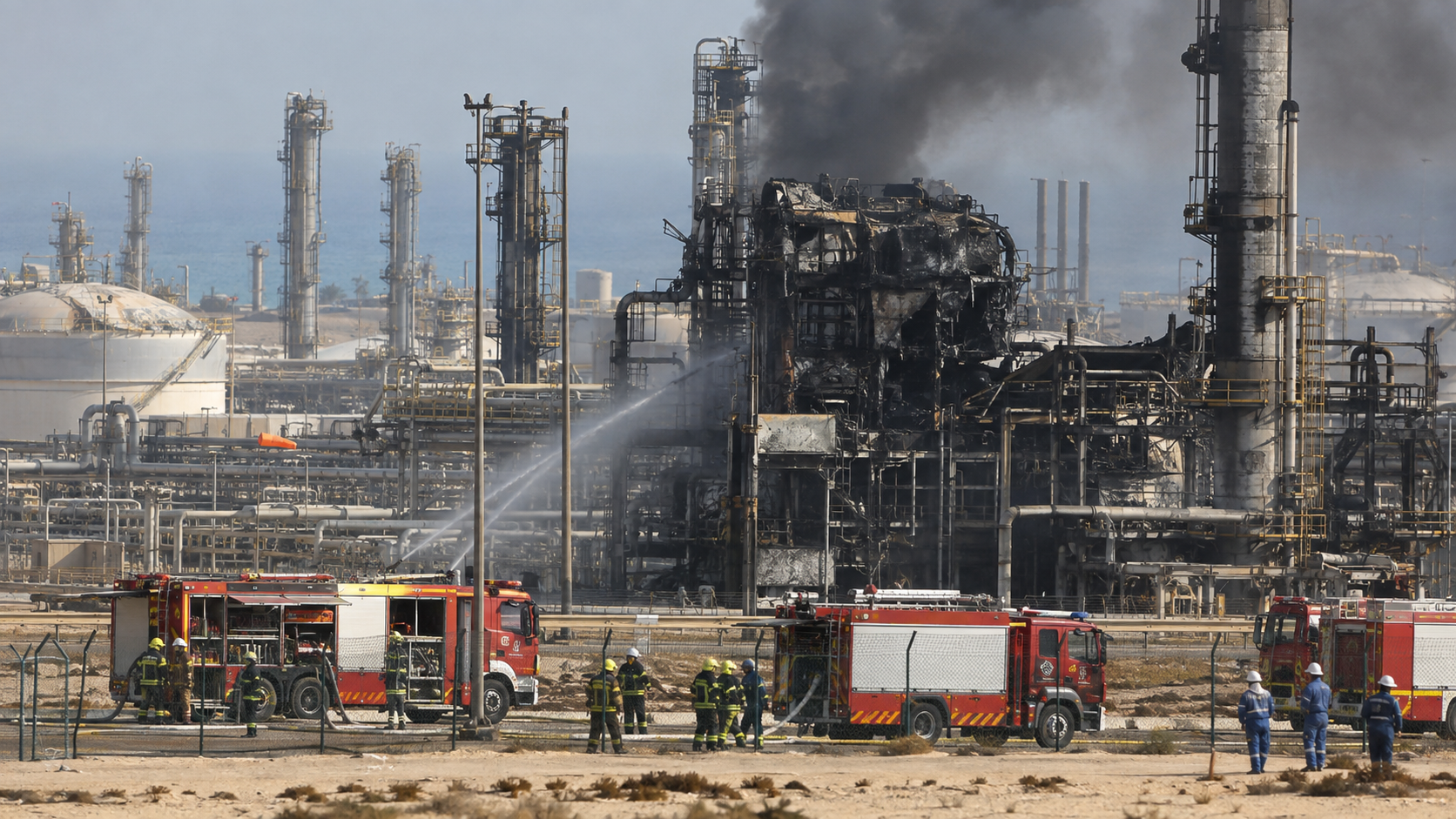
Houthi forces struck Saudi Aramco linked energy facilities early Wednesday in Abha, Najran and Jazan, including the 400,000-barrel-per-day Jazan refinery, using ballistic missiles and drones. Saudi Arabia's energy ministry said fires broke out at multiple locations and halted operations at the affected sites. Seventy three people were injured.
The attack is the first time this campaign has reached Saudi Arabia's own energy infrastructure directly, rather than tanker traffic transiting nearby shipping lanes. That distinction matters for how investors should weigh the oil move that followed: this is a confirmed strike on production-adjacent infrastructure with a disclosed casualty count, not an unconfirmed shipping incident.
Oil rose to $99.49 a barrel in early Wednesday trading. Goldman Sachs raised its oil price forecasts following the attack, telling clients that markets are increasingly pricing a prolonged Middle East conflict with risk tilted to the upside, and that shipping disruptions could persist into 2027.
The strike landed the same day Iran fired on a U.S. base in Jordan for the first time in this conflict, extending the same broader escalation to a second front. Together, the two attacks give investors their clearest evidence yet that the conflict's geography is expanding beyond the Strait of Hormuz shipping corridor that has dominated headlines for weeks.
Supply impact remains unclear
What is not yet established is the scale of the production impact. Saudi Arabia's energy ministry has confirmed fires and a halt to affected operations but has not released a restart timeline or a quantified hit to output or exports. Until it does, Wednesday's oil move reflects a risk premium building on a confirmed attack rather than a confirmed supply loss, a distinction that will matter for how quickly the premium unwinds if Saudi Arabia restores capacity faster than markets currently expect.