The head of the crypto task force departs with a rulemaking proposal, an innovation exemption and newly revised staff guidance still in progress, five weeks before the midterm elections.
The SEC commissioner most closely tied to crypto policy has two days left.
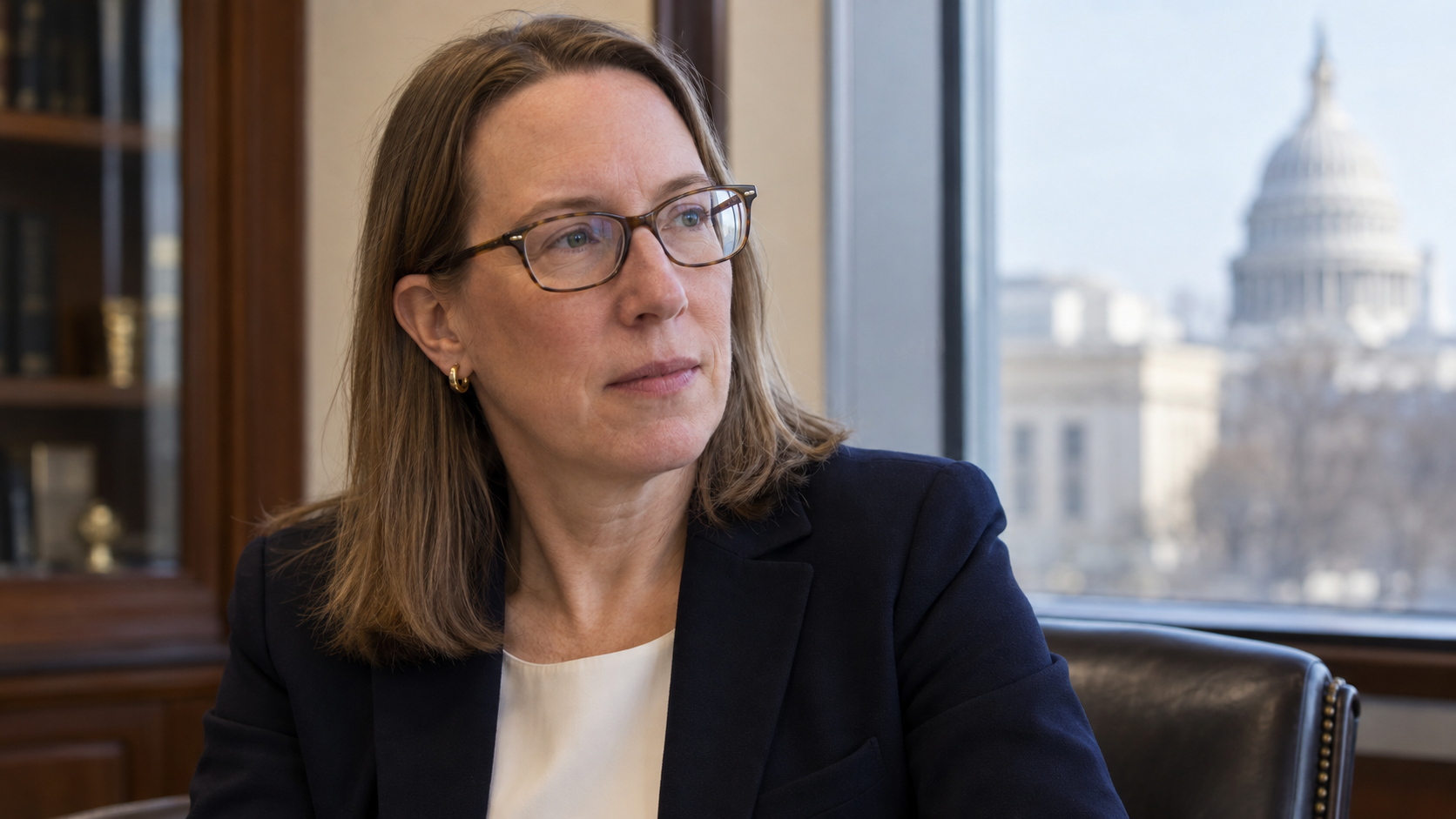
Hester Peirce, who leads the agency's Crypto Task Force, resigned in a letter to President Trump dated Sept. 21 and made public on Sept. 25. Her last day is Friday, Oct. 2. She joins Regent University School of Law in November. In a June 9 speech, she had signaled that she planned to leave.
Her exit leaves Chairman Atkins and Commissioner Uyeda, both Republicans, as the only members of a five-seat commission.
The unfinished rulebook
Several crypto items are in progress. The Commission proposed Regulation Crypto Assets on Aug. 18. It issued an innovation exemption on Sept. 17. The Division of Corporation Finance published crypto FAQs on Sept. 25 and revised them on Sept. 28.
Who sits on the Commission matters more than usual because Congress has not written the rules. The Clarity Act, the market-structure bill, failed a Senate cloture vote on Sept. 15, 49 to 50. Since then, the crypto framework has come from regulators rather than legislation.
A thinner commission
A two-member commission changes the calculus for everything still pending. How much it can finalize, and how durable those rules would be if challenged in court, is now the central question for the industry. No nominations for the open seats have been announced, and any nominee would go before a Senate whose makeup could change after the Nov. 3 midterm elections.
Two readings
One reading is that a smaller commission of like-minded members could move faster. With no dissenting votes to accommodate, the crypto proposals could advance on a shorter timeline.
The other reading is that speed comes with fragility. Rules finalized by a two-member commission, just before an election that could shift control of Congress, may be more exposed to legal challenge and to reversal by a future commission.
What to watch
Any nomination to fill the vacant seats is the first marker. The timeline for finalizing Regulation Crypto Assets will show whether the remaining commissioners intend to move before the midterms or wait for a fuller bench.