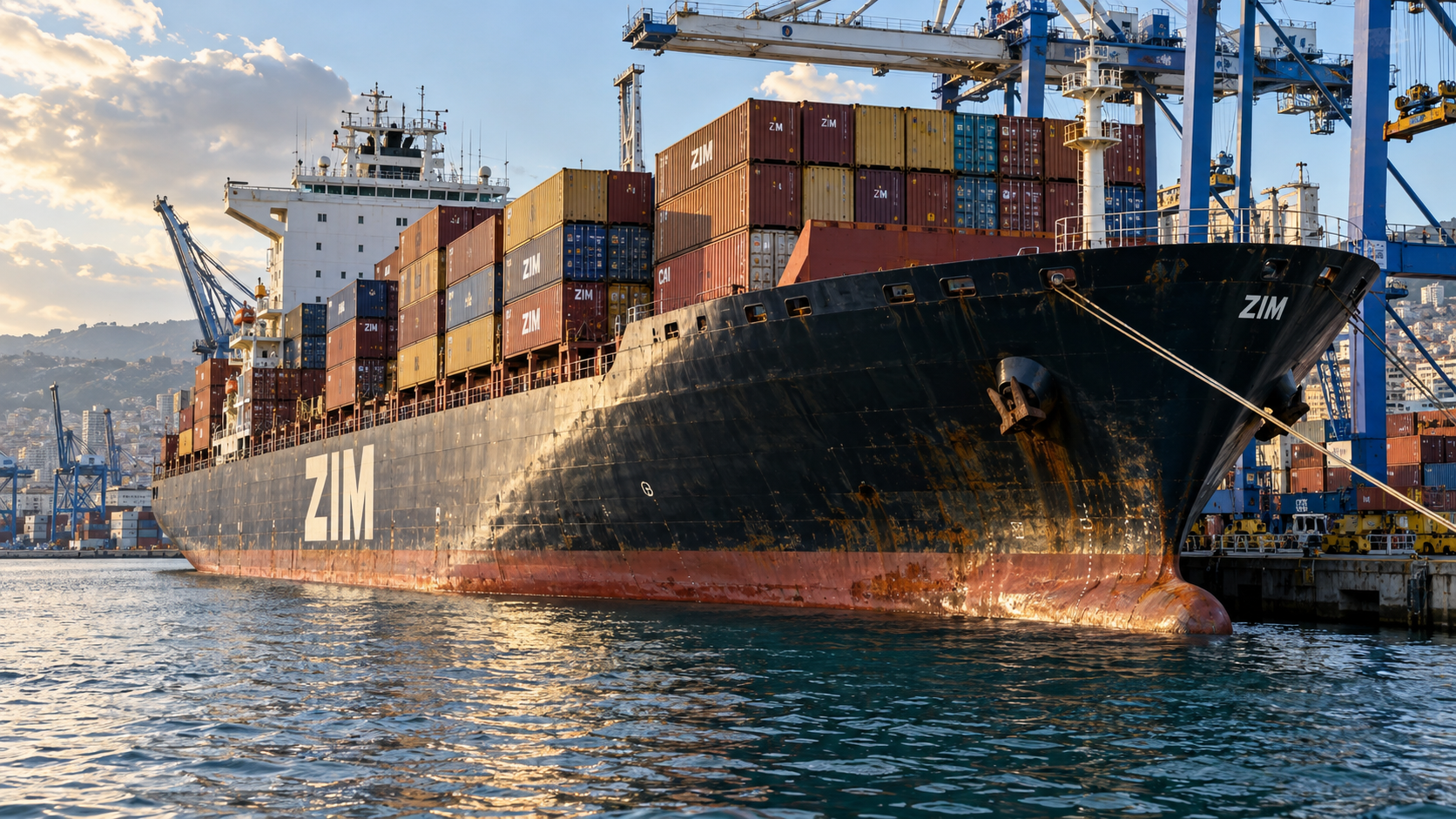
A sharp guidance increase lifted ZIM's Ebit outlook to $1.4 billion to $1.7 billion. The shares rose only 2.9%, leaving a 16.5% gap to the cash offer while Israel weighs a revised structure.
The price Hapag-Lloyd agreed to pay for ZIM Integrated Shipping in February looked full at the time. After Tuesday evening's forecast update, it looks very different, and ZIM's stock barely reacted.
The arithmetic
Hapag-Lloyd's offer of $35 a share in cash adds up to about $4.2 billion. ZIM now guides 2026 adjusted Ebit, its measure of operating profit, to a range of $1.4 billion to $1.7 billion. Against the $1.55 billion midpoint, the takeover price is about 2.7 times a single year's expected operating profit.
The upgrade was large. The old Ebit range ran from $700 million to $1.1 billion, so the midpoint jumped 72%. Adjusted Ebitda guidance moved to $2.7 billion to $3.0 billion, from $2.0 billion to $2.4 billion, a 30% increase at the midpoint. ZIM credited strong demand and freight rates that continue to move in its favor.
The muted response
ZIM's shares closed Tuesday at $29.20 and traded at $30.04 by about 2:10 p.m. Eastern on Wednesday, a gain of 2.9%. That narrowed the discount to the offer from about 19.9% to about 16.5%. A gap that wide to an agreed cash price typically reflects doubt about whether, or when, a deal will close.
Israel's role
The open question sits with the Israeli government. The State of Israel holds a special share in ZIM that gives it rights over the carrier, including the ability to secure shipping service in an emergency. Hapag-Lloyd's plan hands those obligations, along with a group of vessels and several trade routes, to a new Israeli company controlled by the investment firm FIMI, while Hapag-Lloyd takes the international business. The transaction cannot complete without the state's approval.
That approval stalled at the end of September. Israel's Government Companies Authority informed ZIM on that it was ending its review of the application tied to the special share. Hapag-Lloyd responded that it would prepare a fresh submission covering both the special-share arrangements and the merger itself. ZIM's investors voted for the deal in April, and the companies continue to target a close by year-end.
Hapag-Lloyd plans to fund the purchase from its own cash plus as much as $2.5 billion of new debt.
How investors may read it
One reading is that the spread is mostly a measure of political risk: investors see a real chance that Israel delays or blocks the sale, and ZIM's results have little to do with where the stock trades until that is settled.
Another reading is that the higher forecast changes the downside. A ZIM earning this much on its own would be worth more if the deal fell through than it was in February, and the $35 price itself now looks modest against the company's profits.
The decision point
What Hapag-Lloyd puts in its new submission, including the number of ships assigned to the Israeli company, and how the authority responds will determine whether the gap closes. A revised price or a new timetable would move the shares more than the next freight-rate report.