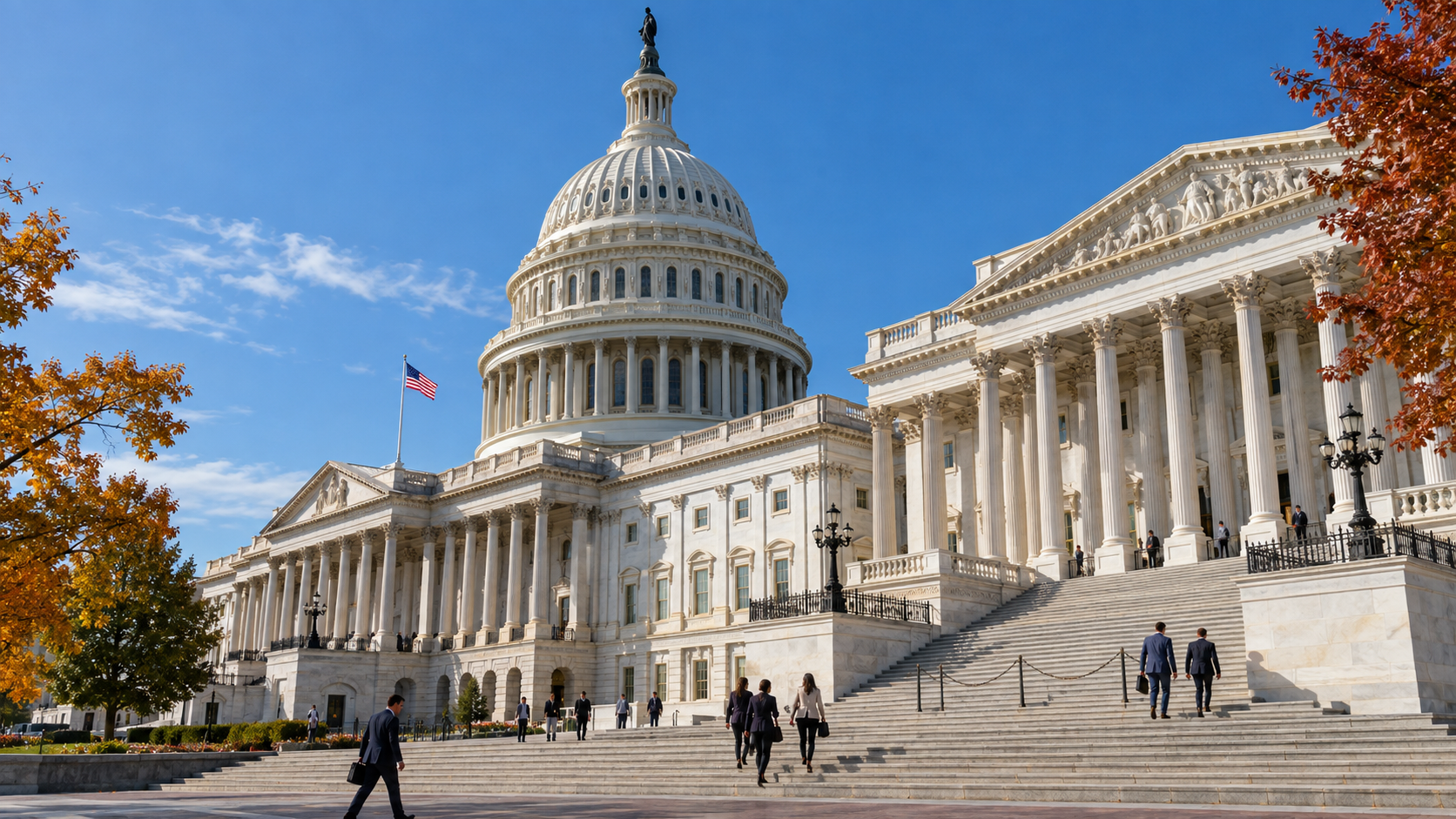
A stopgap signed four weeks ago keeps the government open through , after the midterms.
The federal fiscal year ends Wednesday without a shutdown countdown.
Congress passed H.R. 6500, a continuing resolution that funds the government through , and the President signed it on . The House vote was 370 to 48, a margin that removed any suspense about the deadline weeks in advance.
Seventy-two days of runway
The stopgap gives the government 72 days of funding into fiscal 2027, from through . The calendar is deliberate. The new deadline falls after the midterm elections and after the Federal Reserve's to policy meeting, which means the next budget negotiation will be conducted by a lame-duck Congress, possibly one whose majorities have just changed.
That timing matters for markets. Shutdown standoffs tend to add noise to economic data, delay federal statistics and unsettle short-dated Treasury bills. Pushing the fight past the election removes one source of volatility during an autumn already crowded with inflation reports, a hawkish Fed debate and a war in the Persian Gulf.
A quiet deadline, not a quiet bond market
The absence of a shutdown does not mean fiscal risk has left the room. The 30-year Treasury yield hit 5.62% this week, its highest level since 2002, and part of what investors demand for holding long-dated debt reflects concern about deficits rather than the Fed. A short-term funding patch does nothing to change that longer arithmetic.
What to watch
Whether appropriators use the next 10 weeks to negotiate full-year spending bills or set up another extension. December's deadline falls inside the late-year window Williams has flagged for one more rate increase.