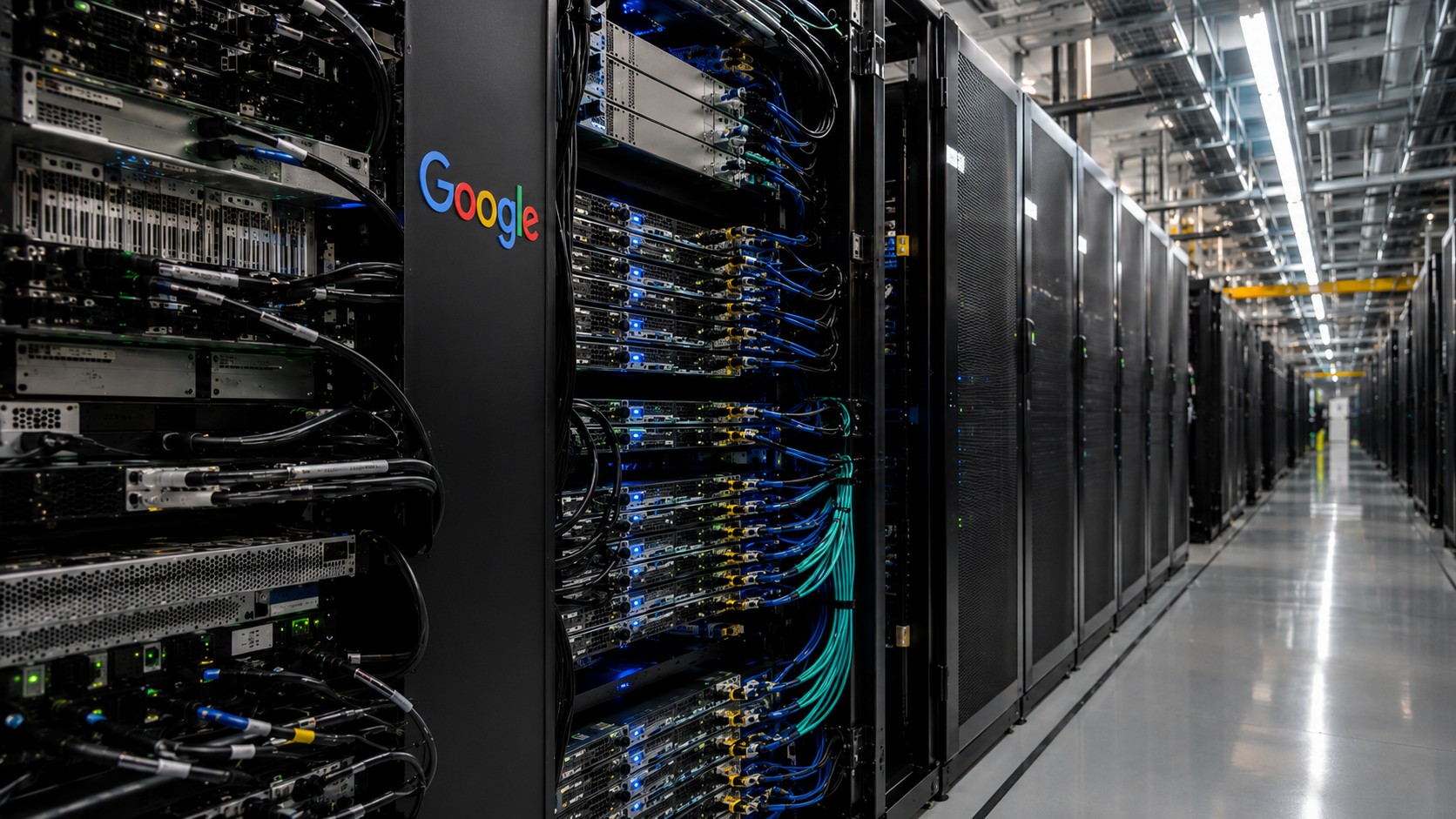
Alphabet's second quarter settled one debate and opened a harder one. Demand for its AI products now shows up clearly in reported revenue. The cost of serving that demand is climbing even faster than the revenue. Shares slipped after hours because the price of sustaining these results keeps rising.
Cloud made the demand case
Google Cloud grew 82% to $24.8 billion. Analysts polled by LSEG expected about 64% growth. Segment operating income reached $8.8 billion, more than triple last year. Segment margin jumped from 20.7% to 35.6%. Cloud backlog rose by more than $50 billion in the quarter, to $514 billion. Analysts had expected about $488 billion. Just over half of that backlog should convert to revenue within 24 months, per the company.
Two details complicate the headline. First, Alphabet booked its first revenue from selling TPU systems into customer data centers. That adds a hardware-like revenue stream with margin traits that differ from cloud consumption. CFO Anat Ashkenazi said Cloud accelerated meaningfully even without those sales. Most TPU contract revenue arrives in 2027. Second, supply still caps growth. Ashkenazi said demand continues to outpace three years of heavy building. Alphabet will rent third-party compute in the third quarter as a bridge. She warned that this rented capacity will pressure Cloud margins near term, as will the Wiz integration. So the record 35.6% margin is a high-water mark that may slip in coming quarters.
A $99 billion asterisk on profit
Reported earnings per share of $9.11 overstates the quarter's operating strength. Other income included roughly $99 billion of unrealized gains on equity holdings. Before the report, Bank of America analysts tied most of the expected gain to Alphabet's stake in Anthropic, which was revalued sharply higher during the quarter. Paper gains on an AI investment say little about the earning power of Search, Cloud, or YouTube.
Alphabet offered no adjusted EPS. Our own estimate, which strips the gain and related tax effects from reported figures, puts underlying earnings near $2.75 per share. The operational consensus before the report sat near $2.87. On that basis, underlying profit came in about in line, and probably a touch light. Read the $9.11 print with that in mind.
Estimate sources also split on advertising. Figures cited by CNBC showed total ad revenue of $81.6 billion, just above the $81.1 billion estimate. Bloomberg framed Search revenue as a slight miss against its own survey. The beat-or-miss call on ads depends on whose numbers you use.
Search holds while the meter runs
The core franchise looks sturdier than bears feared a year ago. Search and other revenue grew 17% to $63.3 billion, with retail and finance leading. AI Mode has passed 1 billion monthly users since its global launch last October. Management says AI features add queries on top of traditional ones, and that monetization on AI Overview queries remains encouraging. Sundar Pichai also said the cost of serving an AI Mode response hit its lowest level since launch. Those claims arrive without disclosed unit economics. Revenue per AI query and cost per response stay private, so the long-run margin question stays open.
YouTube ads grew 13% to $11.1 billion, helped by record World Cup viewing. A comparison problem looms: Ashkenazi said Search begins lapping an acceleration from the third quarter of last year.
The model race is the soft spot. Analysts pressed on coding and on the still-unreleased Gemini 3.5 Pro. Pichai conceded that coding and agentic coding need improvement, while pointing to the Gemini 4 training run now underway. The answer signaled commitment without settling the question. Reuters noted the stock had already lost about 9% since late April, partly on Gemini delays. Coding agents are becoming a high-value enterprise workload. A lasting gap there would blunt the payoff from all this infrastructure.
The bill arrived this quarter
Capital spending reached $44.9 billion in the quarter, roughly 60% of it on servers. Full-year guidance moved up to $195 billion to $205 billion, from $180 billion to $190 billion. That marks the second raise this year, and management repeated that 2027 spending rises significantly again. Free cash flow went negative, at $5.9 billion, because capex outran $39.1 billion of operating cash flow.
The funding model is changing with it. Alphabet announced an $84.75 billion equity capital raise in June. It banked $49.6 billion of net proceeds in the quarter and can sell up to $40 billion more through an at-the-market program. It also issued $20.3 billion of senior notes. Long-term debt now stands near $98 billion, up from about $16 billion a year ago, by Ashkenazi's own account. The quarterly dividend held at 22 cents.
None of this is reckless on its face. Matching long-lived assets with long-term capital can be sound finance. Backlog of $514 billion is real contracted demand. Still, a company that once funded everything from ad cash flow now issues equity and debt while spending near $200 billion a year. That changes the underwriting. Depreciation, energy costs, and financing costs all sit between today's growth and tomorrow's shareholder cash.
The market's reaction tracked that logic. Shares slipped more than 1% as late trading opened, then losses deepened past 2% as the call turned to spending. Heading into the print, the stock was up about 11% this year. The selling targeted the spending outlook far more than the results.
What settles the debate
The bull case rests on conversion. Backlog becomes revenue on schedule. TPU sales scale while revenue quality holds. Search monetization keeps pace with inference costs. Free cash flow recovers as new capacity fills. Cloud's operating leverage this quarter shows the machine can work at the segment level.
The bear case rests on escalation. Capex guidance has risen twice this year and rises again in 2027. Rented capacity and hardware sales dilute margins. Depreciation compounds. External financing hardens into a habit. And the model race demands ever-larger training runs just to stay in place.
Alphabet cleared the bar it faced a year ago. Customers want the capacity, and Search has held through the AI transition. The next bar sits higher and takes longer to clear. The company must show what normalized free cash flow looks like after building, powering, and depreciating all of this. That proof arrives over years, in installments. Each quarter of capex guidance, backlog conversion, and cash generation will serve as one. Investors just repriced the first installment.