Net revenue rose 23% to $18.68 billion and earnings reached $17.01 a share, far above forecasts. Equities financing almost doubled, while the investment banking backlog fell from the end of June.
The part of Goldman Sachs' equities business that lends to clients such as hedge funds produced more revenue last quarter than the part that executes their trades.
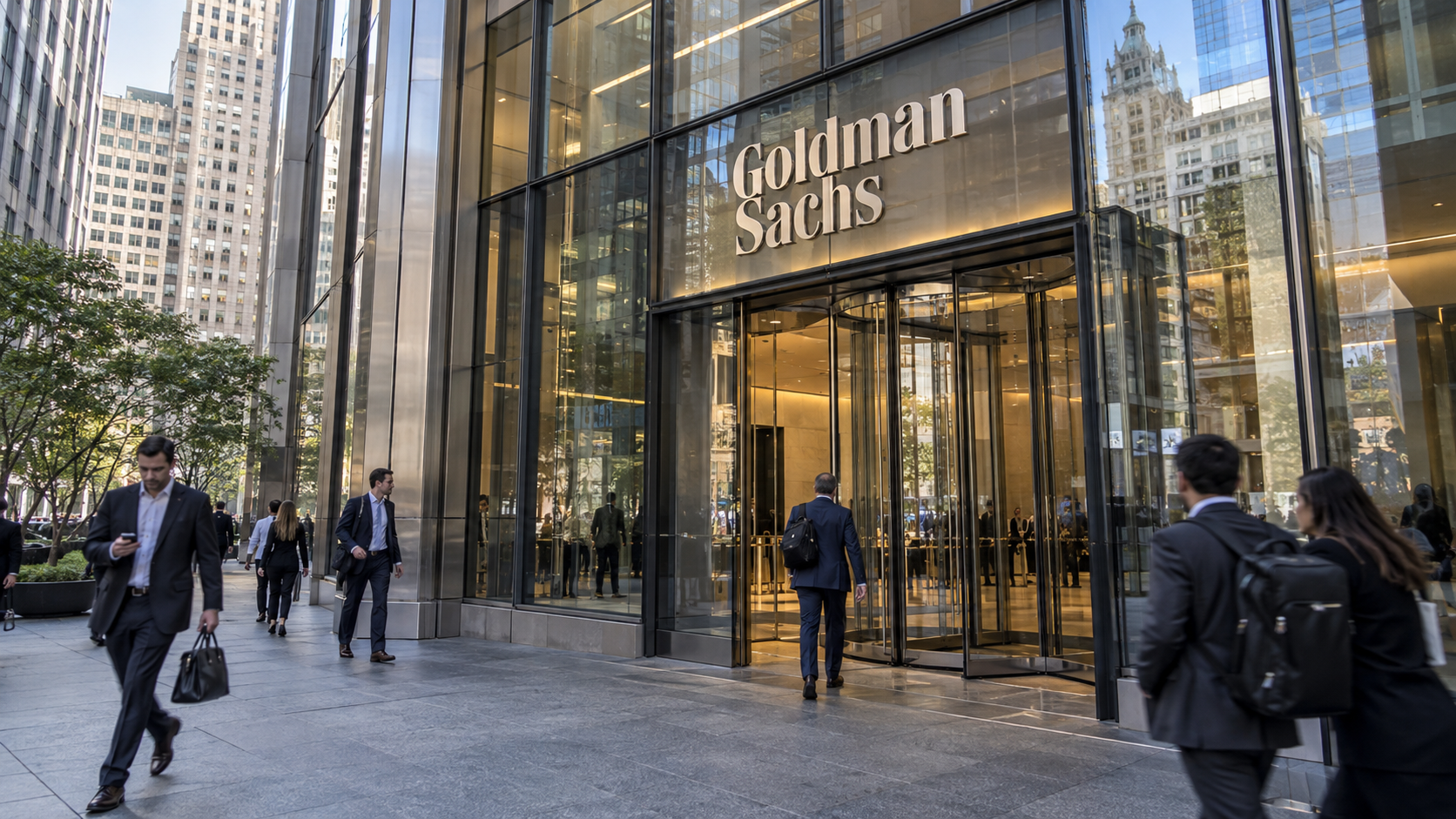
Goldman reported third-quarter net revenue of $18.68 billion on Tuesday, up 23% from a year earlier and its second-highest quarterly total. Net earnings rose 29% to $5.29 billion, or $17.01 a share. Analysts surveyed by LSEG had expected revenue of $16.71 billion and earnings of about $13 a share. Revenue came in about 12% above that forecast.
The financing engine
Equities revenue jumped 72% to $6.44 billion. Within it, financing revenue, which includes prime brokerage, rose 96% to $3.37 billion. Intermediation, the market-making side, rose 52% to $3.08 billion.
The same pattern appeared in fixed income, where total revenue slipped 1% to $3.47 billion. Financing rose 14% while intermediation fell 7%.
Added together, financing revenue across both trading divisions rose about 65% from a year earlier, to roughly $4.6 billion. Intermediation rose about 20%, to roughly $5.3 billion. Financing revenue is tied to how much clients borrow rather than how much they trade, which can make it steadier.
Banking up, pipeline down
Investment banking fees rose 21% to $3.22 billion, with advisory fees up 18% and equity underwriting up 43%. But the bank disclosed that its backlog of investment banking fees decreased from the end of the second quarter and slightly from the end of 2025. It gave no figure.
Chairman and Chief Executive David Solomon pointed to "our second highest quarterly net revenues and record year-to-date net revenues" against "a complicated operating environment."
The weak spots
Platform Solutions revenue fell 72% to $170 million, reflecting net markdowns on the Apple Card portfolio, which is held for sale. The provision for credit losses rose to $368 million, mainly on impairments of wholesale loans. Operating expenses rose 20%, led by a 54% jump in transaction-based costs.
Asset and wealth management revenue rose 14% to $5.05 billion, helped by incentive fees of $587 million, up from $76 million a year earlier.
By region, revenue from Asia nearly doubled from a year earlier to $3.80 billion. Revenue from Europe, the Middle East and Africa was roughly flat from a year earlier at $3.21 billion, though down 29% from a strong second quarter.
Capital
Goldman returned $4.49 billion to shareholders, including $3.0 billion of share repurchases at an average price of $1,048.73. That is about 17% above Monday's closing price of $893.95. Its standardized common equity Tier 1 ratio fell to 12.4% from 12.9% at the end of June, as risk-weighted assets rose to $817 billion. Return on equity was 18.7%.
In early premarket trading the shares rose 3.4% to $924.00 by 7:44 a.m. Eastern, after briefly trading lower earlier in the morning.
Market implications
One reading is that Goldman's model has shifted toward more durable revenue. Financing businesses grew far faster than intermediation, asset management fees rose, and record year-to-date revenue came despite softer fixed income.
A second reading is that the quarter flatters the outlook. Total revenue fell 8% from the second quarter, the backlog is smaller, wholesale loan impairments are rising, and buybacks at prices well above today's leave less room for error if activity slows.
What to watch
Management's description of the backlog and October activity on the earnings call will be the next test. Whether financing balances keep growing will show if the shift is structural.
EDITORIAL STATUS: DRAFT — pending human editorial review and approval. Published URL: Pending publication. Newsletter eligibility: Pending.