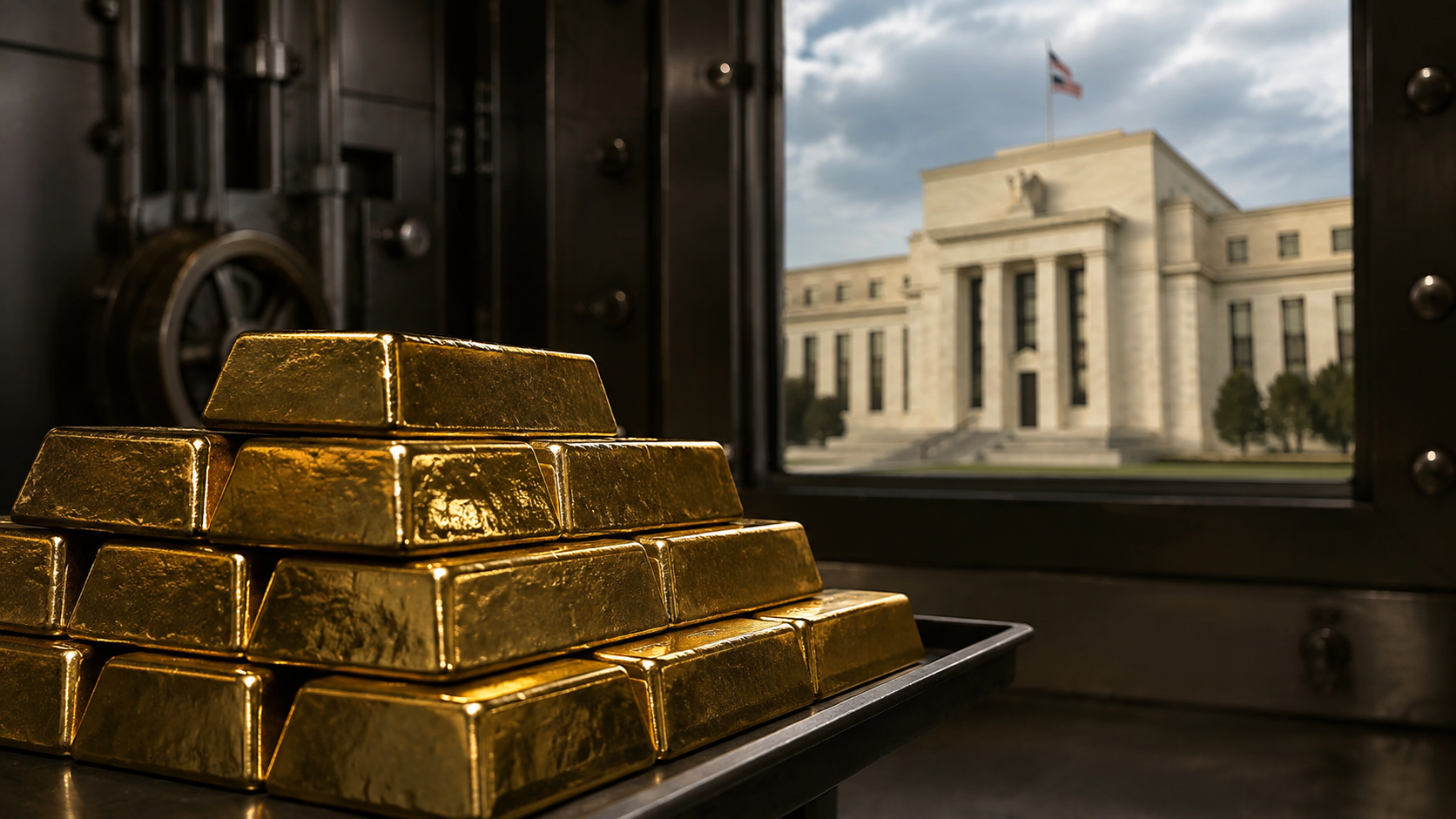
A second straight day of gold declining alongside rising Middle East risk points to the Federal Reserve, not the war, as the market's dominant driver.
Gold fell roughly 0.6% to about $4,304 an ounce Wednesday, a three-week low, with December futures down about 1%. Silver, platinum and palladium also declined. The move came the same day the United States struck Iranian tankers directly for the first time and Iran retaliated across four countries, an escalation that would typically push safe-haven demand higher, not lower.
This is the second consecutive session in which gold has moved against the geopolitical headline. Tuesday, gold fell 1.43% even as U.S. forces confirmed strikes on Iranian Revolutionary Guard targets. Futures pricing has shown roughly a two-thirds probability of a quarter-point Fed hike at the September meeting, up sharply from odds of no change a week earlier, and a higher policy rate raises the opportunity cost of holding an asset that pays no yield.
Two sessions is a thin sample, and gold can fall for reasons unrelated to rate expectations, including dollar strength or profit-taking after a run-up. But the coincidence of timing, a second straight decline arriving alongside escalating war news rather than a quiet news cycle, sharpens the case for a rate-driven explanation.
Equity markets showed a similarly restrained reaction. U.S. futures were down less than half a percent, and Asian markets closed lower overnight, including a 1.6% drop in Japan's Nikkei 225. That is not the shape of a market in the grip of geopolitical panic.
The clearer test will come from the bond market. If short-dated yields are rising faster than long-dated yields, that shape points specifically to a rate-hike story; if yields are moving together across the curve, that looks more like a broad risk-premium reaction to the war. That comparison was not available at last check, leaving the Fed's September 15-16 meeting as the event most likely to settle the question directly.