Third-quarter adjusted earnings of $3.70 a share topped estimates, and the company raised its free-cash-flow forecast by $1.5 billion at the midpoint. But the midpoint of its full-year profit range sits below analysts' expectations, and commodity and logistics costs are now running near $2 billion.
General Motors gave shareholders almost everything a carmaker can offer except a reason to expect more profit.
GM reported third-quarter adjusted earnings of $3.70 a diluted share on Tuesday, up 32% from $2.80 a year earlier and above the $3.63 consensus compiled by LSEG. Revenue rose 2.9% to $50.0 billion, against forecasts of $48.7 billion. Adjusted earnings before interest and taxes rose 22% to $4.1 billion, and the margin widened to 8.2% from 6.9%. In North America, the adjusted margin rose to 8.7% from 6.2%.
The company also announced a new $20 billion share repurchase authorization, after completing a $6 billion program begun in January.
The shares were down 8.4% at $75.83 at about 2 p.m. Eastern, near the session low of $75.08. Ford was down 0.6%.
The guidance problem
GM narrowed its full-year forecasts rather than lifting them. Adjusted EBIT is now expected at $14.5 billion to $15.5 billion, against a prior $14 billion to $16 billion, leaving the $15 billion midpoint unchanged. Adjusted earnings are expected at $12.75 to $13.75 a share, against $12.00 to $14.00 before. The midpoint rose to $13.25 from $13.00, but it sits about 1.2% below the $13.41 LSEG consensus for the year.
Cash was the bright spot. GM raised its forecast for adjusted automotive free cash flow to $11.5 billion to $12.5 billion, from $9.5 billion to $11.5 billion, a $1.5 billion increase at the midpoint.
The cost problem
The costs explain why profits are not following cash higher. GM said commodity inflation, including logistics and memory chips, is now running at about $2 billion for the year, up from a previous estimate of $1.5 billion to $2 billion. Gross tariff costs are tracking toward the low end of a $2.5 billion to $3.5 billion range.
The company's language on 2027 was conditional. "While the path forward is more challenging, we continue to believe that 2027 will be another strong year and better than 2026, assuming customer demand remains strong and commodity, logistics and other recent cost pressures moderate," GM said.
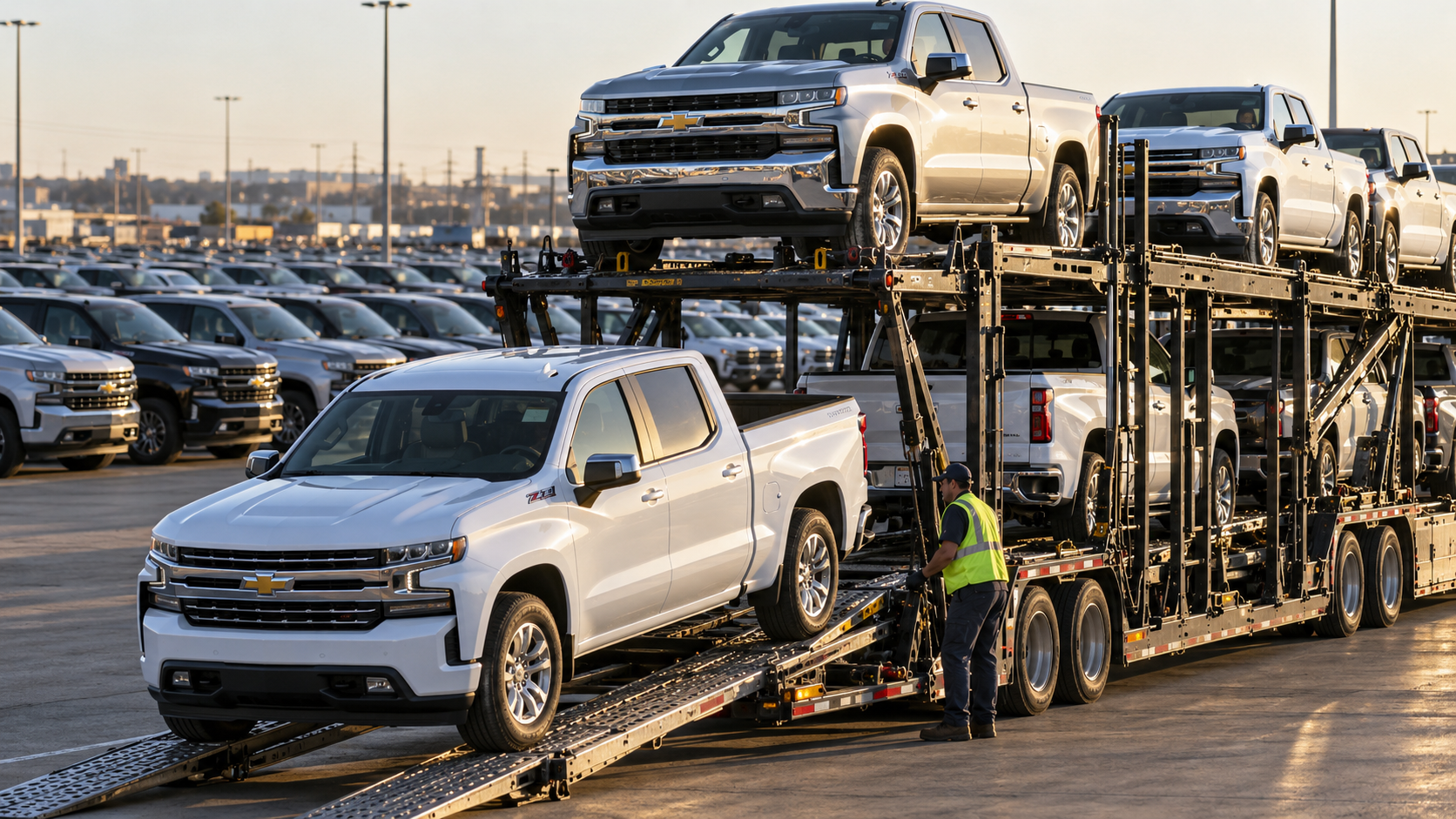
Analysts focused on those conditions. Garrett Nelson of CFRA pointed to commodity costs, fewer fourth-quarter pickup trucks during a changeover of the Silverado and Sierra lines, and the absence of hybrids in the lineup. JPMorgan analysts said investors are "likely to question conviction" in the outlook.
Reported earnings above adjusted
One detail cuts against the cautious reading. GAAP earnings of $3.73 a share were above the adjusted figure, an unusual result that reflects other items GM excludes from its adjusted earnings. Separately, charges tied to GM's electric-vehicle strategy fell to $238 million from $1.59 billion a year earlier, which helped net income attributable to shareholders rise to $3.3 billion from $1.3 billion.
The buyback in context
The new authorization is large. At about $66.7 billion of market value at Tuesday afternoon's lower price, $20 billion would be equal to about 30% of the company. "This further demonstrates our Board's commitment to creating even greater shareholder value," Chief Executive Mary Barra said.
A buyback that size signals that management thinks the stock is cheap. It does not change the earnings forecast, and Tuesday's trading suggests investors were pricing the forecast.
Market implications
One reading is that the market is overreacting to a narrowed range. Cash flow guidance went up $1.5 billion at the midpoint, the buyback could retire a large share of the company, EV charges have fallen sharply and the consumer, in the words of Chief Financial Officer Paul Jacobson, "has held up remarkably well."
A second reading is that the stock is pricing the trajectory. Costs are rising faster than GM had forecast, the earnings midpoint is below consensus, the 2027 outlook depends on conditions GM does not control, and a buyback cannot offset a lower earnings base indefinitely.
What to watch
Commodity and memory-chip costs into the fourth quarter; the pace of the pickup changeover; any update on hybrid plans; the pace of buybacks under the new program; and Ford's next quarterly report. Evidence that costs are stabilizing would make the 2027 forecast easier to believe.