Factory orders collapsed in August, but excluding bulky contracts they were almost unchanged, and industrial output beat forecasts. The underlying trend is weaker than the output figure suggests and stronger than the orders headline.
German industry delivered two headlines in two days that appear to contradict each other. Read closely, they describe a sector that is neither collapsing nor recovering.
New manufacturing orders fell 10.6% in August from July, the federal statistics office said Tuesday, after a revised 3.2% gain the month before. The driver was a reversal in large contracts. Orders for other transport equipment, a category that includes aircraft, ships and trains, dropped 61.5% after soaring 129.4% in July. Excluding large orders, total demand slipped just 0.1%.
The breakdown still contained weak spots. Capital goods orders fell 15.3%, domestic orders 17.3% and foreign orders 5.4%.
A day later, industrial production surprised in the other direction. Output rose 2.0% in August, well above the 0.5% gain economists had forecast, and July was revised to a 1.2% decline. Production was up 2.3% from a year earlier.
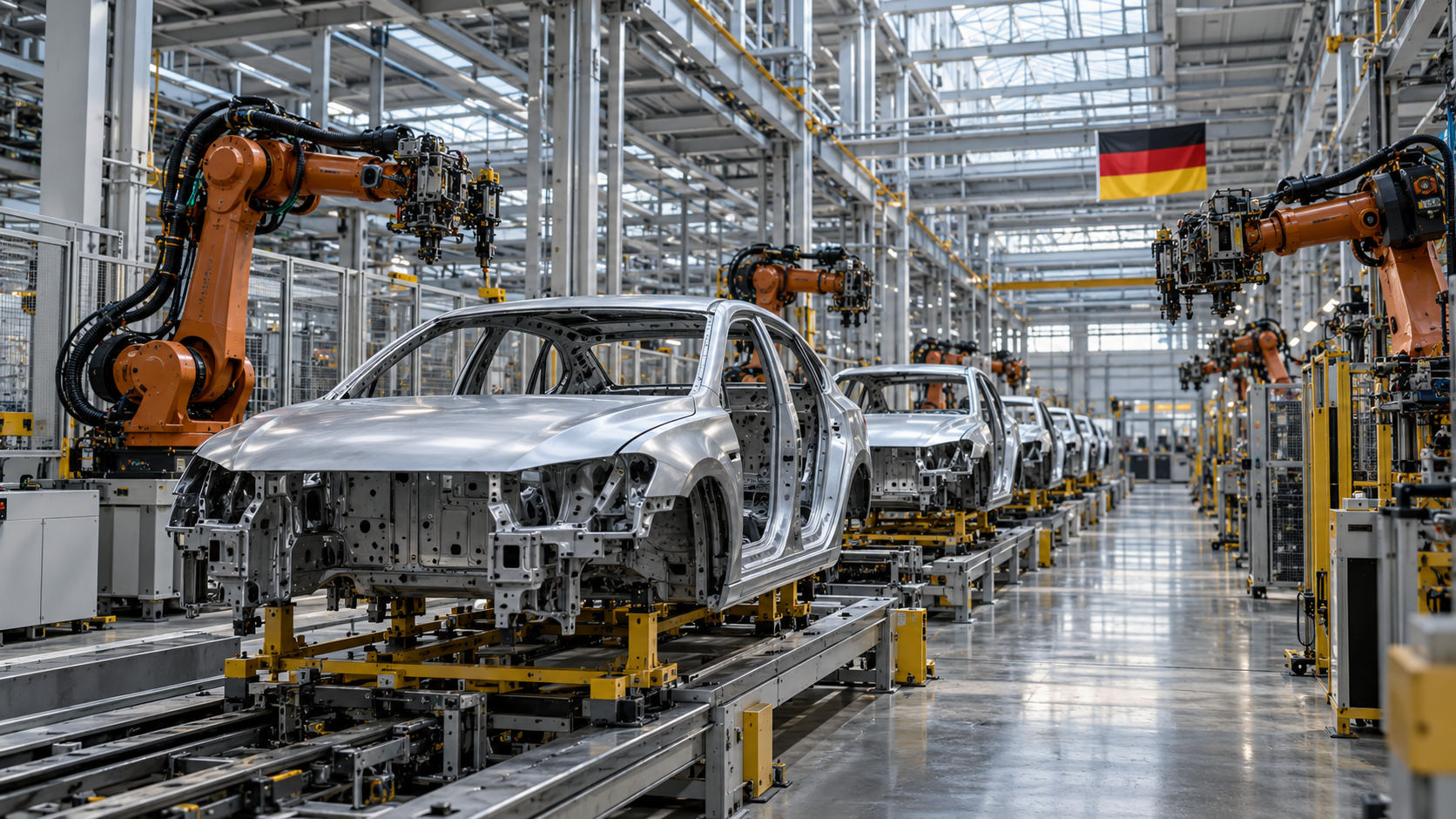
The details temper the good news. Construction output jumped 9.3%, carrying much of the gain, while automotive production fell 5.4%. A beat built on construction says less about the health of Germany's export-oriented manufacturing base than one led by factories.
The more reliable signal sits in the three-month comparison. Orders over the June-to-August period were 1.3% higher than in the prior three months, but excluding large contracts they were 2.6% lower. That is the figure that captures day-to-day demand, and it is drifting down.
Currency markets were unimpressed. The euro fell about 0.6% overnight to near $1.12, giving back part of Tuesday's rally despite the production beat.
What to watch
September orders excluding large contracts are the test. Another decline would confirm a slow erosion in core demand that the volatile headline figures keep obscuring.