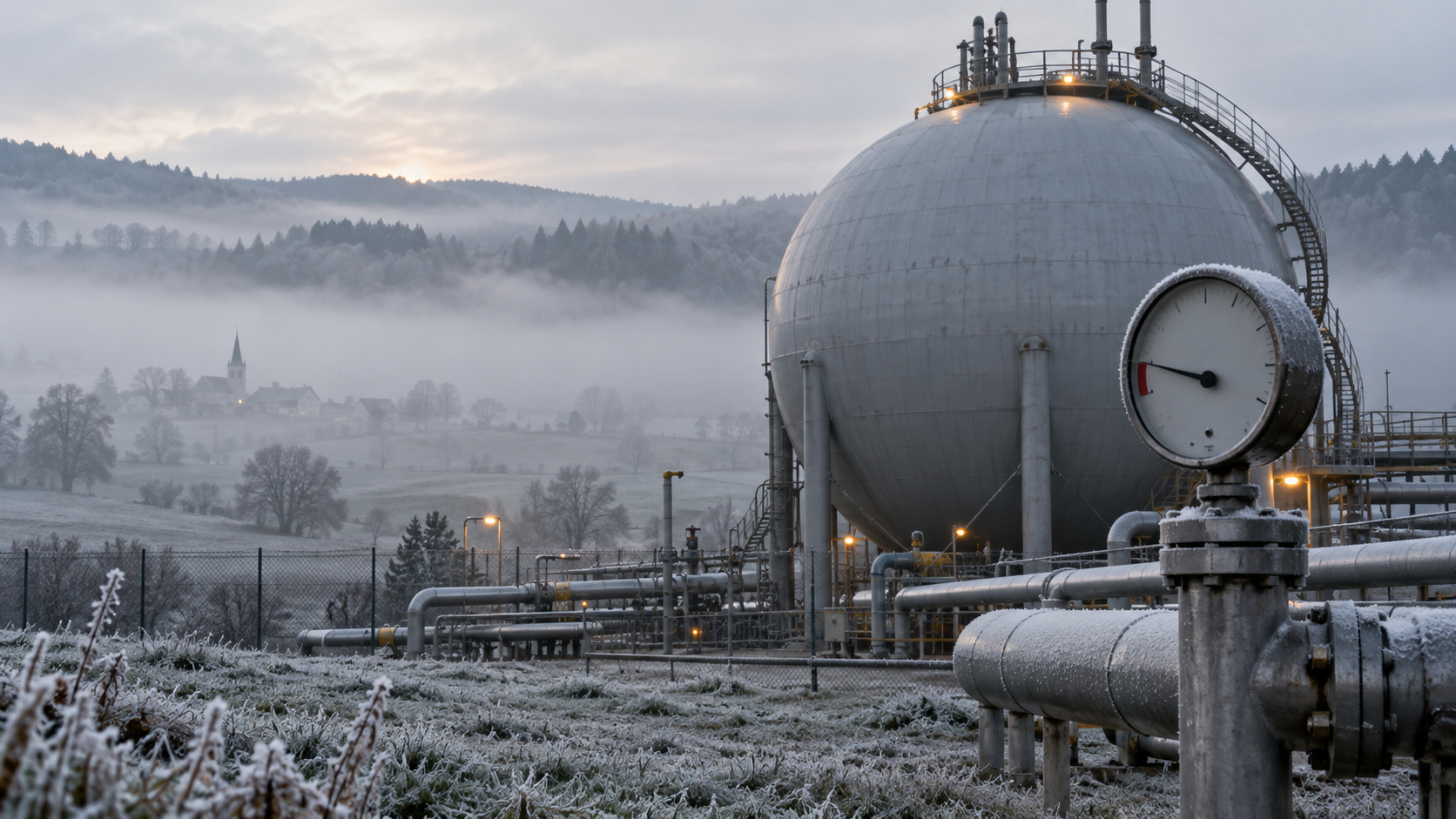
Berlin is preparing market incentives rather than state purchases, with a ministerial decision targeted for September 21 and storage sitting near 53% of capacity.
German gas storage stood at roughly 53% of capacity in early September, described by the country's storage association as the lowest level for the time of year in 15 years of recorded data. The seasonal injection window that fills European storage ahead of winter is largely over.
Economy Minister Katherina Reiche is preparing a response built on market mechanisms rather than direct government purchasing. The plan centres on an expanded autumn tender of Long Term Options through Trading Hub Europe, the instrument used to subsidise the cost of holding gas in storage across the winter, alongside direction to state-owned firms Uniper and SEFE to maximise use of existing capacity. A ministerial decision is targeted for September 21.
Why the choice of instrument matters
The distinction between subsidising storage economics and buying gas outright is not procedural. Direct state purchasing moves the market against the buyer: a government announcing it will buy a known quantity into a tight market pays a premium for the privilege. That was the lesson of 2022.
Long Term Options work differently. They compensate traders for the spread risk of holding gas through the winter, which makes storage economic without the state taking an outright price position. It is the cheaper instrument when it works, and the slower one when it does not.
The risk in the timing
Germany is attempting this with storage already at a 15-year seasonal low and roughly six weeks before heating demand becomes the binding constraint. The margin for the incentive to fail to attract volume is thin.
The broader European energy picture does not help. The distillate market is already tight, Gulf export capacity is disrupted by the Saudi pipeline outage, and Russian refined-product exports have fallen sharply. Gas and distillate are not the same market, but they compete for the same marginal industrial energy demand and for the same shipping capacity.
What to watch
The September 21 decision, and then the tender itself. A Long Term Options auction that clears at wide spreads would indicate traders demanding significant compensation to carry inventory, which is the market's own assessment of winter risk. A poorly subscribed tender would put the question of direct state intervention back on the table at a worse moment.