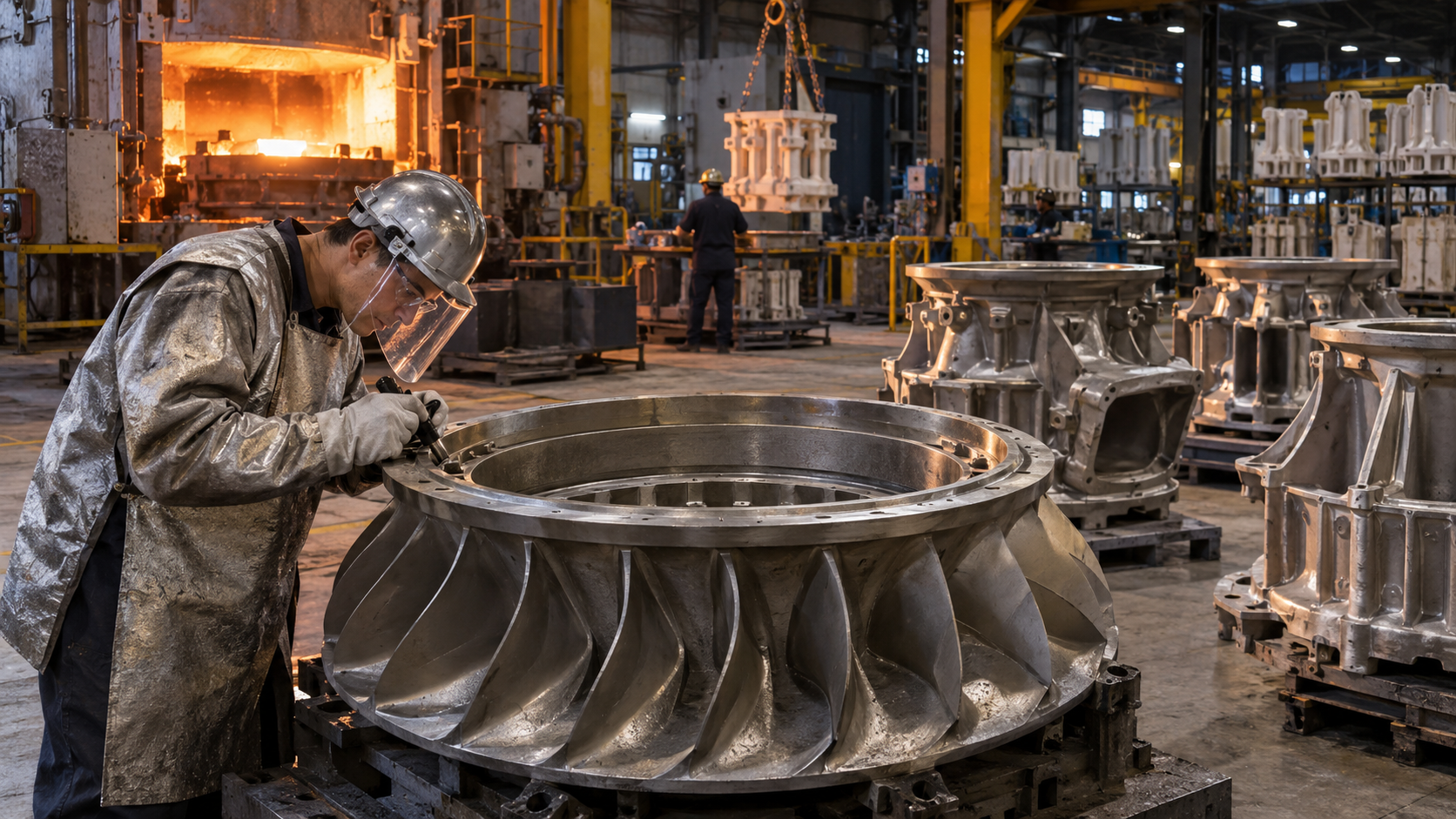
The acquisition would expand GE’s casting capacity, with the valuation depending in part on expected synergies.
GE Aerospace agreed to acquire Consolidated Precision Products, a Cleveland-based maker of castings and forgings for commercial aerospace, defense and industrial turbine engines, for $11.75 billion, the company announced Tuesday. The deal is being financed with $7 billion in cash and roughly $4.75 billion in new debt, and GE says it will be accretive to adjusted earnings and free cash flow in the first year. GE expects the transaction to close in the second half of 2027, pending regulatory approval.
Capacity and valuation
By GE's own math, the price works out to about 18 times CPP's projected 2027 earnings once expected synergies are factored in, or roughly 26 times without them. That gap matters: the lower multiple depends on synergies GE hasn't detailed in its own guidance, while the seller, private equity firms Warburg Pincus and Berkshire Partners, has owned CPP since recapitalizations in 2013 and 2019, making the transaction an exit for long-standing private equity owners.
GE frames the deal as securing scarce casting capacity to meet what it calls strong, simultaneous demand across commercial engines, aftermarket parts and defense. Jefferies reiterated a buy rating on GE with a $455 price target, estimating roughly $200 million in cost synergies by the third year, though that figure comes from Jefferies' own modeling rather than GE's guidance.
Separately, Howmet Aerospace shares fell more than 8% amid a report that SpaceX is building in-house turbine-blade manufacturing capacity. The report concerns a different transaction and customer relationship; the available reporting does not establish that GE’s CPP deal caused Howmet’s decline.
The two developments highlight different approaches to securing aerospace components: buying an established supplier and building production internally. For CPP’s sellers, the immediate questions are regulatory clearance and closing. For GE, the longer-term test will be whether the acquired capacity and expected savings justify the price.